Business tips – Sticks & Stones

Archive

Category Archives for "Business tips"

Behind the Buyer Curtain

Hi! I am Molly and I have been with Christensen’s for 14 years. Many of you may remember me from my days on the perennial lot. These days, I am the perennial buyer, sadly working at a desk (not so sadly during a heat wave or rainstorm). My main goal is to source fresh, quality perennials that are landscape ready!

I wanted to give you a little peek behind the curtain, so that you can understand all that goes into offering the best customer care possible!

Let me start with the most important aspect of my job: timing. The plant buyers are always working one to two weeks out. For example, today is Monday July 13th. By the end of this week, I will have trucks for the week of July 20th set in stone and am unable to make additions or changes.

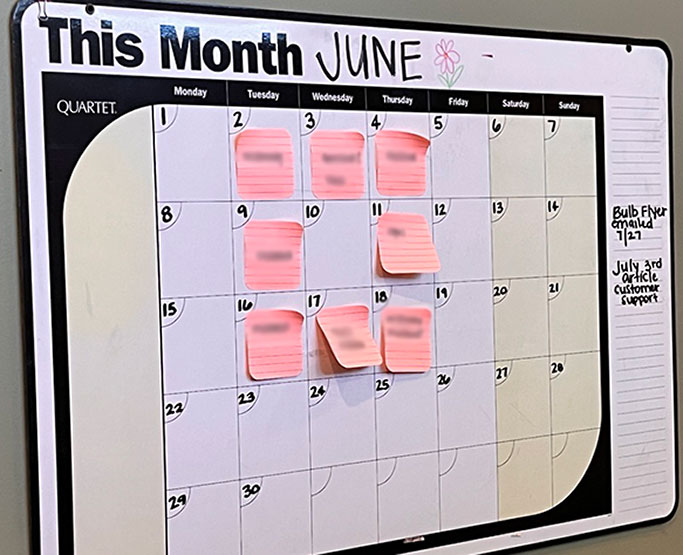
This is how I lay out the perennial shipments. Each sticky note represents a shipment, sometimes several. It's necessary for the plant buyers to plan several weeks in advance - not only to source stock material but to plan for

large orders.

You might be wondering, why do I need to know this?? As the contractor, it’s important to understand the lead time required to get your material to Christensen’s. Basically, the buyers need a week or two, sometimes more (depending on time of year) to get you exactly what you need. If you need something ASAP, let us know ASAP so your material arrives fresh and in a timely fashion.

If a project requires a large quantity of a plant, or something funky no one has ever heard of, please let us know, in advance! We want to help! But we order your plant material from all over the country, and with the logistics involved, it takes proper planning on our part.

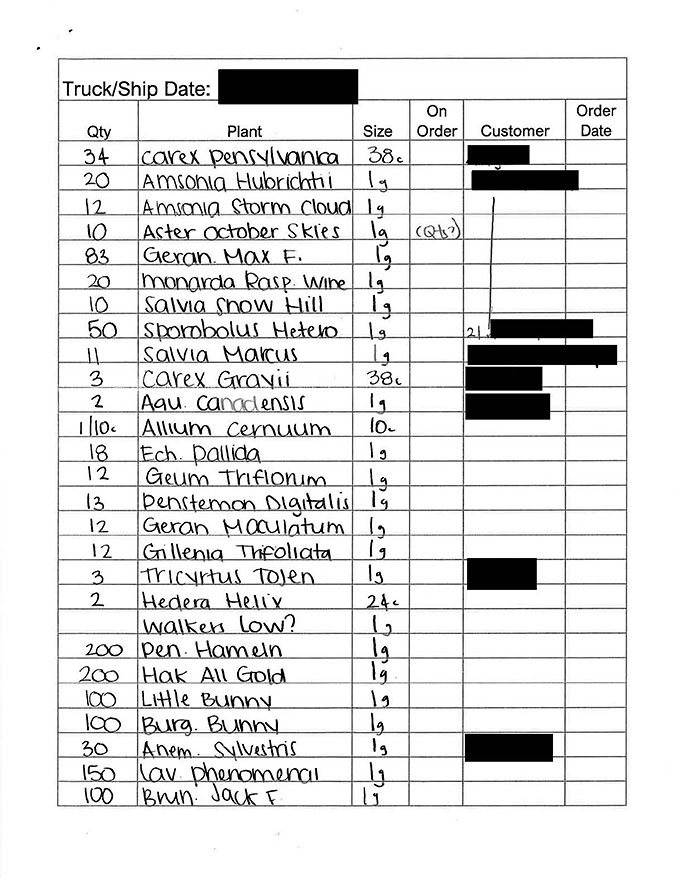
I use this form to keep a running list of what I need to order from a given vendor on a given truck. This list is then emailed to the vendor.


Note that next to the Aster October Skies, I have (Qts?) written. This happens sometimes where you, the customer, ask for a certain size or a specific plant. After checking my sources, I might have to think outside the box and come to you with alternatives.


Flexibility on both sides ensures we get the best possible results for everyone!

There is another snake in the grass to be wary of. Say you give me the list of materials and deposit right on time, I order it for the following week, and all is good. Then the dreaded “bounce back” email arrives, notifying me that the plants are no longer available: crop loss, water issues, pruning issues, someone stole them for another order. Whatever the reason, your plants are not coming as planned.

As a buyer who prides herself on meeting deadlines, this is not an ideal situation for either of us. After follow-ups with your salesperson, who will then notify you of the snag, the plants are added to my “get it here now!” list and your arrival date is pushed back at least another week.

Why am I sharing this bit of information? It’s a gentle reminder that some things are out of our control and many issues can be mitigated with advance planning. For example, after receiving a “bounce back” email, there still might be a chance to meet your deadline because it’s several weeks away.

Finally, advance notice of large or unique orders allows the buyers time to search. Even if you are unsure of the exact date, let us know! I am always putting out feelers to my suppliers, inquiring about finish dates and availability, and am sometimes able to place plants on order for me until we are ready to ship. This will secure your order until you are ready for it! Please know that with special order items, or large quantity shipments, we require a deposit of up to 50%. This lets the buyer know that the order is good. And lets you know, I AM ON IT!

This image is just a sample of how I track needed plants. 

Much of my day is spent looking at "Availability Lists" from our suppliers.

By keeping a "Needs List", items are less likely to get missed. 

Let your sales person know if there's something you need to add to my list. 

The moral of the story is that we, the buyers, are committed to providing you with quality material, in stock when you need it. That quality, however, requires regular turnover. Therefore, we may not have the quantity or item you’re looking for on any given day. Advance notice allows the buyers to work with you to source the material you need when you need it. When situations out of our control pop up, please know that we work hard to make it right.

Thanks for reading, and I look forward to your orders! 😊

Fertilizer Primer

Christensen's offers a full selection of fertilizers for landscape professionals. With so many options available, choosing the right product can sometimes feel overwhelming. Here's a quick guide to help you match common landscape applications with the fertilizer best suited for the job.

Quick Fertilizer Guide

  1. New planting Trees and Shrubs → Bio-Tone Starter Plus + Root Stimulator
  2. Long-term feeding → Osmocote
  3. Acid-loving shrubs → Holly-Tone
  4. Established Trees and Shrubs → Plant-Tone
  5. Flowers → Flower-Tone
  6. Roses → Rose-Tone
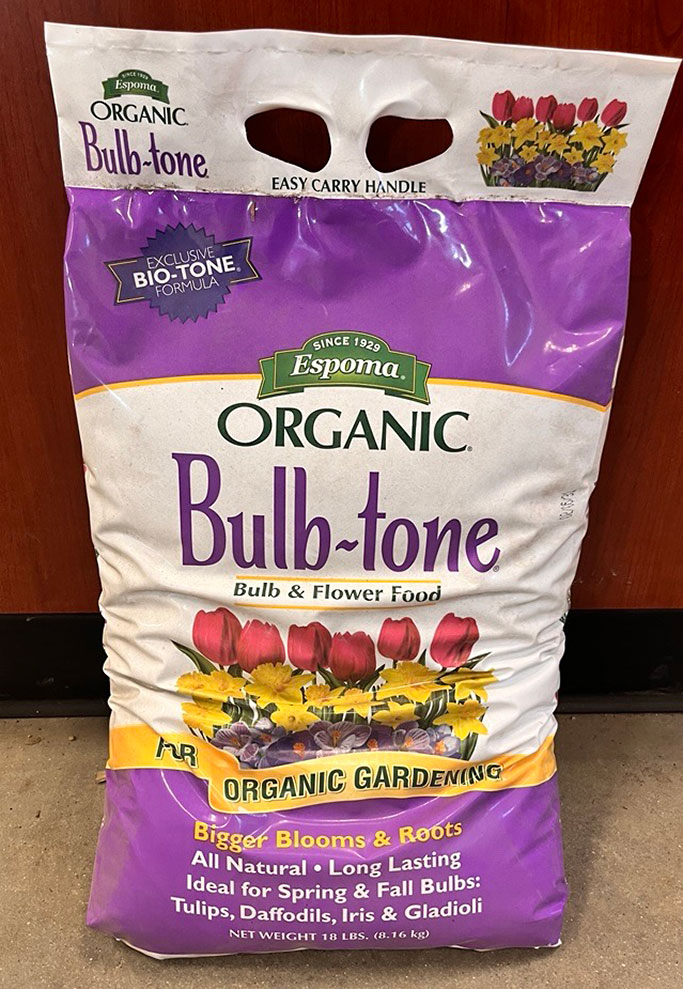
  7. Bulbs → Bulb-Tone
  8. Turf → Milorganite

If you'd like a little more detail, here's a closer look at each fertilizer and where it fits best in the landscape.

Product

 Recommended Use

Bio-Tone Starter Plus

Starter fertilizer for newly installed trees, shrubs, perennials, and annuals. Contains beneficial microbes and encourages strong root development while reducing transplant shock.

General Purpose 12-12-12

A balanced fertilizer for general landscape use. Good for established trees, shrubs, flower beds, and situations where a quick nutrient boost is needed.

Holly-Tone 4-3-4

Formulated for acid-loving plants such as hollies, azaleas, rhododendrons, blueberries, and many evergreens. Helps maintain proper soil pH while feeding.

Plant-Tone 5-3-3

An all-purpose organic fertilizer for trees, shrubs, flowers, and vegetable gardens. Easy recommendation when customers want one product for most landscape plants.

Rose-Tone 4-3-2

Designed for roses and flowering shrubs. Promotes healthy growth and abundant blooms without excessive vegetative growth.

Osmocote Blend 17-5-11

Professional-grade controlled-release fertilizer that feeds for several months. Excellent for trees, shrubs, landscape beds, container plantings, and commercial installations where long-term feeding is desired with fewer site visits.

Flower-Tone 3-4-5

Formulated for annuals, perennials, and flowering plants. Higher phosphorus and potassium support strong flowering and bloom production, helps strengthen root growth.

Fertilizer Stakes 15-7-6

Convenient slow-release feeding for trees and shrubs. Good option when customers want targeted feeding with minimal labor.

Bulb-Tone 3-5-3

Designed for bulbs such as tulips, daffodils, lilies, and alliums. Supports root development and improved flowering.

Milorganite Pro 6-4-0

Slow-release nitrogen fertilizer commonly used on lawns, turf, and landscape beds. Feeds gradually, improves soil health, and has a very low risk of burning plants. Excellent for sod establishment and maintenance.

Ferti-Lome Root Stimulator Plus B-1

Used at planting time to reduce transplant stress and encourage root establishment for trees, shrubs, flowers, and bedding plants.

Application Tips

  • Bio-Tone: Mix into the backfill during planting.
  • Root Stimulator: Water in at planting.
  • Plant-Tone, Holly-Tone, Rose-Tone, and Flower-Tone: Mix into planting beds during installation or apply to the soil surface around established plants and water in.
  • Osmocote: Apply to the soil surface under mulch or lightly incorporate into the root zone.
  • Milorganite: Broadcast over turf and water in.

Christensen's prides itself on partnering with landscape professionals to help them install and maintain beautiful, successful landscapes.

While fertilizer can help plants establish and thrive, more is not always better. Fertilizer is most effective when plants are healthy and actively growing. Avoid fertilizing plants that are drought-stressed or experiencing significant transplant shock. Sites amended with quality compost may also require less fertilizer than expected. In most cases, proper watering, soil preparation, and planting practices will have a greater impact on long-term plant success than fertilizer alone.

Box Tree Moth and The Future

For the past several years, it seems that every new pest or disease affecting boxwood has sparked another round of conversations about removing these iconic shrubs from the landscape. Most recently, the arrival of box tree moth in southeastern Michigan has many homeowners wondering if it is time to replace their boxwoods with something else. In my opinion, the answer is still no. Boxwood has earned its place in our landscapes over decades of performance. Few shrubs can match its year-round color, versatility, deer resistance, and ability to provide structure and formality in the garden. While box tree moth is certainly a challenge, it is a manageable one.

The key is understanding that box tree moth is an insect pest, not a death sentence for every boxwood plant. Like many landscape pests, it can be effectively controlled through regular monitoring and timely treatment. Homeowners and landscape professionals who inspect their plants for feeding damage, webbing, caterpillars, or defoliation can often identify problems before significant damage occurs. Several treatment options have proven effective when applied at the proper time. For example, Btk (Bacillus thuringiensis var. kurstaki) is readily available. The reality is that maintaining healthy boxwoods through monitoring and treatment is often far less disruptive and less expensive than removing mature plantings and starting over.

When considering alternatives, it is important to remember what would be lost. Boxwood has long been the standard for foundation plantings, formal hedges, and landscape accents because few shrubs offer the same combination of size, density, evergreen foliage, and tolerance of pruning. Even Michigan State University Extension, while discussing alternatives, acknowledges that there are currently no perfect replacements that fully replicate the performance and appearance of boxwood. Replacing established shrubs often means waiting years for new plants to reach the same size and visual impact already present in the landscape.

For landscape contractors and homeowners in southeastern Michigan, my recommendation is simple: don't give up on boxwood. Learn to recognize the signs of box tree moth activity, work with a knowledgeable landscape professional, and implement a treatment program when necessary. With proper care, boxwoods can continue to provide the timeless beauty and structure that have made them a landscape favorite for generations. The best boxwood replacement is often the healthy boxwood already growing in your yard.

Air Cured Resin Joint Sand

Installing joint sand on paver projects is crucial for both the structural longevity and lasting aesthetics of the installation. All joint sand fills the gaps between concrete pavers to lock them together, creating a rigid yet flexible surface. It evenly distributes weight, stops pavers from shifting, prevents weed growth and keeps out insects.


Today though, we're tip-toeing into air-cured, resin paver joint sands.


If you’ve been installing pavers for a while, you already know joint sand can make or break a job. It’s the last stage of the project and often the final step before you collect your check.
With polymeric sand, installers must keep a close eye on the weather, temperature, and even ground moisture levels that may keep your concrete pavers too moist on a shady day.

That’s where air-cured resin sands have been gaining traction. From our side of the counter at Christensen’s, we’re seeing more contractors make the switch simply because it takes a lot of the guesswork out of the process. Site prep and scheduling are more straight-forward. Yes, it’s initially more expensive than traditional polymeric. But it’s also more forgiving and less weather-dependent. With resin sand, you’re not racing the clock or watching the weather the same way you are with polymeric. There’s also no chance of polyhaze showing up after the pavers have dried and your crew has left the site.

The big win we keep hearing about is workflow. You can pack up larger equipment, clean your site, and move right into sanding the same day. No scheduling a return trip on a dry day just to finish joints! For companies juggling multiple jobs, this is real time-saver. As the saying goes “Time Is Money

The installation is straightforward. 

  1. Clean the compacted pavers surface, leaving it slightly damp (not flooded)
  2. Sweep or squeegee the sand into the joints with the help of a garden hose.
  3. Sweep off the excess
  4. Lightly mist to settle everything in.

After that, it cures from the top down as the resin becomes exposed to air. No mixing, no polyhaze, and no stressing about a surprise rain shower rolling through right after you leave.

Gator Nitro Joint Sand (stocked at Christensen’s) brings something extra to the table with its semi-permeable setup. It firms up hard and allows water to pass through. This can help with jobs where drainage matters or where permeable specs come into play.

Gator Nitro-X Fine Joint Sand installs the same way as the original Gator Nitro, but features a finer grain, making it a better fit for tighter joints and more refined surfaces. This tighter joint surface encourages water to sheet from your paved area. This may be especially useful near pools where you may grade towards a drain channel.

At the end of the day, resin joint sand isn’t necessarily about replacing every bag of polymeric sand you use. It’s about having another tool that’s a little more foolproof when conditions aren’t perfect or timelines are tight. Resin sand may offer a smoother day on site, and fewer return trips just to deal with joints.

Value Statements

Creating a Value, Mission or Vision Statement can have the connotation of corporate nonsense, especially to small businesses. As a sole owner of a landscaping business, you know who you are. You know what your goals are. And you only have a few employees.

But the creation of a value statement is especially important for small businesses. A successful small business grows by customer referrals. “In most businesses, you don’t just want employees and customers: you want evangelists. You want to overhear your employees bragging about how much they love their work, and your customers referring their friends and family to you.” Customer confidence in your company will grow if they know, understand, and see you standing behind your values, even if they are as simple as Red Bull’s: “Ideas, people, culture”.

Value Statements are also beneficial in employee hiring and management. Once a company has defined its values it allows for the hiring of people willing to align with those values. This in turn increases employee loyalty and engagement. According to an article on Medium.com, “The McKinsey Global Institute has established that productivity improves by 20 to 25 percent in organizations with connected employees.” The same article goes on to cite a Gallup pole that indicates when employees can say “The mission and purpose of my organization makes me feel my job is important”, absenteeism and safety incidents drop and the quality of work increases.

Value Statements provide employees with a roadmap and empower them to act. Company growth necessitates sending employees to a project without the benefit of constant oversight by ownership/management. If employees were hired under, and expected to adhere to, the standards of a Value Statement, they are more likely to complete work as expected.

While Value Statements are at the heart of a company’s identity, they should go through regular review. Christensen’s is in the middle of such a review. Even with the tweaks, our commitment to customer service will not change. But you may notice employees with a renewed sense of investment in their jobs, the company and you.

Christensen’s Values

Integrity

                Honesty, transparency and ethical behavior in all actions and decisions

Teamwork

                Respect for others, personal accountability and effective communication

Ownership

                Takes initiative, responsible, passionate and is committed to customer service

Reframe the Winter Blues

Snow ruins everything

OK, maybe not everything. I had fun playing in the snow as a child, building snowmen, having snowball fights with neighborhood friends, and sledding on the hill in our yard.  There was one year when we had so much snow, it was over my head as I traversed our front sidewalk!! Growing up in Minnesota, snow was part of life just like it is here in Michigan.

However, as I aged, snow became less fun. My family was not into winter sports (skiing, snowmobiling, ice fishing). It just became the white stuff that caused problems.

There was the year that my 17th birthday weekend was marred by two separate car crashes caused by snow-hidden ice patches. My mother gave me my first curfew after the revving engine of my boyfriend’s truck woke her while we tried to get it unstuck after an unexpected snowfall. Getting married in February, I stressed over the possibility of my in-laws trapped in Fargo, ND and missing our wedding since the interstate would shut down during snowstorms. Trapped in Fargo by blizzards has become an annual problem when we visit for the holidays. As a mother of teenage and adult children, I worry about them driving in it.

But when plans to attend GLTE in January 2025 fell through because of lake effect snow, I decided to try and reframe. I don’t think I will ever be excited to see snow. But with no intention of moving south, it was time to find the positives.

Snow blankets the outside in pure, beautiful, white, covering the “blah” of hibernating plants. It can help lighten the winter blues.

Snow offers opportunity for quiet. Have you ever gone outside after a recent snow and noticed how quiet the world is? Snow’s insulating properties can be a respite from the world’s constant “noise”.

Snow is essential to our ecosystem. According to the National Snow and Ice Data Center, “Snow cover helps regulate the temperature of Earth’s surface, and once that snow melts, the water helps fill rivers and reservoirs in many regions of the world”, providing early spring moisture to awakening plants.

Snow forces us to slow down, literally, and figuratively. Lower road speeds are necessary. But snow also reminds us of the importance of arriving safely at our destination or making the difficult decision not to travel.

Winter is a time of respite for many of us in the Green Industry. Spring, summer and fall can bring long hours of hard work and time lost with family and friends. But winter is quieter, allowing us to catch up. Winter hobbies can be rediscovered.

Snow is also a source of income for many in the Green Industry. When planting isn’t possible, many Christensen’s customers turn to snow removal. Fingers crossed, it will be a bit before the flakes fly. But businesses need to plan. Christensen’s already has Ice Melt in stock, with options to order in larger quantities. Contact your salesperson today to inquire!

Mixed Load Deliveries

Smarter Deliveries, Smoother Jobs

In landscaping, timing and coordination are everything. One late pallet can throw off your crew and cost you money. That’s why Christensen’s Plant and Hardscape Centers stocks plants, hardscape, drainage, and lighting—and can deliver them together!

Mixed loads save headaches:

  • One ETA, one invoice, one vendor
  • Less downtime waiting on material
  • Allows more time for plant placement, leading to “upsell” opportunities.

Our shipping team makes sure plants stay protected, hardscape stays tight, and moisture-sensitive products are packed where they’ll stay dry.

Pictured here is the flatbed trailer. Once the material is safely loaded, the Shipping Department carefully tarps before leaving the yard.

Christensen's Shipping Department has several types of trailers, perfect for mixed loads.

Pictured here is the Conestoga, along with "Driver Dave", loading a box of drain supplies.

Tips to help deliveries, and your jobsites, run smoothly

  • Store plants in a water-accessible area, with shade if possible.
  • Store adhesives and polymeric sand in a dry area, such as inside a truck or trailer.
  • Stage materials in the order your crew will install them, moving items as few times as possible.

Your partner in sourcing premium materials

When a contractor designs projects mindful of the materials stocked at Christensen’s, it prevents delays and simplifies reorders. This, in turn, improves consistency and keeps projects moving. It also adds the potential of a single delivery.

At the end of the day, single-source purchasing isn’t just convenient, it’s strategic. Let Christensen’s Plant and Hardscape Centers manage the logistics, so your crew can focus on creating landscapes that impress.

Water Wars

Every year, our local high school seniors organize what has affectionately been named “Water Wars”.  A non-school activity, it is effectively a huge water balloon and squirt gun fight, all done in the spirit of good, clean fun. That event got me thinking of Landscape Water Wars”.

“Landscape Water Wars” is also an annual occurrence that starts around July 4th, when Christensen’s starts receiving numerous phone calls regarding plants that have defoliated or declined. The week after the holiday tends to be when we receive the most phone calls since it’s usually one of the first, really, hot weekends. Many times, it’s also a long weekend, leaving plants to rely on new irrigation systems for the first time without much attention.

So, I thought I would take a moment to give everyone a friendly reminder to pass along to your homeowners and building managers.

New plantings need a thorough watering every two to three days for the first month or two. Moving from pot to landscaping is stressful and they need to be weaned from the scheduled watering they receive at the nursery. At Christensen's, plants are watered a minimum of twice a day. This is what plants are used to, making the weaning process very important.

  • Water slow enough that the water does not run off, and long enough to get the newly planted root ball wet. For the first month, the roots are only in the root ball. As a result, this is the only place where the plant will get water.
  • The ever-popular Hydrangea will be the first indicator of a lack of water. Hydrangeas will wilt within 24 hours of insufficient water and drop leaves within 3-4 days. Keep an eye on these to see if your landscape needs water.

After the first two months, watering may be reduced to every five to seven days, depending on the air temperature and the amount of wind we have experienced.

Over-watering can be just as problematic. Unfortunately, it presents with many of the same symptoms as under-watering. So, watering needs to be measured and monitored.

All of you, our awesome contractors, install such beautiful landscapes for your clients. It kills me to see them injured or destroyed by something so preventable. 

I suggest incorporating plant care and homeowner education into every job, so your projects thrive, and your clients continue to celebrate their new landscape.

Benefits of Planting Native Perennials


You may have heard of the rise in popularity of native perennials, making you wonder, “Why should I plant them?”. Well, there are many reasons! 

Native plants are beneficial to our environment. Not only do they provide habitats and food for insects and animals, but they create a healthier place for us and our communities. Native perennials are excellent pollinators and will fill your garden with beautiful flowers, attracting butterflies, hummingbirds, and more! They are also beneficial because they help reduce noise and carbon pollution! Finally, natives require less water due to being adapted to their native environment, saving you money and time!

One of my favorite Michigan natives is Asclepias tuberosa (Butterflyweed). This plant is beautiful in all seasons. The star of the show is its stunning orange flowers that bloom mid-summer. Fall interest continues with unique seed pods! Not only is this plant beautiful, but it is also food for Monarch Caterpillars. By planting Asclepias Tuberosa, you can rest easy, knowing that you are helping preserve one of the most beautiful, and vulnerable, butterflies in North America. Stop by the perennial lot and check out our Asclepias tuberosa. Look closely and you might see the stunning Monarch caterpillar yourself!

Another showstopping Michigan native available at Christensen’s is Lobelia cardinalis (Cardinal Flower). This crimson red beauty is known for its deep, tubular flowers that attract hummingbirds. This plant is commonly found in wetlands, so it will tolerate wet areas and a variety of soils. This plant is an easy to maintain, late-summer bloomer! Check them out today!

Last, but not least, are the Echinacea purpurea (Purple Coneflower). This plant is native to prairies, meadows and woods, making it a very diverse and easy to grow Coneflower. Its bushy foliage and purple flowers provide interest all summer long. Once the flowers are spent, if not dead headed, they will last well into winter, allowing Finches and other birds to munch on their seeds. Fun Fact: Echinacea comes from the Greek word ‘Echinos’, meaning Hedgehog or sea urchin, describing the flowers’ spiky look. Can you see the similarity to the hedgehog in your email?


Landscaping choices have a meaningful effect on the world around us and our communities. Selecting natives not only benefits the insects and birds, but also the people. Making the choice to plant natives will give your customers low maintenance, pollinating options that will make the world a better place!

(Note: Although we do carry many Michigan native plants at Christensen’s there are many more that can be special ordered! Don’t hesitate to inquire about natives and we will do our best to get you what you need!)

It’s the Law

Why Tarping Bulk Material Matters

Keeping your load secure isn't just about safety.

It's the law! (MCL - Section 257.720)

Secure Every Load

Trucks must be loaded in a way that nothing falls, leaks, or blows off while driving.


Seal All Openings

Make sure tailgates and tarps are tightly closed and secured to avoid spillage.


Watch for Gaps

Check your truck for any holes or cracks that could let materials escape.


No Spillage?

Still a Violation

Even if nothing falls off, an unsecured or improperly loaded vehicle can result in a fine.


Responsibility Falls on

More Than the Driver

Anyone involved in loading a truck that enters the road unsafely can be held responsible, not just the person behind the wheel.


Penalties for

Non-Compliance

Violating these rules can result in more than just a ticket:

- Up to $500 fine

- Up to 90 days in jail

- Or both

1 2 3 7