Kim Roth – Sticks & Stones

Tag Archive

Tag Archives for " Kim Roth "

Hydrangea Chaos

Not sure how we got here. But alas, we're in Hydrangea chaos, yet again. Lately, it seems like every hydrangea has an evil stepbrother trying to knock him off. I must tell you that we carry way too many and there are thousands more to choose from. (That may be a slight exaggeration.) Oh, where to start! (I am only listing what you should expect Christensen’s to carry)

Let’s start with arborescens (Smooth Hydrangea). Arborescens flower on new wood. So, prune if needed and they will re-flush.

Annabelles' remain a staple and Christensen’s sells hundreds.

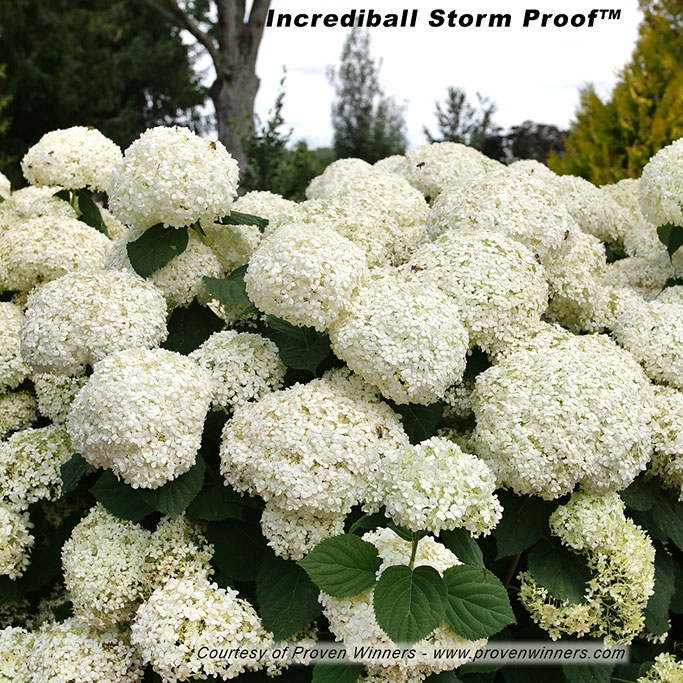
Incrediball® is considered an improved ‘Annabelle’ with bigger flowers and stronger stems. They are tolerant of both clay and alkaline soils as well as salt and shade.

The Incrediball® Series includes:

  • Incrediball® Blush, a reblooming ruby red and pink ‘Annabelle’. Overall the shrub will get 5x5 but has a stout look to it. The flowers are huge and hold well on the stems.
  • Incrediball Stormproof™, the newest of the group, it has a slightly smaller flowers than other Incrediballs® and thicker stems.

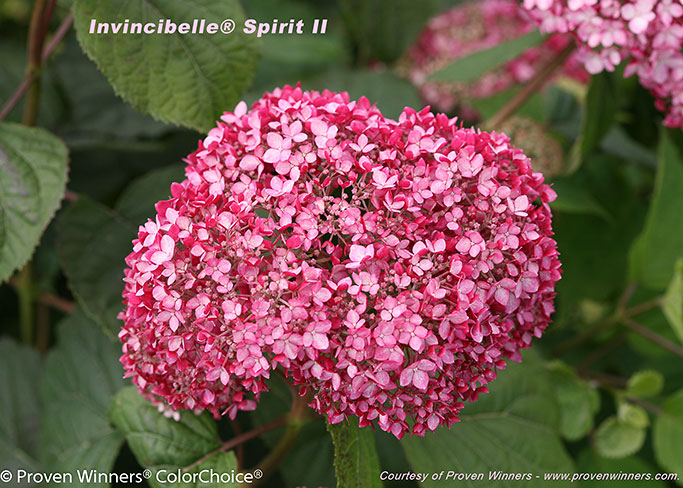
Invincibelle® comes next. The original Invincibelle® was considered the “Pink Annabelle”. It disappeared fast and was replaced by Invincibelle® Spirit II, which is still pink but with stronger stems to hold up the large flowers.

P.S. For every Invincibelle® series Hydrangea sold, Proven Winners donates $1.00 to Breast Cancer research.

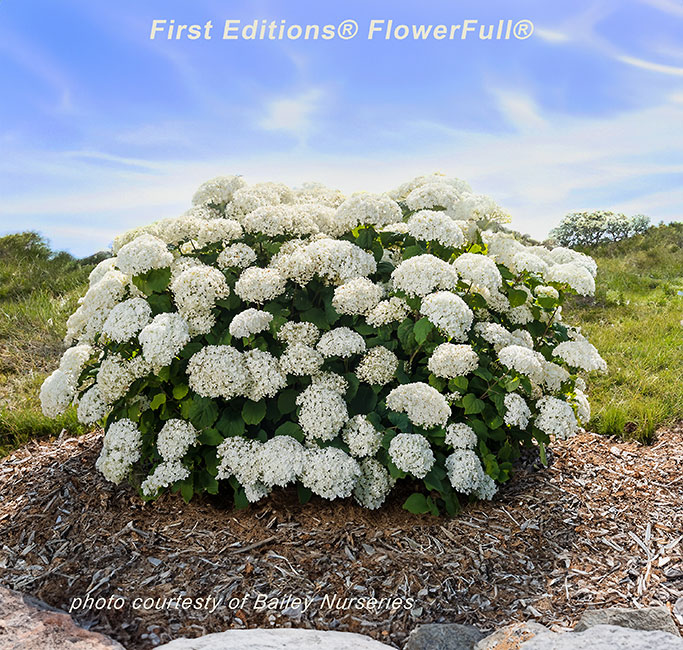
The newest arborescens is Flowerfull®. Size-wise, it’s in the middle reaching 3-4’ x 4-5’ with strong stems and large white flowers (ageing green). It is listed as having great disease resistance.


Let’s move on to the “Big Leaf Hydrangea” (macrophylla).

Over the past few years, there has been a slew of new varieties added to the reblooming Endless Summer® Collection. Some have been around for a couple of years but are just now getting their 15 minutes of fame.

The collection includes:

  • Endless Summer® The Original
  • Bloomstruck®
  • Twist-n-Shout®
  • Summer Crush®: raspberry-red, unaffected by soil alkalinity and one of the shortest at 18-30” tall
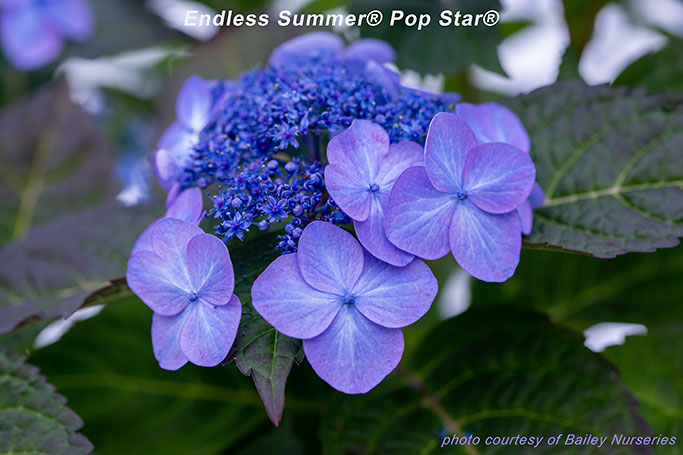
  • Pop Star®: blue or pink, another one at 18-30”, a lacecap

Making it’s Christensen’s debut in 2026 is Dream Cloud® with their white, mop-head flowers and on a 3-4 x 3-4’ plant.

Before we head into the paniculatas, I would like to highlight a few other lacecaps from the Tuff Stuff® series. Christensen’s has carried these for a few years now and they have held up very well in the nursery. The original Tuff Stuff® is a 2-3’ tall rebloomer with blue or pink flowers. Christensen’s will also carry:

  • Tiny Tuff Stuff™ is quite small at 18-24" x 18-24" with blue or pink flowers
  • Tuff Stuff Ah-Ha® is 3' x 3' with blue or pink flowers
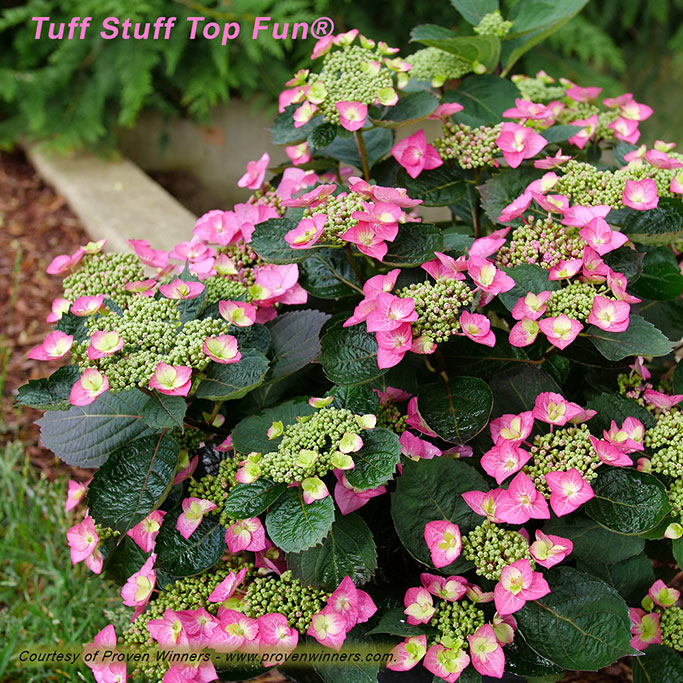
  • Tuff Stuff Top Fun® is 3' x 3' and purple with pink flowers BUT it also has red stems

OK, now we can discuss paniculatas.

Hydrangea paniculata Bobo® are The O.G. panicle hydrangea, no evil stepbrothers in sight. Bobo® are 24-30 x 36-48”, with strong stems, a rounded habit, white flowers and look like they belong on a macrophylla (big round ball flowers) and not a paniculata (usually more of cone shape). The flowers are also sterile, so they just bloom and bloom. 

Hopefully your coffee cup is full - here comes the mess.

‘Limelight’ has been around forever. Reaching 8x8 with green flowers that age pink, red, burgundy. For now, these are still available.

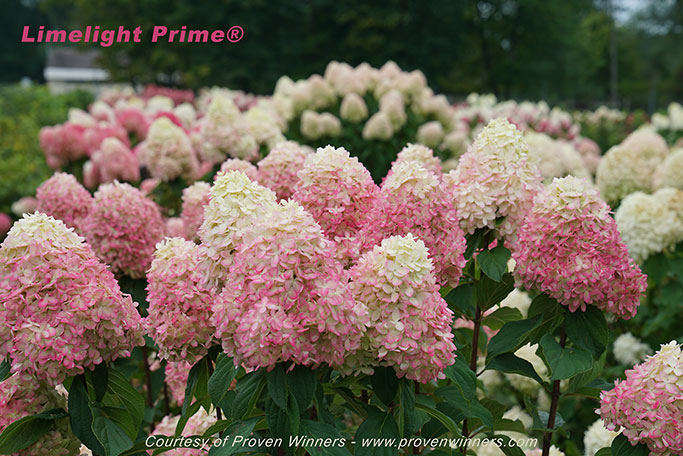
However, Limelight Prim is looking to knock off ‘Limelight’. Primes® still have the green flowers that age to red and pink tones. But Limelight Prime® are a little shorter at 6’ x 5’ with stronger stems and bloom earlier, giving you a longer season of color.

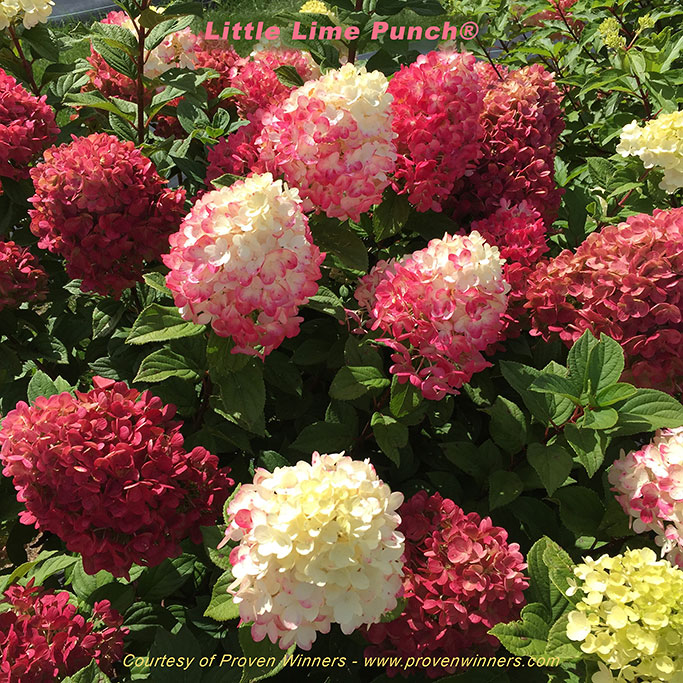
Little Lime Punch® is the middle brother, reaching 5’ x 5’ but I think it holds its shape better with very strong stems. Little Lime Punch® flowers emerge green but age to a rich red with pinks and whites mixed in. Also, the flowers start the color change at the bottom and work up the flower stalk giving an array of colors before autumn.

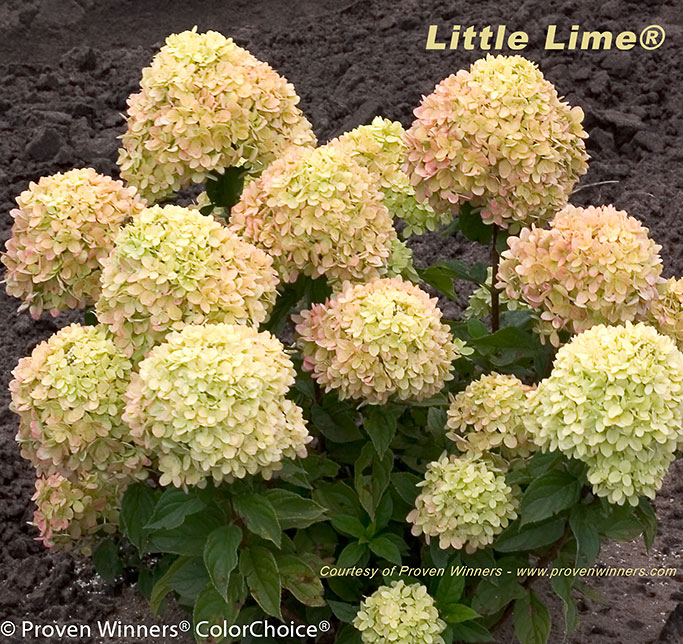
At 3-5' x 3-5', ‘Limelight’s baby brother can be found in its dwarf version, Little Lime®.

Little Lime® has the same green flowers but age more red.

‘Quick Fire’ Hydrangea and all its children bloom about 1 month earlier than other paniculatas, providing a little longer show.  They come in at 8’ x 8’, start flowering white then age pink with great fall color.

Little Quick Fire® is one of my favorites and a dwarf of ‘Quick Fire’, at only 3-5’ x 3-5’. The flowers are white, age pink and the red stems stand out on the plant.

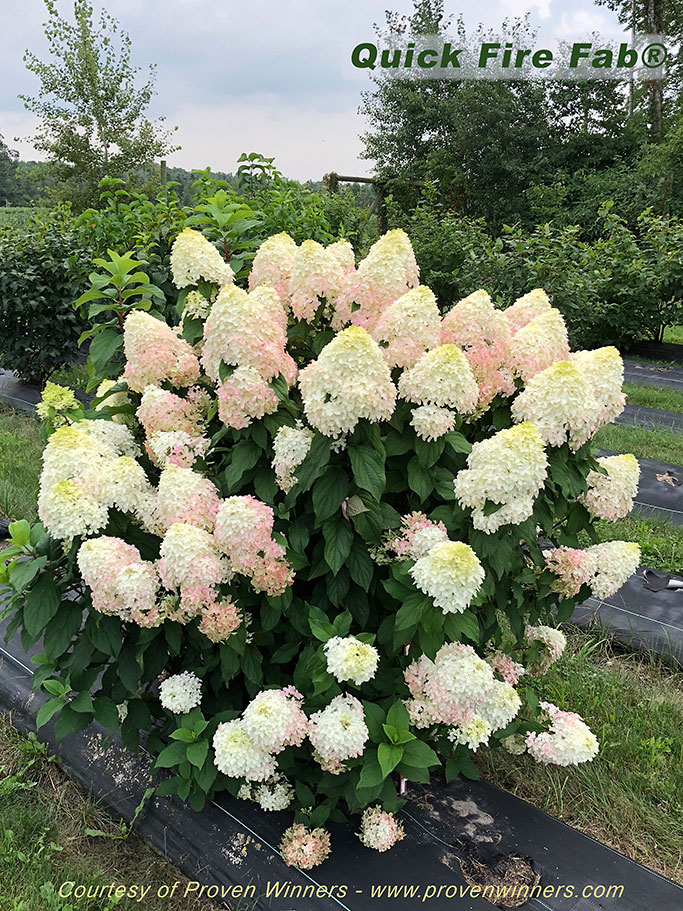
I don’t know why. But with a name like “Fab” I thought Quick Fire Fab® was small – it is not. It is around 7’ x 6’. Unlike their parent, Quick Fire Fab® flowers are pink mopheads then age to red than white. Their stems were also bred to be stronger.

Moving on to another standard - Pinky Winky®. “Pinkys” come in at 6-8’ x 6-8’ with white flowers that age pink. The flowers can also be up to 12” long making for a very showy plant

Now there is also Pinky Winky Prime®. It is touted as having much stronger stems than its parent. Otherwise, it’s similar to the original.

Phew, almost to the end. (You thought I was joking!)

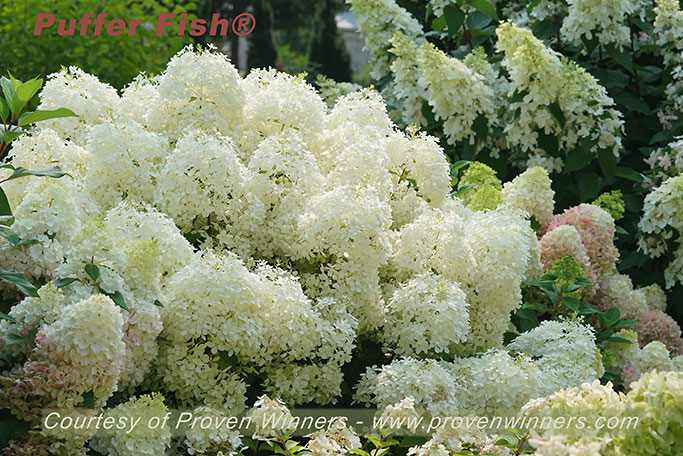
Puffer Fish® Hydrangea’s claim to fame is it has so many flowers you cannot see the plant! According to Proven Winner, "Puffers" are a Bobo® but puffier on a compact 3-5’ x 3-5’. The flowers are white and age green on strong stems.

Powerball® is one of the newest from Proven Winners. Powerball® has mop head flowers on strong stems, starting lime, aging white and pink. It is also a solid rebloomer with a size of 3-6’ x 3-6’.

Believe it or not, there are still more. We didn't even discuss "Oakleafs". I'll cover those later this summer.

I’m always on the look-out for new varieties that will grow well in Michigan. But they tell me, in order to get a new variety through the gate I have to remove one.

New Shrubs for 2026

“Sooner or later, everything old is new again.” (Stephen King, The Colorado Kid)

Isn’t that true?!! Much of what’s new at Christensen’s this year is new varieties of existing plants or improved versions of plants that have been available for years.

First up is – are you ready for it?

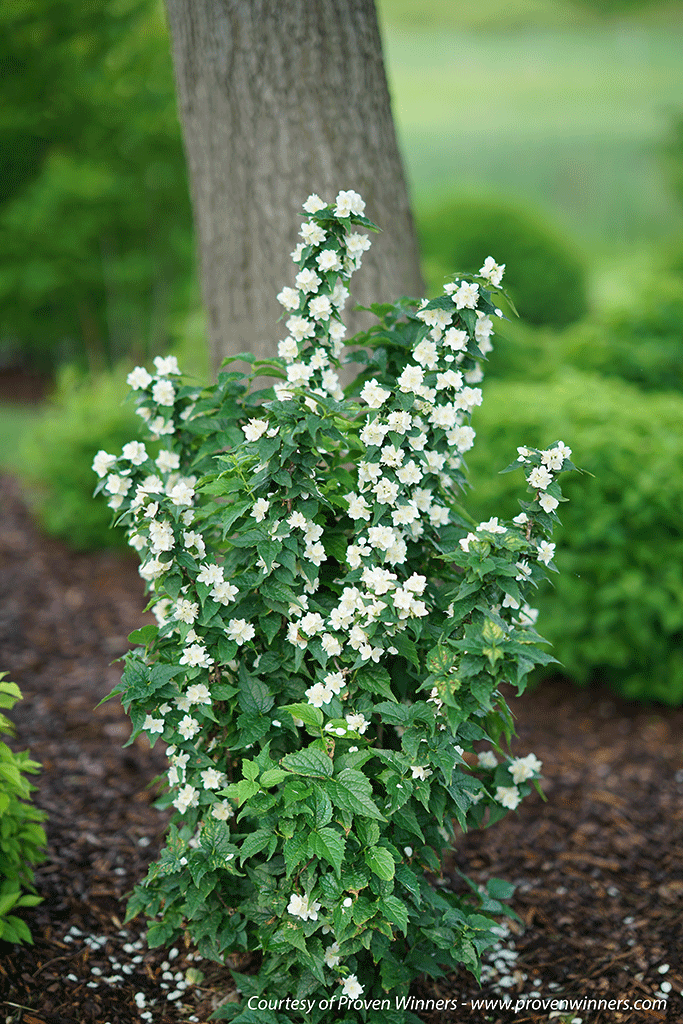
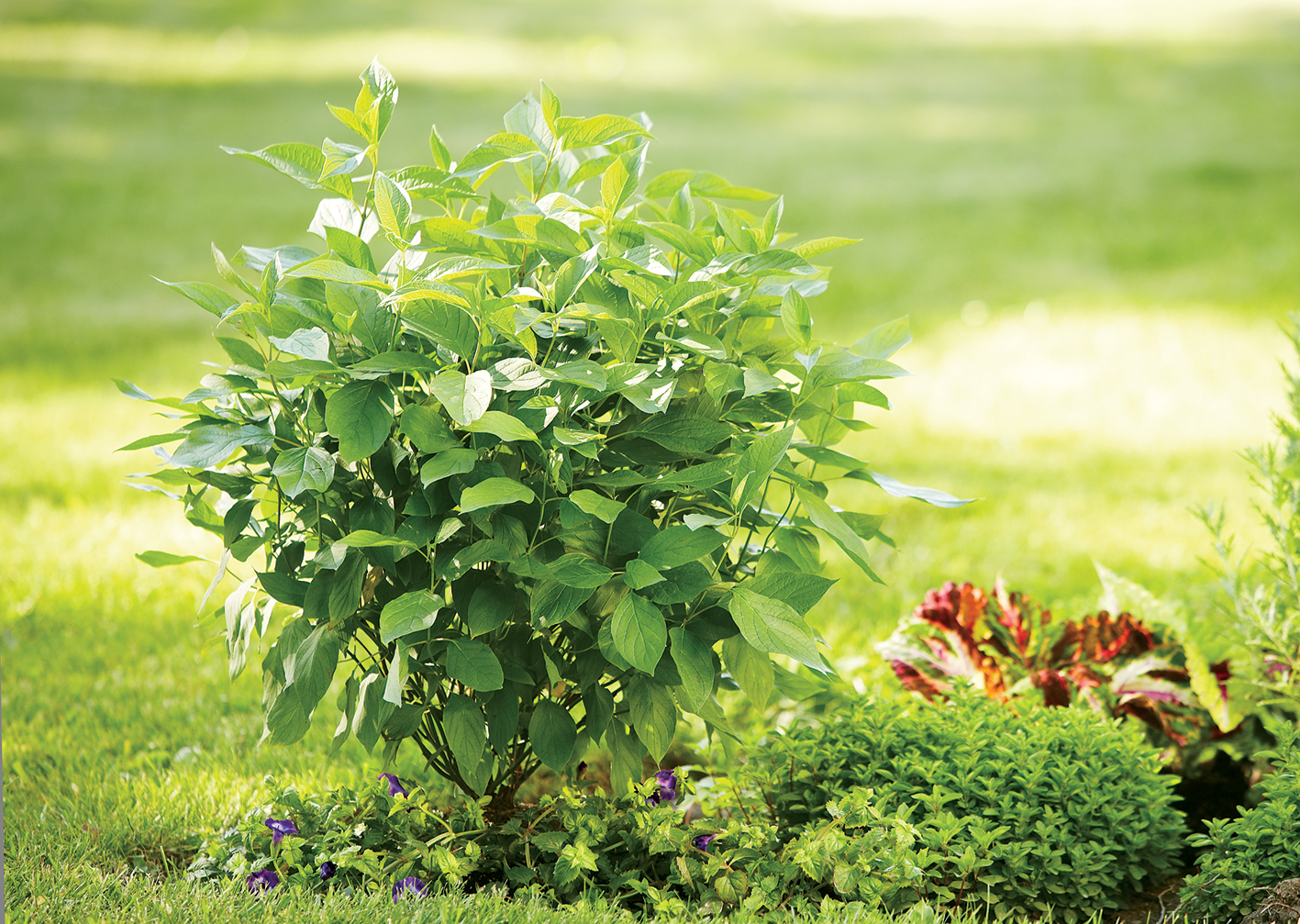
Philadelphus – yep mock orange. The newer Illuminati® Series has turned out to be a very nice mock orange. I planted a couple a few years ago, below a window. I had totally forgotten how sweet they smell and how pretty the flowers are. I was hooked! There are several different heights in the series. Mine are Illuminati Tower® (Philadelphus coronarius ‘SMNPVG’) which flower up and down the stem. It is the tallest at 5’ (3’ spread). 
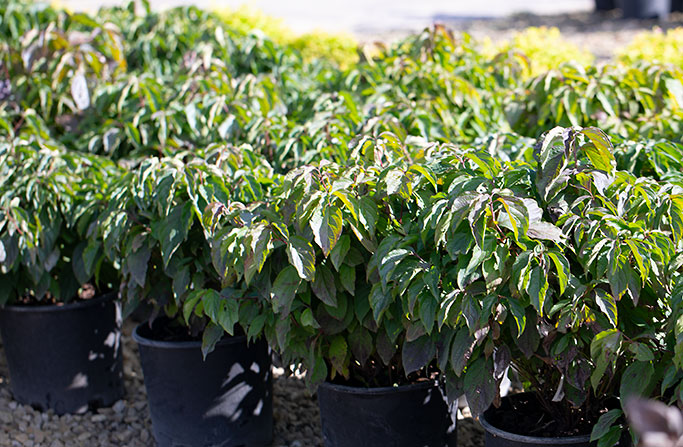
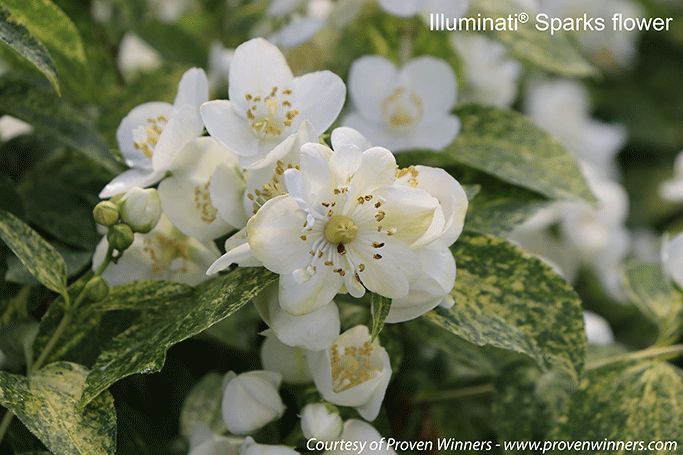
Christensen’s will also have some Illuminati Sparks® (Philadelphus coronarius ‘SMNPVB’),

with its smaller 3 x 3 size. All in the series are well maintained, and all

have deliciously sweet flowers in late spring.


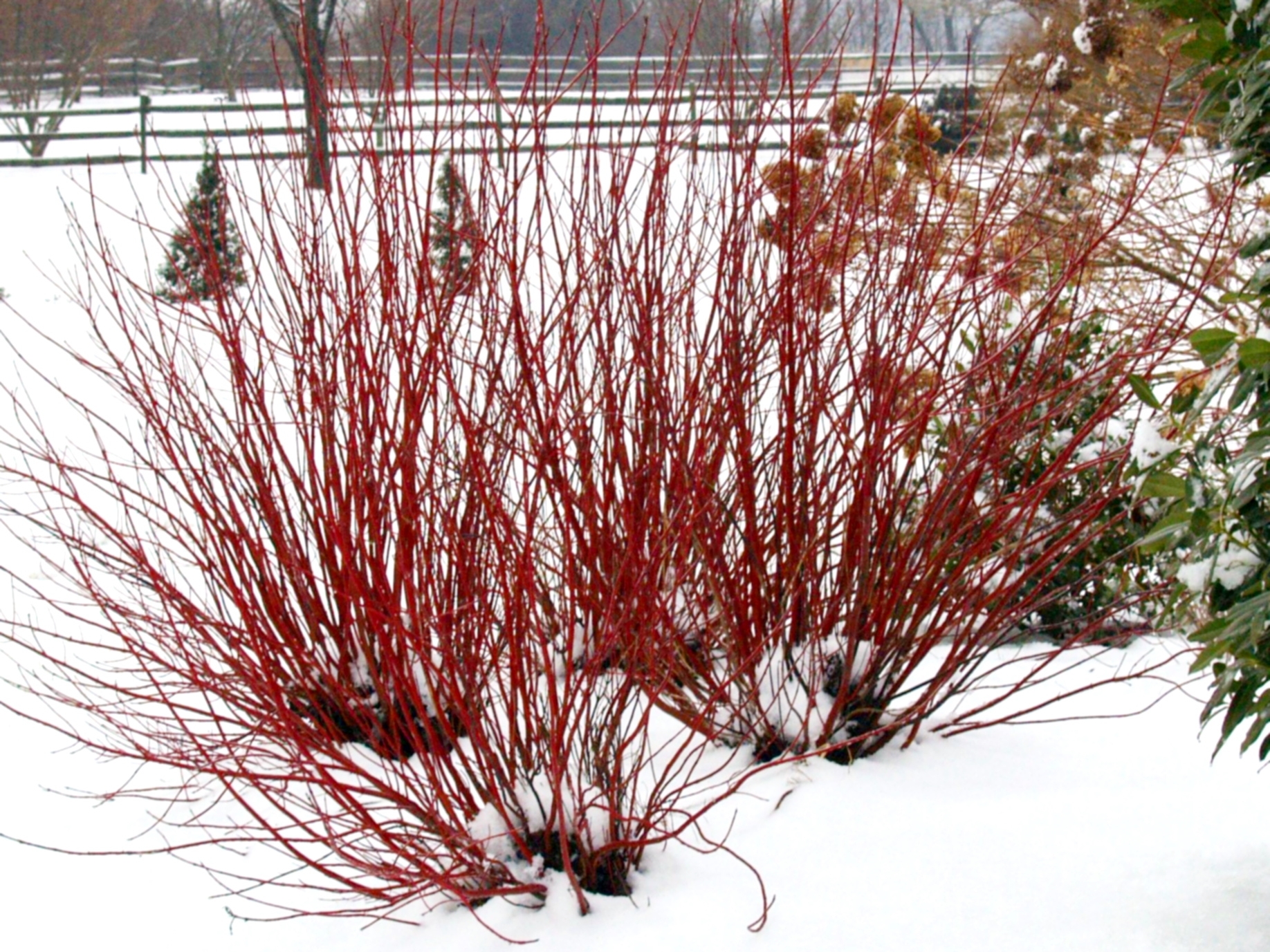
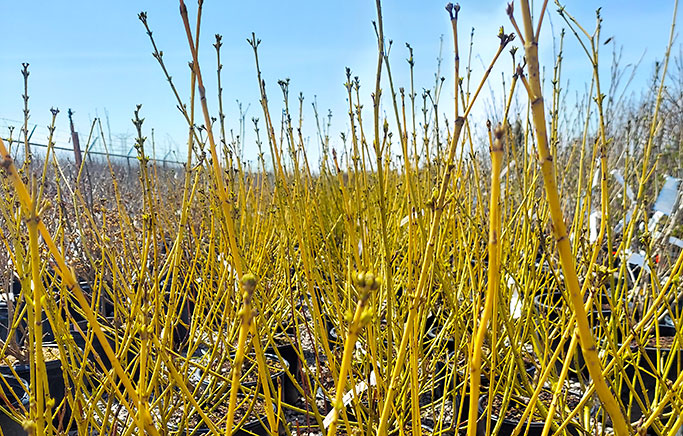
Is it weird to be excited about a new Cornus sericea? “Redtwig” Dogwoods do have a place, looking fashionable in the winter, all dressed up in red. For years the nicest and most colorful was ‘Baileyi’ (6-10 x 6-10'). A true nativar, ‘Baileyi’ was found in a wooded area

and is considered a naturally occurring cultivar. 

The new one, Arctic Fire® (Cornus sericea ‘Farrow’), is bred to only grow about 3-4’ tall and lacks the colonizing habit of the species, therefore it doesn’t spread.


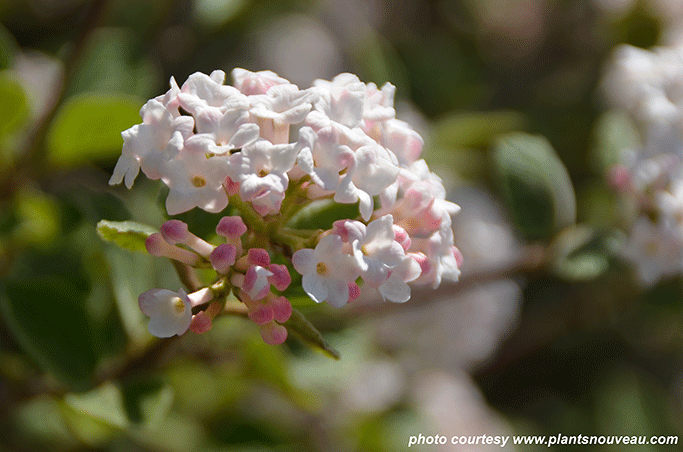
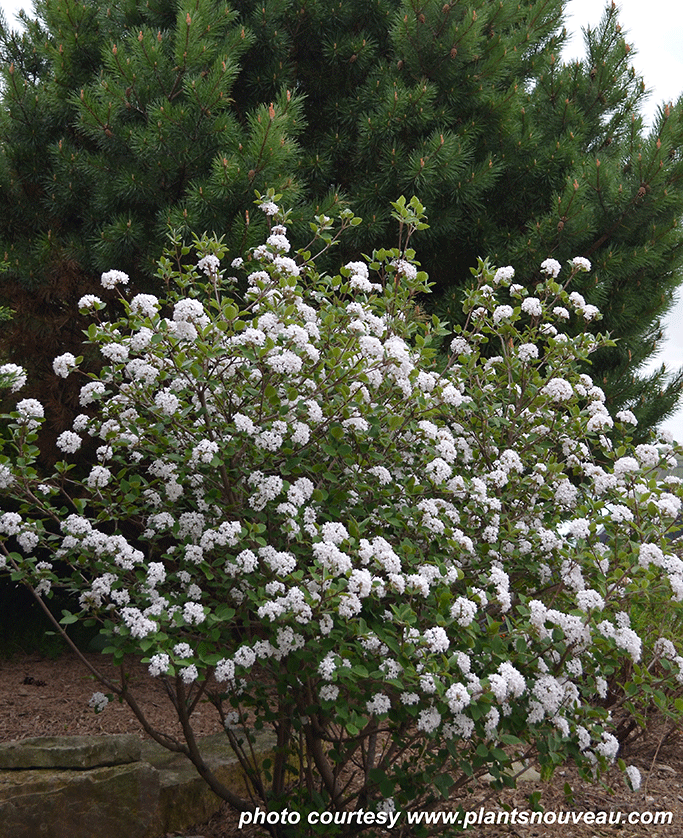
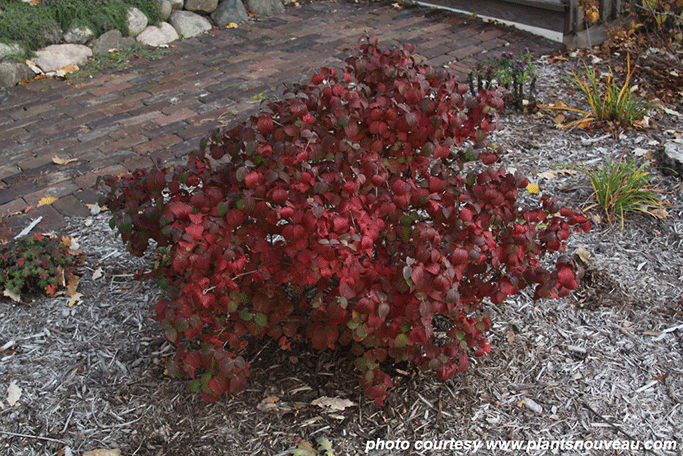
If you haven’t guessed from prior articles, I am a Viburnum FAN. There are a couple of new ones Christensen’s will carry this year. My new favorite is the Sugar n' Spice™ (Viburnum carlesii ‘Select S’). It is a small sized Viburnum (4-6’ x 4-6’) with pink buds, opening to an excess of white flowers. It is a Korean spice bush, so it has a sweet-spicy scent when it blooms in mid-May.

Buds and flower of the Sugar n' Spice™ Viburnum

And just because Viburnum are such an awesome plant, this one morphs

to a brilliant red in the fall to add to the show.

Check back next week for the last in the series... Molly will introduce us to the Perennials.

Woody Bee Plants

Here at the Christensen’s, we get a lot of honeybees. One of our neighbors keeps several hives. The bees look at the Christensen’s yard as an all-you-can-eat buffet! We can be proud of that (until inventory day).

If you were to research planting to support honeybees, it would appear all information points to herbaceous perennials.

However, there is a long list of shrubs that will support honeybees (along with butterflies and hummingbirds).


Azaleas and Rhododendrons are great for early feeding! They also feed butterflies and hummingbirds.

Although insignificant to us, Berberis flowers are just the right size for bees and have lots of nectar. It is also the correct color for hummingbirds to feed. Barberry is home to a caterpillar that will eventually pupate hanging from underneath to become a moth for summer.

Caryopteris ‘Bluebeard’ is the right color and provides ample nectar and pollen. Pushy butterflies try to get the bees off these plants with hummingbirds sometimes entering the fray.

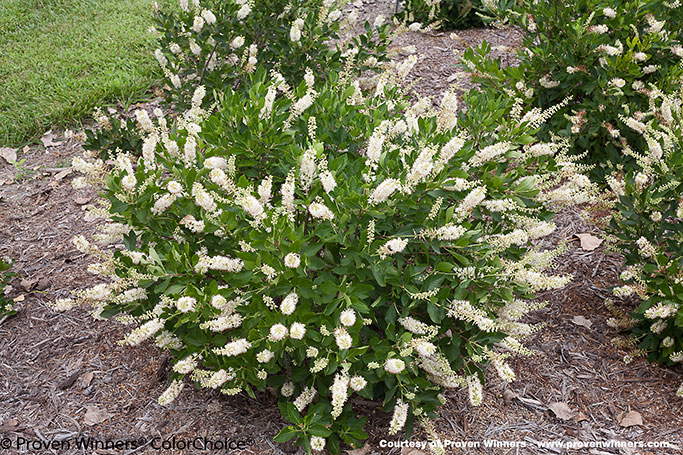
Clethra of any flavor is a bee, butterfly and Hummingbird magnet! The plant produces copious amounts of nectar and pollen. Clethra also flowers at a time when there isn’t much else available for the bees.

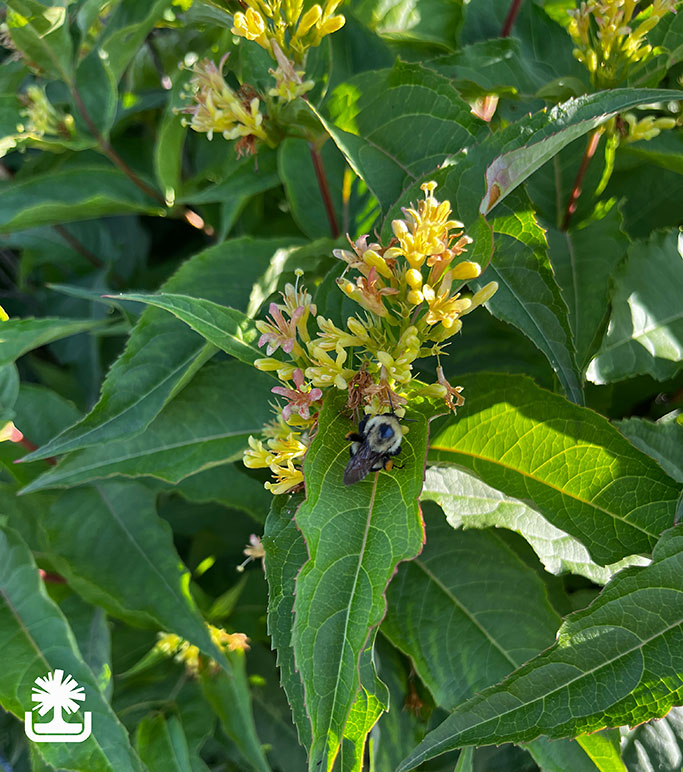
Diervillea. You can’t avoid them, bees need them. They are also a big attraction to hummingbirds and butterflies.

Hamamelis is one of my favorite plants! “Virgin Witches” and vernalis, along with x intermedia hybrids, are great for early spring as well as late fall. “Witch-hazels” attract bees, butterflies and small mammals.

Hydrangea paniculata hybrids. While bees will feed from them, these aren’t a great choice. Some of those flowers were bred for largeness and in the breeding lost the nectar repositories.

Itea (“Sweetspire”) cultivars are bee magnets. Some types of bees are particular and only like one plant. However, all bees like Itea. Itea also attracts butterflies, especially “Skippers”.

Ligustrum vulgare “Privet” it is a wonder food. They produce nectar and pollen. It attracts all bees, butterflies, moths and caterpillars.

Physocarpus opulifolius, and all its cultivars, produce lots of nectar and pollen for bees, as well as butterflies. Physocarpus are also a Finch magnet.

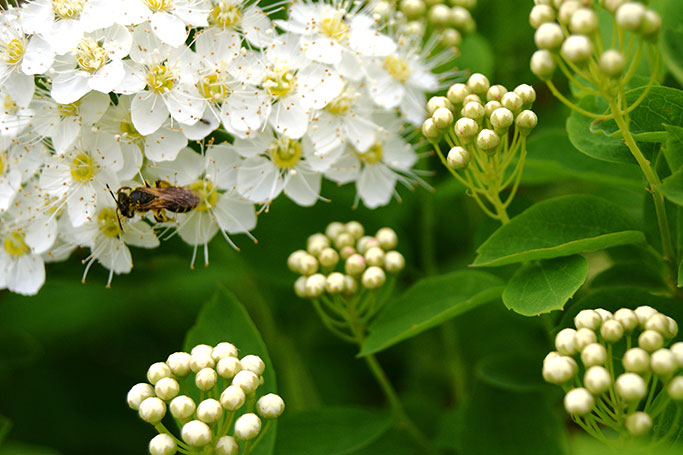
Can you spot the bee on the Diervilla?

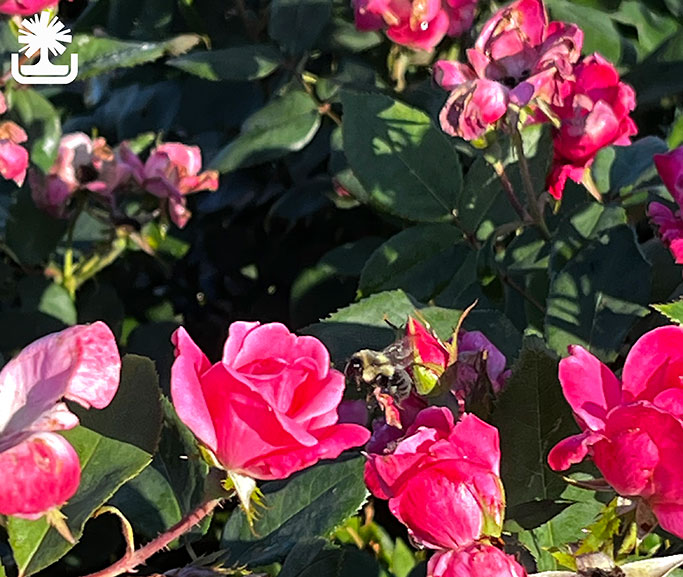
Rosa species and cultivars attract bees. However, the Drift® and Knock Outs® are not good pollinators. They have been bred for other things, losing most of their nectaries. Older varieties, like Rosa rugosa cultivars, are the best for bees and butterflies

Salix species are a favorite food of Queen Bumblebees. Typically, Salix are early bloomers, providing nectar and pollen when not much else has started to flower. They are also butterfly plants. “Viceroy and the “Cloak” Butterflies lay their eggs on Salix and the caterpillars feed on the leaves when they emerge.

I hate having to count Spiraea during the summertime inventory. When you count, you have to move every plant and hope its bees don’t get mad at you! Cultivars available today bloom all year, giving the bees and butterflies a solid food source.

Syringa vulgaris, really any Lilac will do. They are also food for butterflies, several of which use it as a caterpillar plant.

Any and all varieties of Viburnum are heavy nectar producers. If you plan correctly, you can have  Viburnums blooming all season. It is another plant that feeds not only bees and butterflies but also birds and mammals. 

Spring Party!

A long time ago, I would have said, “Ugh!” to shrubs. However, over the last few years, I have grown fond of a few. I thought I would showcase my favorites.

We’ll start with my second favorite.

Fothergilla

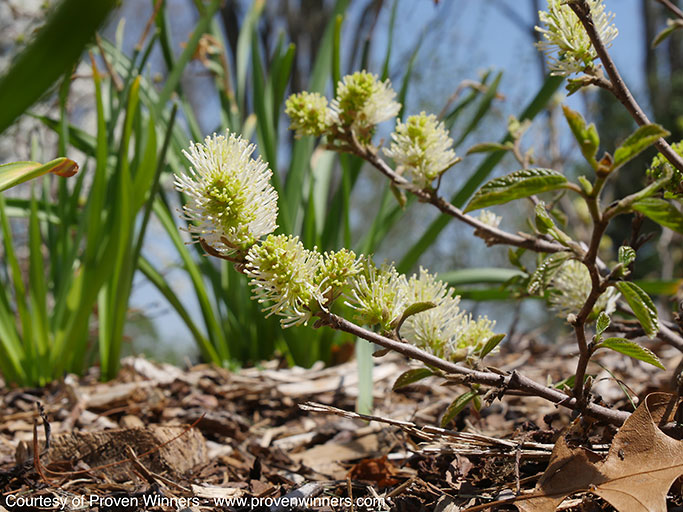
Really? Fothergilla Kim?!?!  You bet. I agree that in the summer, there isn’t much to talk about when it comes to Fothergilla. During the summer it sits in the landscape as a perfectly well-behaved, quiet, little shrub. (Maybe not so little as Fothergilla gardenii gets to be 3-4’ and Fothergilla ‘Mt Airy’ comes in at 4-5’.) But spring brings the WOW effect of flowers! Even with their “dirty white” color, the little “bottle brushes” are adorable! Flowers appear from April until May. Green leaves don’t appear until after the flowers, making the flowers more fab!

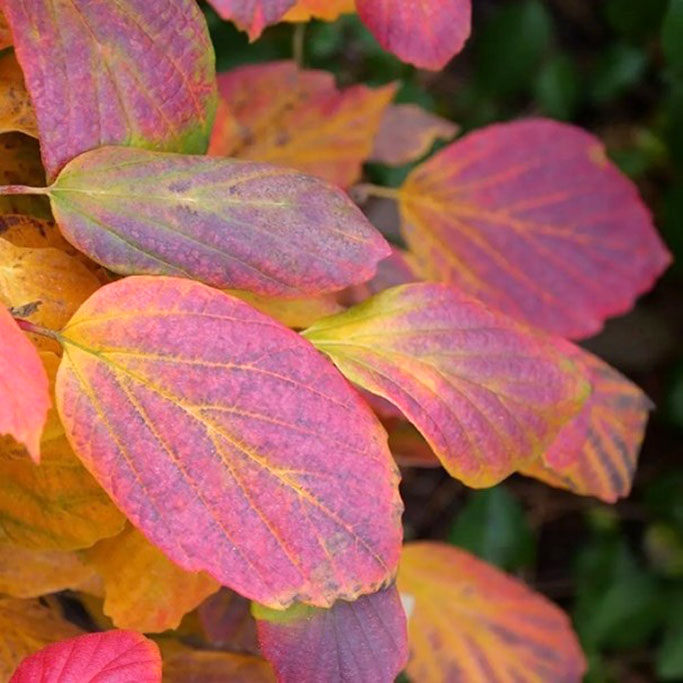
Fall brings vibrant purple, maroon, burgundy, red, yellow, orange and gold to Fothergilla gardenii. (Did I miss a color from the rainbow?) Fothergilla x ‘Mt Airy’ tends to stay in the yellows and oranges.

One more thing about Fothergilla gardenii and ‘Mt Airy’. Ready for it?? They do it all in part shade or full sun. I have Fothergilla gardenii planted in nearly full shade at home and they are just as fabulous as those in full sun. 

Now my favorite.

Hamamelis – “Witch-hazel”

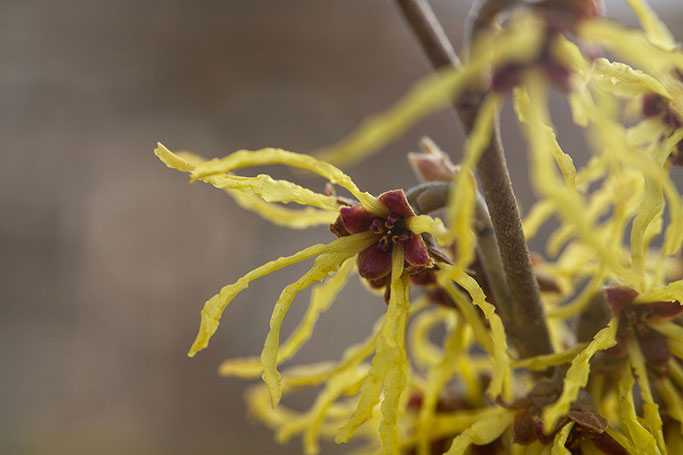
Some of you may say, “Kim this is a tree, not a shrub”. I agree that it’s not really a shrub, but instead a small multi-stemmed tree. Hamamelis virginiana is the bigger of the two at 15-20’, while Hamamelis vernalis is much shorter at around 6-8’. Both are native to Michigan and bird magnets.

Hamamelis vernalis flowers January-March and Hamamelis virginiana flowers October-November. Both have yellow flowers that get tinges of red and flower without the leaves. However, Hamamelis vernalis flowers before leaves while “Virgin Witches” flower after leaf drop.

Christensen’s will have a few other Hamamelis varieties this year. I am looking forward to seeing the ‘Grape Fizz’, spring-blooming, Hamamelis. The flowers are a deep shade of purple-red and can reach 4-5’ tall.

‘Carmine Red’ Hamamelis, flowering in … red. These can reach 10-12’.

Hamamelis ‘Diane’ has an amber-orange flower and grows to 8-12’.

And of course, customers will find Hamamelis ‘Arnolds Promise’, with its yellow flowers.

All of these varieties bloom in early spring and are officially Hamamelis x intermedia hybrids.

And finally, my third favorite shrubbery is…

Pieris

I know it doesn’t do all that great for us and needs a proper location to thrive. But it is worth it! Pieris are ericaceous broadleaf evergreen shrubs, like a Rhododendron. Pieris may need winter help, so it doesn’t desiccate (dry out). The white flowers are born in early spring.

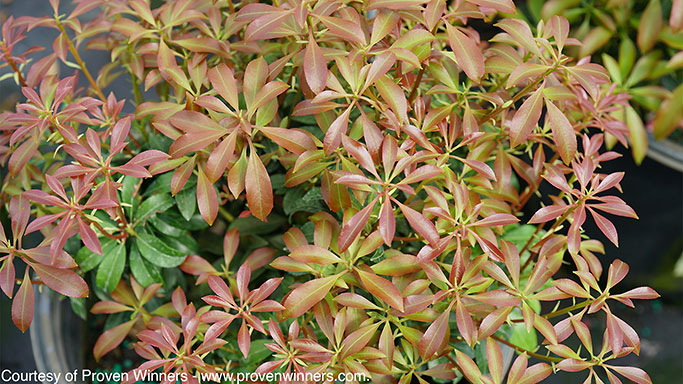
Pieris ‘Mt. Fire’ has huge clusters of flowers, but the show comes from its foliage. New foliage is red but ages to green. Because new foliage emerges all year, there is always some red streaked in. Remember it needs a proper, shady and well-drained, location!

Contact your Sales Rep to add one or more of my favorites to your next project.  

Happy Spring!  k

The Devil in the Dissonance

What do Jaws, Jimmy Hendrix and emergency sirens have in common? They all include the ‘Devil’s Trill’! “What is this?” you may ask. Well, it is ‘Satan in music’ and was once banned by the Catholic Church for being a “demonic combo”! The Violin Sonata in G minor by Tartini or the Devil’s Trill Sonata is the notes F & B played together and they clash so much it gives us an unnatural feeling of foreboding. Some people twitch when they hear these keys played together.

Police sirens are a perfect example. They are typically the notes C and G flat – can you hear them in your head? They clash – trouble is coming. You will find the ‘Devil’s Trill’ in movies like The Exorcist, The Shining and of course Jaws (da-dum… da-dum; Can you see the shark coming? The music gets faster as the shark gets closer… da-dum. P.S. Did you know that it’s a Tuba in Jaws?). Or maybe you are into the Rolling Stones (“Sympathy for the Devil”), Metallica ,(“Enter the Sandman” Fun note: this is my cup of tea!) Led Zepplin, (“The Rover”, “Since I’ve Been Loving You”) or, of course, “Purple Haze” (Jimmy plays the B-flat while bass man Redding plays an E, da-dant… da-dant, in the opening riffs) These groups use the demonic combo!

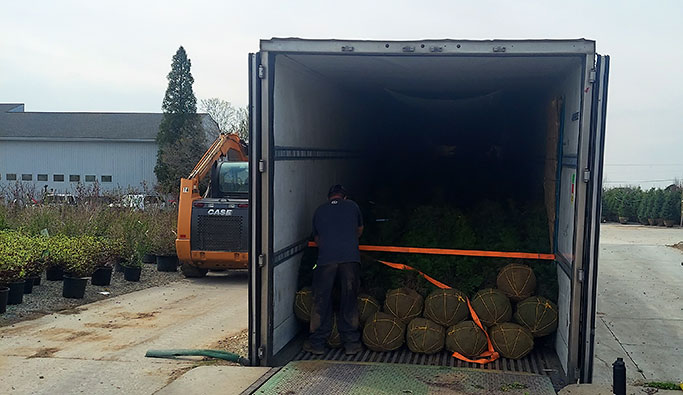
You get the idea but what has this to do with plants – nothing. What does this have to do with Kim – lots! We receive a lot of trucks from growers. Some are small – some are large. I try my hardest to get out and look at every truck and the material. But I must admit there are some nurseries that as I am about to look into the back of the truck and *wham*, a “Devils Trill”!! I also hear it when we open the houses up in the spring and, of course, when someone walks into my office and says, “I need a favor!” It is usually Jaws that plays in my head at work, but, nevertheless, it is in my head as a sign of foreboding! (Usually, I internally yell at myself for thinking that way – especially when the load is beautiful or the favor is easy!)

The ‘Devil’s Trill’ itself was composed by Giuseppe Tartini. An Austrian dude from the late 1600’s. He has two claims to fame – He was the first ever owner of a Stradivarius Violin and his Sonata in G Minor or “The Devils Trill”. The Sonata was basically the first “Devil Went Down to Georgia” style song (and story).

I will admit I also get it in my head before I step into the doctor’s office, dentist, and even sometimes as I about to put on the news. Funny thing is that in those moments the trill I hear is ‘Purple Haze’, I didn’t know it had a name, but it does and a cool one at that. (Not really sure where I learned the name or why.)

A couple of last Devils Trill footnotes.

  • Did you watch the Sopranos? The season finale? Because they purposefully used Journey’s “Don’t Stop Believing” and purposefully ended it at the ‘Devil’s Trill’ just to make it even more irksome.
  • It is the hardest piece of music to play on a violin.
  • If Giuseppe lived in our age, he would have been in a major Heavy Metal Band. 
Kim Roth Byline

The “Dogs” are Barking for Attention

Cornus mas Golden Glory

Cornus (Dogwood) is not a species of plant that we put much thought into. Most of them sit in the background being the workhorses they are. Cornus are one the of the few species that cover all “types” of plants. From the 3” perennial Cornus canadensis (“Bunchberry”) to the shrubby ‘Ivory Halo’ types (many of them natives) to multiple sizes of ornamental trees which also include many natives.

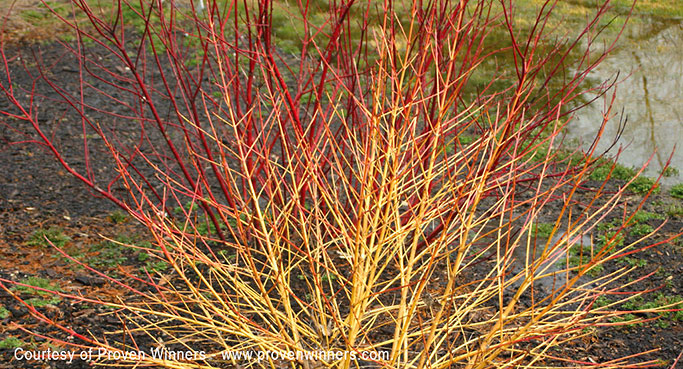
Let’s start with humble Cornus sericea and its cultivars, the “Redtwig’ and “Yellowtwig” dogwoods. We’ll cover the natives first, then cultivars.

Cornus Baileyi

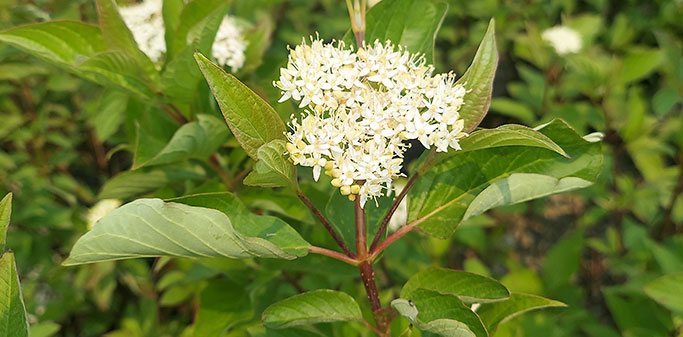
C s. Baileyi… Wait, I said natives first!!! And ‘Baileyi’s’ gets included in with the natives. Unlike its cousins ‘Bergessons’, ‘Kelsy’ etc., ‘Baileyi’ is a naturally occurring hybrid that was found on the side of the road in Minnesota by a worker from Bailey Nursery. Yes, officially ‘Baileyi’ are considered a cultivar (scientifically speaking) but because it is a naturally occurring hybrid it is usually ok to swap for straight Cornus sericea. The straight species, ‘Baileyi’, and all the other cultivars of Cornus sericea like wet to swampish locations and have a vase-shaped habit. What is the difference? ‘Baileyi’ has a deeper red color in the winter! That is it! …officially

Cornus sericea

Buds Yellow Cornus sericea

Unofficially, there is another problem. I can get you #3 or #5 Cornus s. ‘Baileyi’ all day long. Nice full plants, foliage fairly clean, well maintained, and pruned accordingly for success. However, to get a native Cornus sericea, I have to go to smaller nurseries that specialize in native material. Typically, straight Cornus sericea is available in a #2 or #3 pot with a couple of sticks sticking out of the pot in all directions. It’s hard for me to sell, and more importantly, really hard for you to sell. I understand and you do also, but know that if you want straight species, I am going to sell it to you – only because even though it may be 2 sticks in a pot it is rock solid hardy, and will grow up to be a nice 7-9’ tall plant. It just doesn’t start as pretty as ‘Baileyi’ or any other cultivars.

Cornus sericea 'Kelsy'

Other sericea that are noteworthy are:

  • ‘Kelsy’ A cute little mound of green leaves and bright red stems growing 2-3’ x 2-3’.
  • ‘Buds Yellow’ is an older cultivar but a well-established “Yellowtwig” that is 5-7’ tall with a vase shaped habit.
  • ‘Bergessons Compact’ grows 4-5’ x 4-5’ with dark red stems.

Cornus Alba 'Ivory Halo'

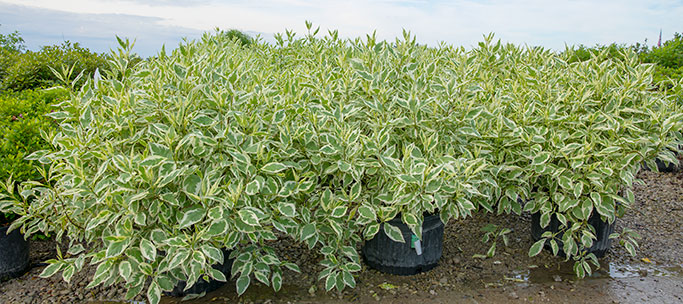
Very closely related is Cornus alba ‘Ivory Halo’ or tartarian dogwood. These are not as aggressive as Cornus sericea cultivars can be. The stems get red but not as red as the “Redtwigs”, but the green and white variegated leaves are where it is at!

Cornus sanguinea 'Arctic Sun'

Another closely related species is C. sanguinea “Bloodstems”. Proven Winners® have some newer ones that are just starting to hit the market in quantities. We had a few here last year, but we will see more this year. ‘Arctic Fire’, ‘Arctic Fire Yellow’, and ‘Arctic Fire Sun’ all have a nice, rounded habit, get 3-4’ x 3-4’, and have bright red (or yellow) stems.

There are many others on the market these days. Many are native to us or other parts of the states. We have our favorites and they have theirs.

Before I go, I would like to go back to the natives for a minute.

  • Cornus racemosa “Grey dog’” prefers a swampy area and will reach 10’ tall. It has red stems but not a great color.
  • C. amomum “Silky dog”. It really has no stem color and like the “Grey dogs” like a wet swampy area. “Silky’s” have a nice, rounded habit.

Cornus mas Golden Glory

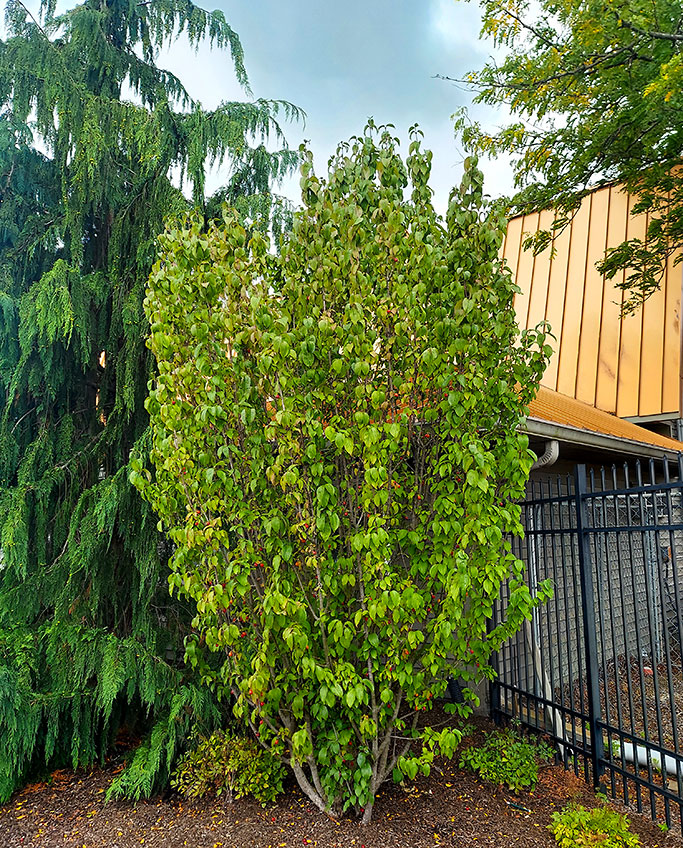
There is one more Cornus I would like to add to this list. Not a shrub but maybe a small tree. Cornus mas 'Golden Glory'. These fit into the world of Amelanchier and some ‘Crabs’ as an understory tree. They will be about 15-25’ tall and 10-15’ wide. They flower yellow in the early spring which is followed by a cherry-red berry. They can be treeform or shrubby form (my favorite). Want to know what they look like, come on over to the west side of the nursery and look at the front landscape. I didn’t have room at home, so I made them plant one here for me to look at!

No matter what Cornus you and your customers choose, I get people what they want. Sometimes it’s an alphabetical list; sometimes a vision! Either way, I’m here for you.

Ps: There is a rather large elephant in the room while I talk about Shrubby Cornus. All “dogs” from the perennials to the trees have fungal leaf spot issues! Less sun, water on leaves, and tight space only exacerbate the issues.

Kim Roth Byline

If You Can’t Beat ‘Em, Substitute ‘Em!

With Boxwood still in limbo I thought I would give a refresher on some plant substitutions that have been flyin’ out the door as a replacement.

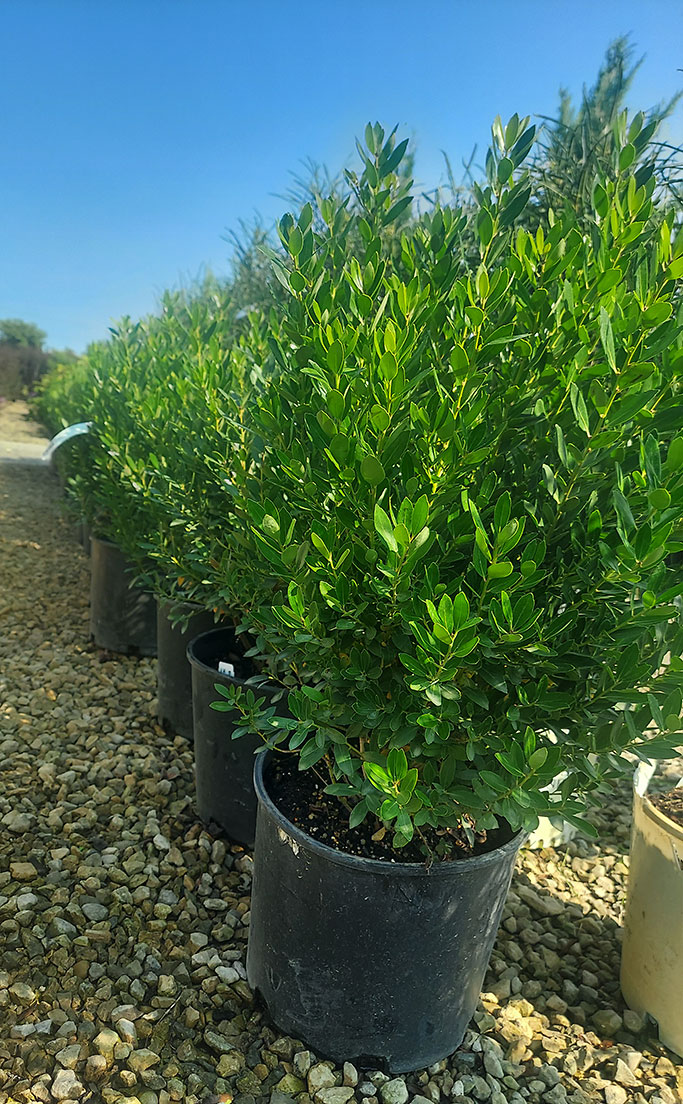
I would have to start with Ilex glabras – seriously! I would have considered these an underused plant, but their time has come to step out in the world! “Inkberries” are hardy to a zone 4, not too bothered by wet feet, and can take part shade. They are not as deer-resistant as boxwood but are on the ‘least browsed’ list. Ilex glabra do not like our alkaline soils and to look their best with an acidic fertilizer applied. (Our alkaline soils are why they get yellow.) They are also salt tolerant. Straight Ilex glabra gets rather leggy and is known to sucker. However, the newer cultivars are an improvement in both leafing all the way down and less suckering (…they say no suckers but… I don’t always believe what they say.)

  • Ilex glabra ‘Shamrock’ is 3-5’ x 3-5’ with upright branching.
  • I.g. ‘Compacta’ is 3-4’ x 3-4’ with an oval-rounded shape.
  • I.g. ‘Densa’ is very uniform in shape.

There are 3 new ones from Proven Winners. They are bred to have better disease resistance as well as leaves all the way to the ground.

  • I.g. ‘Strongobx’  is 2-3’ x 2’ with large leaves. The habit is kinda of a donut… squat and round.
  • I.g. ‘Gembox’ 2-3’ x 2-3’ with petite leaves and a globe habit. (‘Strongbox’ and ‘Gembox’ are both females.)
  • I.g. ‘Squeezebox’ is male with an upright, dense habit at 4-6’ x 2-3’

Fun fact of the day: Why are they called “Inkberry”? Civil War soldiers used the sap as ink to write letters home.

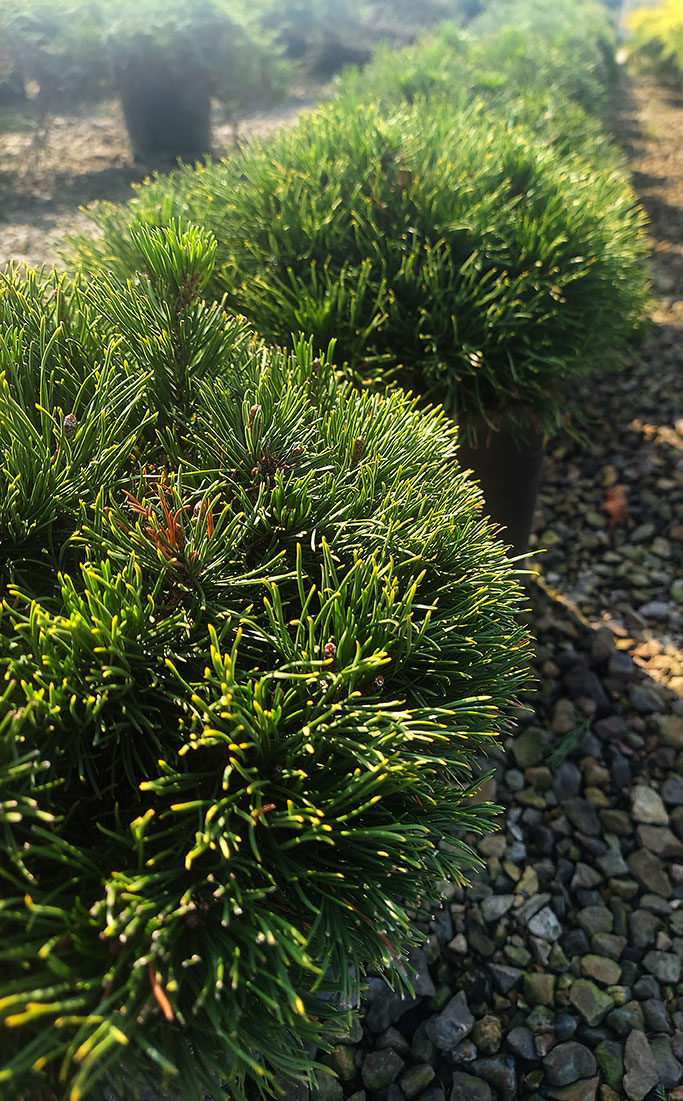
Even “Mugos” have seen a resurgence. Pinus mugo prefers full sun but is light-shade tolerant. Of all the evergreens it is the one that gets the least winter burn. They will tolerate our heavier soil but prefer something a little sandier. Pinus mugo is also deer-resistant and tolerates salt. Nothing new and fab but some tried and true ones are available…

  • Pinus mugo ‘Compacta’ is a dwarf cultivar reaching about 3-4’.
  • P. mugo var mugo gets 4-6’ x 4-8’, but is still considered a dwarf.
  • P. mugo var pumilio is a dense somewhat prostrate form with branching heading upwards for a slightly different look. It is still considered a dwarf but reaches 4-5’ tall and 6-10’ wide.
  • I am expecting to have some P.m. ‘Sherwood Compact’. They are very dense with leaves that have a slight twist to them. ‘Sherwood Compact’ will get to be about 3-4’ x 3-4’.
  • I am also hoping to get in some Pinus strobus ‘Sea Urchin’, a 2-3’ dwarf with blue-green needles and a tight globe habit.

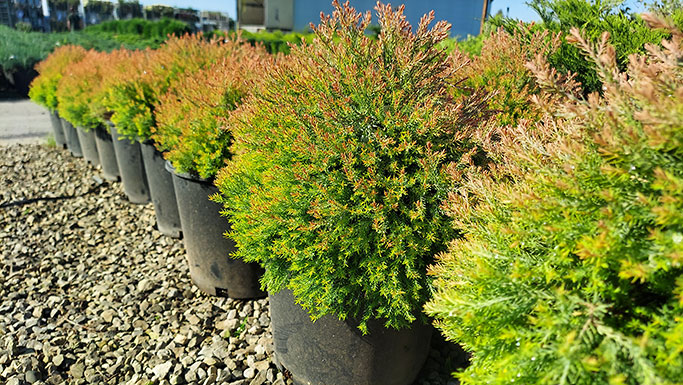
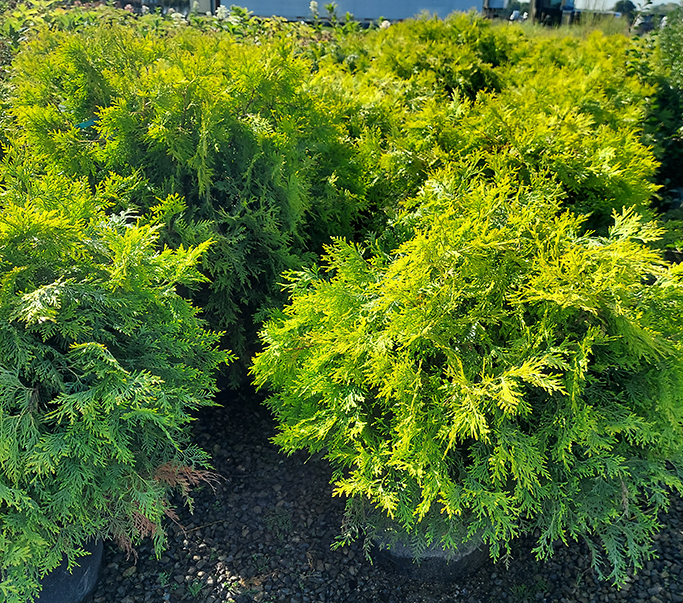
Globe shaped Thuja occidentalis have been moving up the popularity ladder for the last several years. The Globe “Arbs” have some newer well-behaved cultivars (not that the older cultivars are not well-behaved!!). Thujas will take our alkaline soil as well as wet soils. They prefer full sun but will take part shade.

  • T.o. ’Golden Globe’ is very dense and a 2-4’ dwarf with soft yellow coloration.
  • T.o. ‘Firechief’ Do you remember ‘Rheingold’?? ‘Fire chief’ is a mutation of a ‘Rheingold’. It has a better orange-red coloration and gets 4’ x 4’.
  • T.o. ‘Linesville’ or ‘Mr. Bowling Ball’. ‘Mr. Bowling Ball’, also known as ‘Linesville’, is a dense 2-3’ x 2-3’ globe with blue-green foliage that is soft to the touch.
  • T.o. ‘Hetz Midget’ is a slow cultivar eventually reaching 3-4’ x 4-5’. The foliage is blue-green.
  • T.o. ‘Little Giant’ is another slow-growing cultivar with dense dark green foliage.
  • T.o. ‘Woodward’. They get big! They grow to 4-10’ x 8-15’ eventually. Landscape size will be on the smaller end, because these are very slow growers (reaching 4-5 x 8’ in 10yrs.) They have dark green needles.
  • T.o. ‘Anna’s Magic Ball’ As per the Proven Winners website these are nifty! (I like that word.) I agree, a nifty little plant 2-3’ x 3-4’ with bright yellow foliage.
  • T.o. ‘Danica’ I know this one is the love of everyone’s life, but it is incredibly difficult to find! I grab everyone I can! ‘Danicas’ only get to about 2’ x 2’ with dense emerald green foliage.

There is one more “Globe Arb” to mention. T.o ‘Aurea’ (group). They are kind of a mishmash of yellowish foliage globe arbs. They usually only reach about 2-3’ x 2-3’

I hope I’ve given you enough alternatives to think about.  If that’s not enough, there are a few other options – Mirobiota, Myrica, “Chamy’s” or even “Barberry”. Maybe I’ll delve into those suggestions in a future article.  But for now, check out the above varieties.

Until next time!

Kim Roth Byline

It’s Peony Month… YEAH!

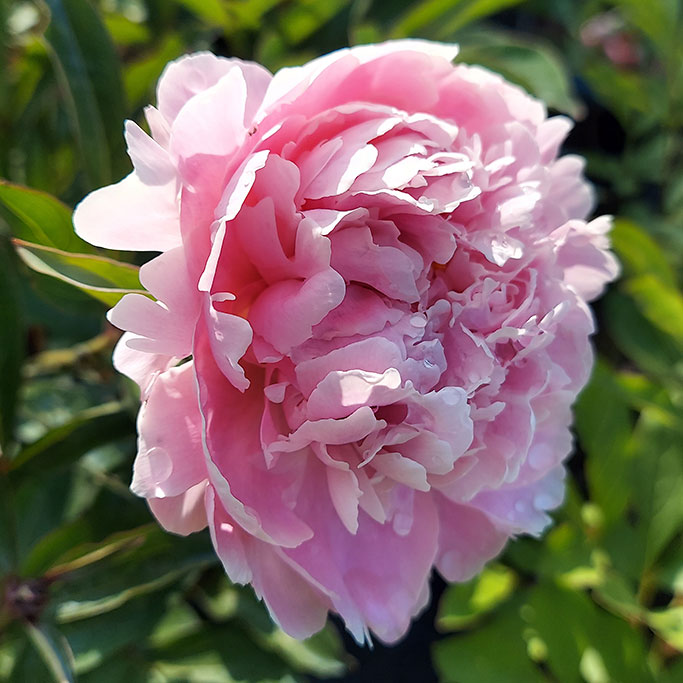
Paeonia Peony ITOH Bartzella

You may ask, 'Why?' or perhaps “Do I need a Hallmark card?" No cards are required. And, ‘Why?’, Well, because peonies are about to bloom! Which peonies? – ALL the PRETTY PEONY!!

I have written a lot of articles in my life, but I do not usually jump up and say me, me, me please, pick me. But an article about PEONIES?!? – Yes, please. They have always been my favorite. The flower is massive, and the fragrance is sweet (it is also one of the few smelly plants that does not give me an instant allergy headache!). I cut them and enjoy them inside by the bucketful. I may end up with a few ants indoors – but who cares, it’s worth it for peony flowers! And, well, they are just ants.

We grow our own peonies at the nursery, and they are quite impressive! (...If I may say so myself.) The production crew pots them up in the fall and they typically root out before dormancy. In the spring, they POP! We not only grow peony, but we grow several types of peonies.

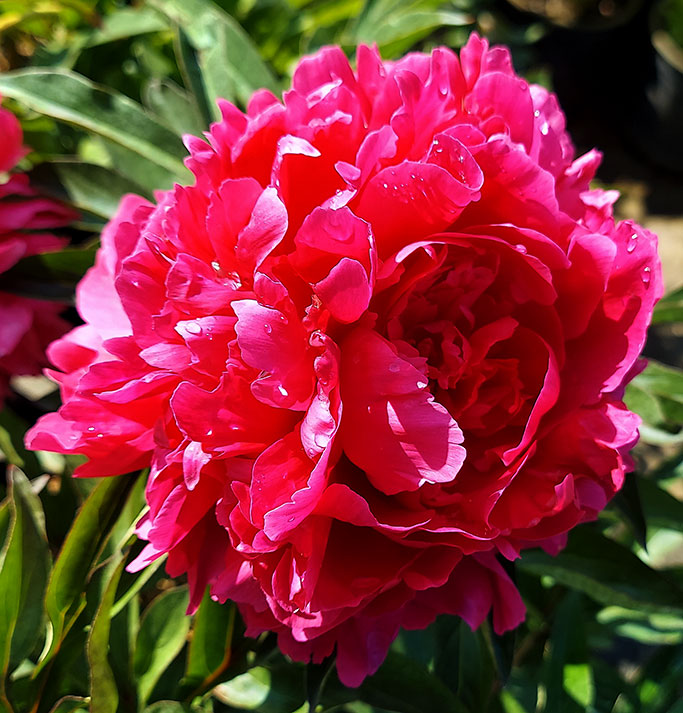
You all are used to the common herbaceous peony (Peony lactiflora). Usually about 2.5’ and they can easily get to 3’ across. The varieties we carry are typically double-flowering cultivars. However, there are a few we offer that are single. I like single ones but prefer – as will most of your customers - the double flowering cultivars. There is no doubt the doubles put on a show.

Felix Supreme Peony

Sarah Bernhardt Peony

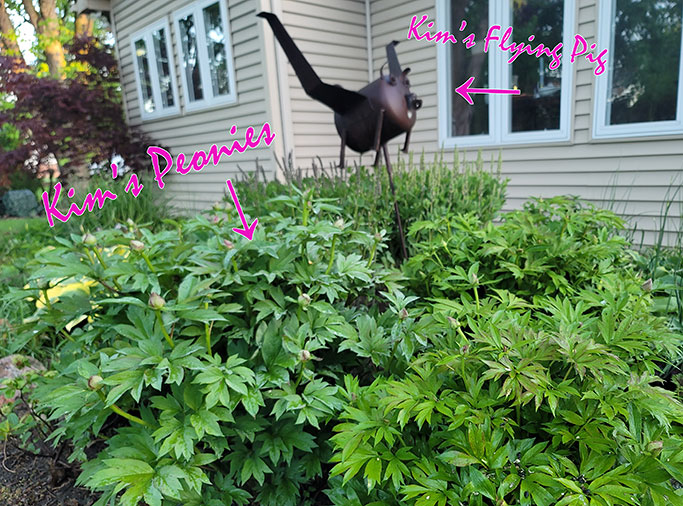
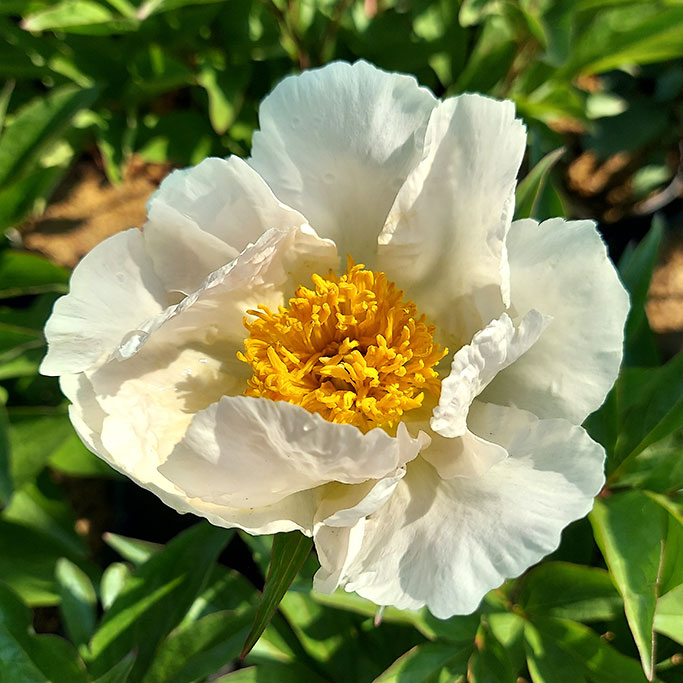
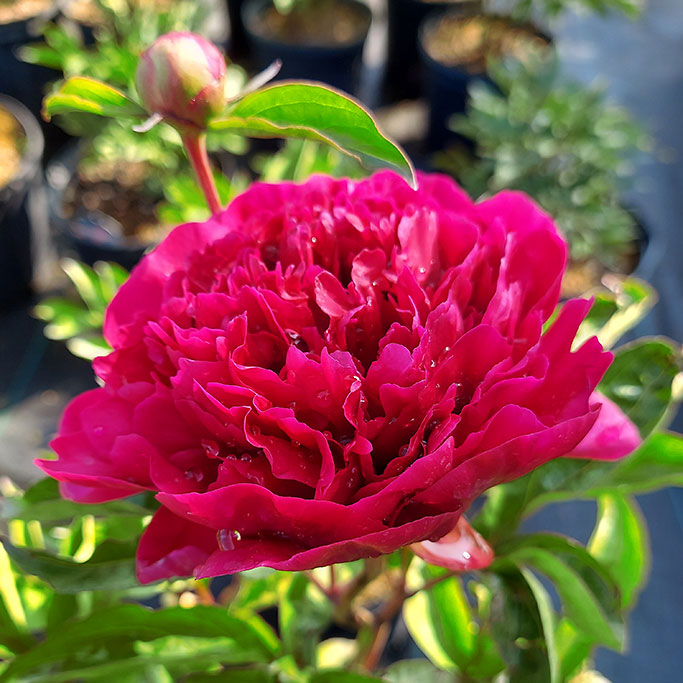
Some of my favorite double flowering cultivars are not only old cultivars but they are still some of the best (they are also reasonably priced, they aren’t “fancy pants” peonies, you know, ones that will cost you your first child!). ‘Sarah Bernhardt’ (double pink), ‘Duchess De Nemours’ (double pink), Felix Supreme (double red). The list goes on. There are at least 6 cultivars in stock, and I know one of them is ‘Krinkled White’ (single white flower). Herbaceous peonies will go downhill by mid-summer and the leaves look quite ratty. When placing an herbaceous peony make sure it can be seen in all its glory through May and then maybe something like a rose to cover them up for the rest of the year.

Bartzella Itoh Peony

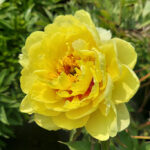
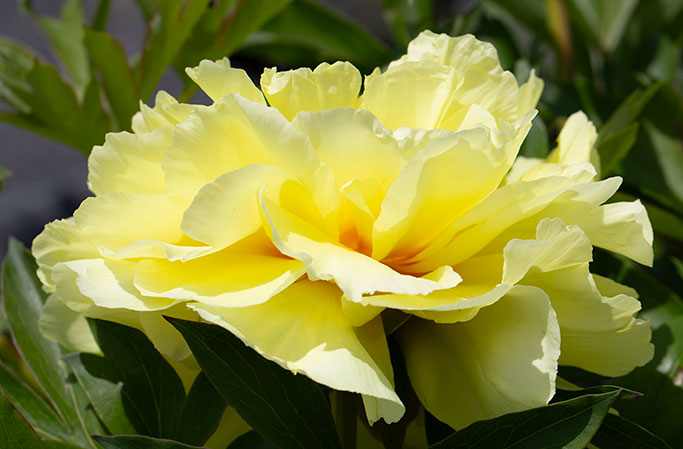
But the production crew does not stop there. No, they have added Itoh Peonies to their production list. A totally different animal than an herbaceous Peony. Itoh’s are a cross between an herbaceous peony and a “Tree Peony” (they are known as “Intersectional” Peony – in case you were wondering). Why would you ever want that – well Itoh’s form a semi-woody stem that is able to hold up the huge flower (both come from the “Tree” Peony (Peony sufferticosa), and it also has and produces herbaceous stems – so if it dies to ground no problem. I have several at home. I do not cut them back until spring and then only to the buds on the woody stems. Every year they get bigger and bigger as new herbaceous stems join the 'club'. Believe it or not, they look more and more fab every time I see them. The easiest to come by is 'Bartzella'. It has a semi-double to double yellow flower that can be 6-8” in diameter. ‘Morning Light’ has a semi-double fuchsia flower. On the upside the plant flowers for longer period as side shoots will also flower and the colors cannot be found in P. lactiflora. (there aren’t even semi vigorous yellows in herbaceous Peony.) The foliage is very clean and lasts all year and when it blooms it is covered with flowers not only on the top but also on the sides. The only thumbs down I would give the Itoh cultivars is like a “Tree” peony the flowers are not cuttable. Vase life is only hours!

I can’t let you go just yet because although I no longer have much to do with perennials and even less on production I know a secret. There are – are you ready for this – “Tree Peonies” in stock. Yeppers. True “Tree” peonies are a rare find. They are incredibly hardy with massive flowers held up by woody stems. The group we have is an “assorted” color collection. But it doesn’t really matter because they are, well, not only Peonies but they are “Tree” Peonies and……. IT IS PEONY MONTH – YEAH! 

Krinkled White Peony

A couple of other quick notes about peonies… They can live 100+ years (all peonies can!). They THRIVE in the cold. If you want to see some spectacular ones, go to Alaska! There are 11 different flower types – from single to lotus, hundred proliferate, golden circle to bombs! They like well-drained soil and if you feel like it, throw some fertilizer on them after flowering and in the fall (you can do it in the summer also). Surprisingly, unlike most plants that put on such a huge, spectacular flower they need little in supplemental feeding. I do not feed mine but occasionally I dump some compost or peat around them (depending on whether I am feeling generous!). 

All peonies prefer full sun. From experience, I can tell you my herbaceous peonies are not flowering as well since the tree started giving them shade – I will be moving them this year. My Itoh peony gets AM sun till about noon then they are in shade – not dark but shade from a massive Maple tree. Doesn’t bother them a bit. They always have tons of huge flowers. Tree Peony require full sun and never get cut back – Tree peonies are a woody plant.

Rachel Peony

Kim Roth Byline

Rhododendrons 101

Rhododendron Cunningham White
/ˌrōdəˈdendrən/
     noun

First of all, “Rhodys”, Azaleas, and ‘PJMs’ are all the same!!! They are all officially part of the rhododendron genus. They are one of our most popular stars of spring. All of those stocked at Christensen’s are Broadleaf Evergreens, flower in the spring, stay leafed out all year, and start the process over again. (We do not stock deciduous Azaleas anymore but if you need them, we will get you some.)

'Boursault' Rhododendron

Those most commonly recognized as “Large Leaf” Rhododendron can be monsters in their natural habitat, the Mid Atlantic. They do not actually have a final height or width as they will continue to grow and grow. I have seen massive ones traveling through Pennsylvania (it’s kinda hard to tell the exact size at 80MPH!). The cultivars that we sell here are some of the hardiest. We stick to H1 hybrids (H1=hardy to -25°F, occasionally a few H2’s arrive and they are hardy to -15°F, after that, we shy away!). ‘Edith Bosely’ is one of my favorites with a deep purple flower. 

I also like ‘Boursault’, again another purple flower (heading towards pink). ‘Boursault’ is a Rhododendron catawbiense hybrid and is short. It will reach 5-6’ max. Both are those hardier H1 hybrids.

  'Karen'                                  'Rosebud Double Light Pink'                            'Hino Crimson 

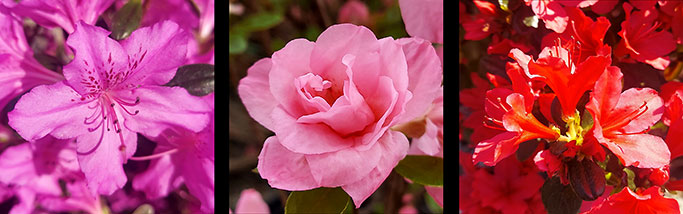
All Azaleas are Rhododendron… But not all Rhododendron are Azaleas. And, what would spring be without them? My favorite here is not your favorite (I can tell!!). ‘Elsie Lee’ is mine with huge purple trusses. The plant will reach 4-5’. Your favorites, based on sales, are ‘Karen” (Lavender, 3-4’), ‘Rosebud’ (small plant 2-4’ with pink flowers), and ‘Hino Crimson’ (2-4’ with deep red flowers). Oh yeah, you guys like ‘Stewartstonians’ also (4-5’ with deep red flowers).

(Sometimes I do question your tastes!!)

'Elsie Lee' Azalea

'PJM Elite' Rhododendron

Last on my list of Rhododendrons is the small-leafed “PJM”. ( FYI: PJM is a series developed by Peter J. Mezitt and his son in the 1930s to be exceptionally winter hardy.) They are getting very hard to find. Sometimes we get ‘PJM’, ‘PJM Elite’, or ‘PJM Regal’. They are all very similar and can work interchangeably. All have the same ‘PJM’ flowers and will reach 3-5’.

'Hino Crimson' Azalea

All Rhododendrons are planted for those flowers. I hear complaints about “Rhodies” not doing well after the first year or not flowering well after the first year. I am here to tell you WHY!!! Those great big, huge, long blooming flowers drain the plant of any strength it had! Not only will keeping your “Rhodo’s” well-fed produce more flowers, but it will help the plant with overwintering. Giving it strength to maintain those flower buds all winter long until WOW! Speaking of which – Remember “Rhodo’s” produce the flower buds just after blooming this year. If you need to prune your “Rhodies”, do so just after they flower.

One last note about Rhododendrons. They like very acidic soils. Top dressing them with peat a couple times a year will not only help to acidify the soil but by acidifying the soil the plant is able to take up more nutrients, therefore more flowers!! WIN-WIN.

Gotta go and find more ‘PJM’s’ and probably ‘Stewartstonians”! 

'Edith Bosley'

Kim Roth Byline

Buyer Seeking Oakleaf Hydrangea. Must look good in a nursery pot.

If you follow our Sticks & Stones articles, you know that as a buyer, my job is to find beautiful plants for you at a reasonable price. I think I do a respectable job at it. Lately, I have had some physical issues that have kept me from walking around as much but the salespeople at the nursery aren’t yelling about anything, so I think I am doing a good job. When I do head out to look at what just came off a truck, some things I do not look at. I just know they are fab. MAGIC!! Just kidding! No not really. Some nurseries do grow certain products that are always to die for, some other items may not be their specialty, so they need to be looked at. It doesn’t matter what nursery they come from, if it is a “Oakleaf” Hydrangea I am all over it!

“Oakleafs” are the one plant that I can say I have never seen a nice one in a pot. Let me rephrase: I have never ever seen even an okay one in a pot! Even when I was just the perennial lady I would go home and look at the stunning one in my yard and then go to work to get a couple more and ugh! It is hard to look at the plant and see what it will look like over the next few years. I have 2 in my yard, both trash outs (I wouldn’t even buy them they look so sad), but wow wow wow!!! One of them is a straight H. quercifolia and has been in the ground 30 years and has been moved at least once! The other one I forgot about until we had to do some tree, arb and fence replacements this summer! There it was! It must be a dwarf as it is not much taller than 4’ and about 4’ wide. She flourished but without great sun there is not great color (we didn’t even notice her, and she was 5’ off my patio). The original 30-year-old plant is about 6x6’ and has leaves twice the size of my hands! Not kidding and color OMG! She literally looks like flames from a fire. “Oakleaf” Hydrangea’s are always on my look list, I get so excited when I have ordered some. But am usually let down when I go out in the yard to look at them.

I have decided this is going to be Hydrangea year again. (A year where I focus on improving my selection in a certain plant) My goal is to find a nice potted Oakleaf! You are going to see some new flavors this coming year! My best hope is with a new cultivar named ‘Jetstream’. Coming in at 5-6’ tall, it’s claim to fame is sturdy stems. I have seen these in a “can” and they look good, the kind of good that makes you look twice and go ‘dang.’ I have seen them at different locations, and they all look good. I have high hopes for these. I have not heard of them being disease resistant, but I have not seen disease issues like ‘Alice’. To counter the trouble ‘Alice’ can cause, a couple of years ago I brought in some ‘Alice in Wonderland’, a 5x5’ Michael Dirr introduction. I have seen some large potted plants, and they are beautiful. I think what I like about these the most is the flowers (on very strong stems) stick out from top to bottom looking kind of like rockets. (Truthfully it reminds me of those centerpieces you get for the 4th of July – not at all in a bad way!).

I have small handfuls of a couple of other cultivars incoming next year.

‘Toy Soldier’ Bet you thought it was a dwarf!?!? It’s not. It will only do 4-5 x 4-5’, but it is supposed to stand up like a “Toy Soldier” on very strong stems. I also have some ‘Snowcicle’ coming in next year. It has 12-15” long panicles of DOUBLE flowers on a plant that will do 5-6 x 5-6. It is also known for its strong stems.

You will still see ‘Pee Wee’ (4’), ‘Munchkin’ (3-4’) and ‘Sikes’ (2-3’) for dwarfs. The closest thing to a “dwarf” I have found so far is the “Toy Soldier’. I have not seen anything else in a new cultivar and truly dwarf. I do, however, plan on something new in the dwarfs soon!

This year, we had a special order for some Proven Winner ‘Gatsby Gal.’ It is a brand-new cultivar and maybe a fabulous landscape plant. However, I have yet to do a double-take when I see them in a pot. ‘Gatsby Gal’ is considered a dwarf at 4x4’. It has large white flowers on very sturdy stems. ‘Gatsby Pink’ (6’) opens white and quickly changes to pink. “Gatsby Moon’ is a large “Oakleaf” coming in at 8x8 with big white mophead flowers I am going to watch these; Maybe give them one more chance. Maybe!

Kim Roth Byline

P.S. To those who pay attention to such crap. This is 30 years and 2 full boxes of staples for me!

1 2 3 4