2026 Posts – Sticks & Stones

Archive

Category Archives for "2026 Posts"

Behind the Buyer Curtain

Hi! I am Molly and I have been with Christensen’s for 14 years. Many of you may remember me from my days on the perennial lot. These days, I am the perennial buyer, sadly working at a desk (not so sadly during a heat wave or rainstorm). My main goal is to source fresh, quality perennials that are landscape ready!

I wanted to give you a little peek behind the curtain, so that you can understand all that goes into offering the best customer care possible!

Let me start with the most important aspect of my job: timing. The plant buyers are always working one to two weeks out. For example, today is Monday July 13th. By the end of this week, I will have trucks for the week of July 20th set in stone and am unable to make additions or changes.

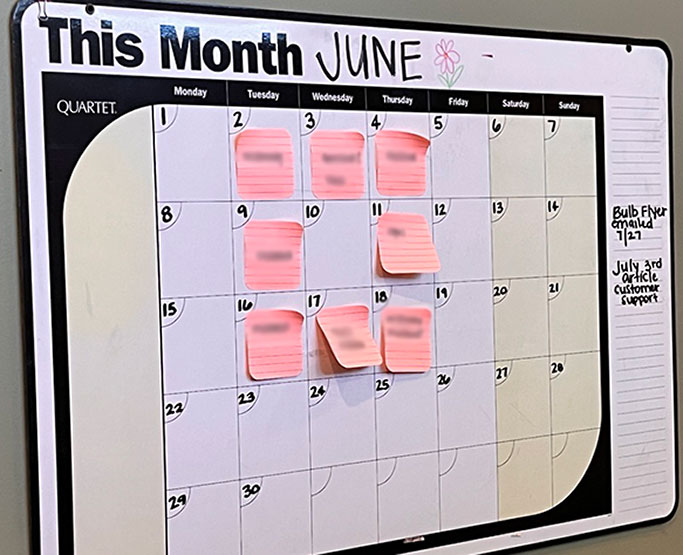
This is how I lay out the perennial shipments. Each sticky note represents a shipment, sometimes several. It's necessary for the plant buyers to plan several weeks in advance - not only to source stock material but to plan for

large orders.

You might be wondering, why do I need to know this?? As the contractor, it’s important to understand the lead time required to get your material to Christensen’s. Basically, the buyers need a week or two, sometimes more (depending on time of year) to get you exactly what you need. If you need something ASAP, let us know ASAP so your material arrives fresh and in a timely fashion.

If a project requires a large quantity of a plant, or something funky no one has ever heard of, please let us know, in advance! We want to help! But we order your plant material from all over the country, and with the logistics involved, it takes proper planning on our part.

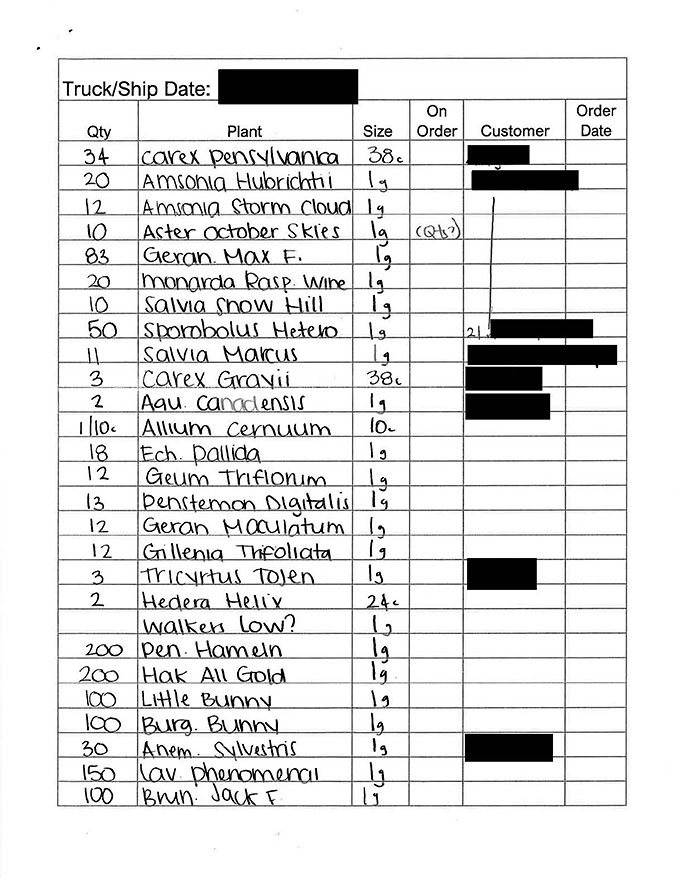
I use this form to keep a running list of what I need to order from a given vendor on a given truck. This list is then emailed to the vendor.


Note that next to the Aster October Skies, I have (Qts?) written. This happens sometimes where you, the customer, ask for a certain size or a specific plant. After checking my sources, I might have to think outside the box and come to you with alternatives.


Flexibility on both sides ensures we get the best possible results for everyone!

There is another snake in the grass to be wary of. Say you give me the list of materials and deposit right on time, I order it for the following week, and all is good. Then the dreaded “bounce back” email arrives, notifying me that the plants are no longer available: crop loss, water issues, pruning issues, someone stole them for another order. Whatever the reason, your plants are not coming as planned.

As a buyer who prides herself on meeting deadlines, this is not an ideal situation for either of us. After follow-ups with your salesperson, who will then notify you of the snag, the plants are added to my “get it here now!” list and your arrival date is pushed back at least another week.

Why am I sharing this bit of information? It’s a gentle reminder that some things are out of our control and many issues can be mitigated with advance planning. For example, after receiving a “bounce back” email, there still might be a chance to meet your deadline because it’s several weeks away.

Finally, advance notice of large or unique orders allows the buyers time to search. Even if you are unsure of the exact date, let us know! I am always putting out feelers to my suppliers, inquiring about finish dates and availability, and am sometimes able to place plants on order for me until we are ready to ship. This will secure your order until you are ready for it! Please know that with special order items, or large quantity shipments, we require a deposit of up to 50%. This lets the buyer know that the order is good. And lets you know, I AM ON IT!

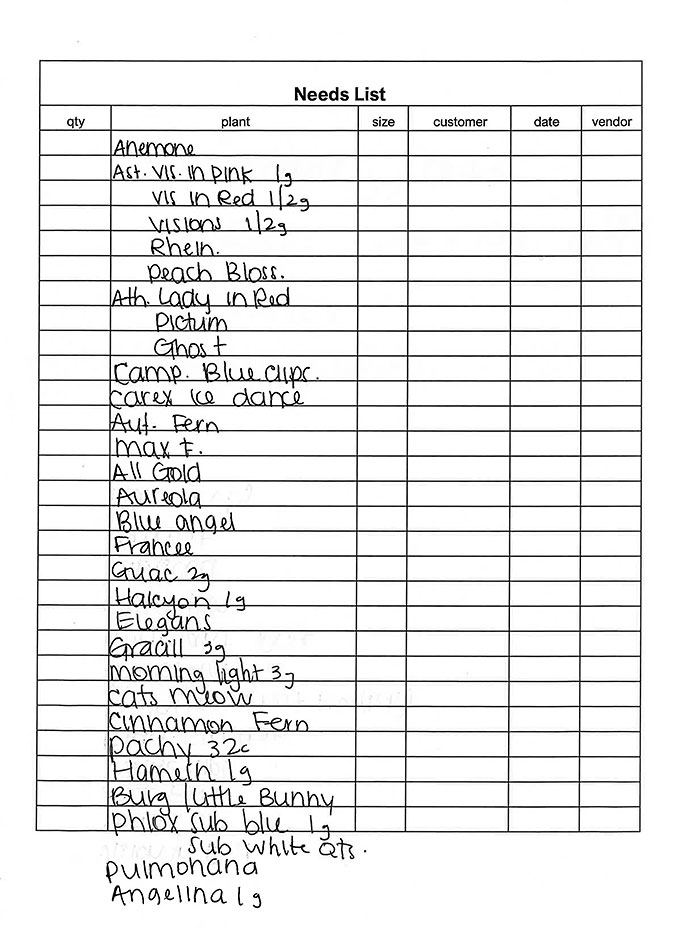
This image is just a sample of how I track needed plants. 

Much of my day is spent looking at "Availability Lists" from our suppliers.

By keeping a "Needs List", items are less likely to get missed. 

Let your sales person know if there's something you need to add to my list. 

The moral of the story is that we, the buyers, are committed to providing you with quality material, in stock when you need it. That quality, however, requires regular turnover. Therefore, we may not have the quantity or item you’re looking for on any given day. Advance notice allows the buyers to work with you to source the material you need when you need it. When situations out of our control pop up, please know that we work hard to make it right.

Thanks for reading, and I look forward to your orders! 😊

Fertilizer Primer

Christensen's offers a full selection of fertilizers for landscape professionals. With so many options available, choosing the right product can sometimes feel overwhelming. Here's a quick guide to help you match common landscape applications with the fertilizer best suited for the job.

Quick Fertilizer Guide

  1. New planting Trees and Shrubs → Bio-Tone Starter Plus + Root Stimulator
  2. Long-term feeding → Osmocote
  3. Acid-loving shrubs → Holly-Tone
  4. Established Trees and Shrubs → Plant-Tone
  5. Flowers → Flower-Tone
  6. Roses → Rose-Tone
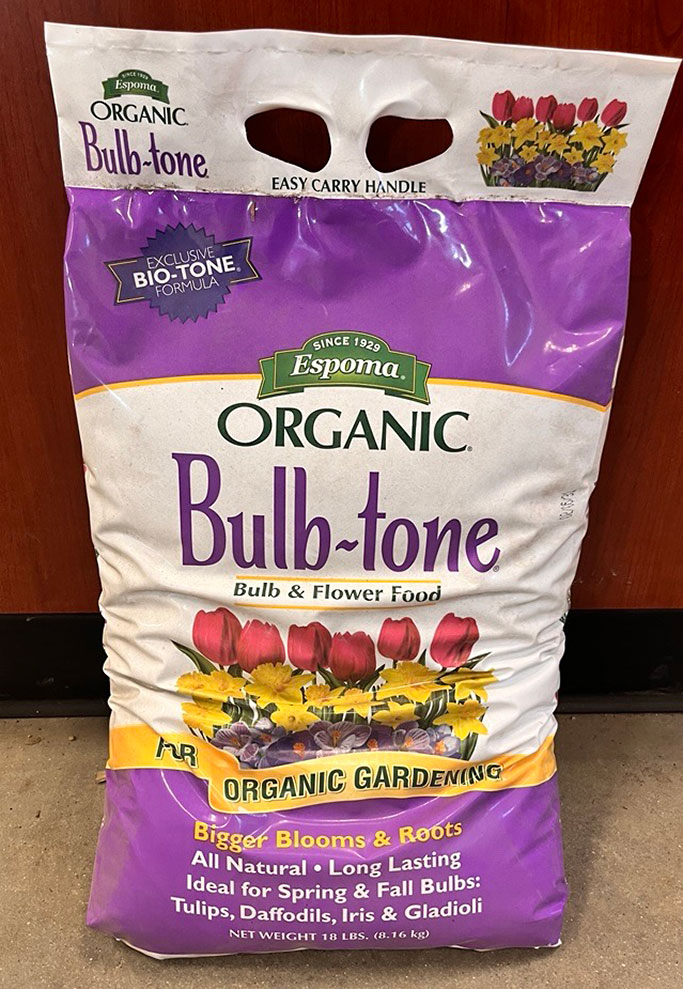
  7. Bulbs → Bulb-Tone
  8. Turf → Milorganite

If you'd like a little more detail, here's a closer look at each fertilizer and where it fits best in the landscape.

Product

 Recommended Use

Bio-Tone Starter Plus

Starter fertilizer for newly installed trees, shrubs, perennials, and annuals. Contains beneficial microbes and encourages strong root development while reducing transplant shock.

General Purpose 12-12-12

A balanced fertilizer for general landscape use. Good for established trees, shrubs, flower beds, and situations where a quick nutrient boost is needed.

Holly-Tone 4-3-4

Formulated for acid-loving plants such as hollies, azaleas, rhododendrons, blueberries, and many evergreens. Helps maintain proper soil pH while feeding.

Plant-Tone 5-3-3

An all-purpose organic fertilizer for trees, shrubs, flowers, and vegetable gardens. Easy recommendation when customers want one product for most landscape plants.

Rose-Tone 4-3-2

Designed for roses and flowering shrubs. Promotes healthy growth and abundant blooms without excessive vegetative growth.

Osmocote Blend 17-5-11

Professional-grade controlled-release fertilizer that feeds for several months. Excellent for trees, shrubs, landscape beds, container plantings, and commercial installations where long-term feeding is desired with fewer site visits.

Flower-Tone 3-4-5

Formulated for annuals, perennials, and flowering plants. Higher phosphorus and potassium support strong flowering and bloom production, helps strengthen root growth.

Fertilizer Stakes 15-7-6

Convenient slow-release feeding for trees and shrubs. Good option when customers want targeted feeding with minimal labor.

Bulb-Tone 3-5-3

Designed for bulbs such as tulips, daffodils, lilies, and alliums. Supports root development and improved flowering.

Milorganite Pro 6-4-0

Slow-release nitrogen fertilizer commonly used on lawns, turf, and landscape beds. Feeds gradually, improves soil health, and has a very low risk of burning plants. Excellent for sod establishment and maintenance.

Ferti-Lome Root Stimulator Plus B-1

Used at planting time to reduce transplant stress and encourage root establishment for trees, shrubs, flowers, and bedding plants.

Application Tips

  • Bio-Tone: Mix into the backfill during planting.
  • Root Stimulator: Water in at planting.
  • Plant-Tone, Holly-Tone, Rose-Tone, and Flower-Tone: Mix into planting beds during installation or apply to the soil surface around established plants and water in.
  • Osmocote: Apply to the soil surface under mulch or lightly incorporate into the root zone.
  • Milorganite: Broadcast over turf and water in.

Christensen's prides itself on partnering with landscape professionals to help them install and maintain beautiful, successful landscapes.

While fertilizer can help plants establish and thrive, more is not always better. Fertilizer is most effective when plants are healthy and actively growing. Avoid fertilizing plants that are drought-stressed or experiencing significant transplant shock. Sites amended with quality compost may also require less fertilizer than expected. In most cases, proper watering, soil preparation, and planting practices will have a greater impact on long-term plant success than fertilizer alone.

America’s Birthday Trivia

My degree is in American history. I was particularly fascinated by the Civil War era as well as how immigrants/emigrants shaped the country.

However, learning lesser known historical facts is always fun for me, no matter the era. Admittedly, my recall abilities aren't very strong. So I'm not necessarily an asset on trivia night. But I love the learning!

As America celebrates its 250th birthday, I thought it would be fun to test your knowledge. Answers are below my byline.

No cheating!!


  1. 1

    True or False. Michigan was a state at the time of the Revolutionary War.

  2. 2
    The land that would become Michigan was part of what Canadian territory at the time of the Revolutionary War?
  3. 3
    Who was on the Committee of Five that drafted the Declaration of Independence?
  4. 4
    What occurred on July 2, 1776?
  5. 5
    True or False. The Declaration of Independence was signed on July 4, 1776.
  6. 6
    How many delegates to the Second Continental Congress signed the Declaration of Independence?
  7. 7
    Did George Washington sign the Declaration of Independence?
  8. 8
    What came first? The start of the American Revolutionary War or the Declaration of Independence?
  9. 9
    What was the final battle of the Revolutionary War?
  10. 10
    What year was the Treaty of Paris signed, ending the American Revolutionary War?
  11. 11
    What European country provided supplies, ammunition and funds to the Continental Army?
  12. 12
    What infection did General Washington inoculate the Continental Army against?
  13. 13
    What was the daily whiskey ration for the Continental soldiers?
  14. 14
    An early copy of the Declaration of Independence was found in a flea market picture frame in 1989. How much was it sold for?

Answers

  1. 1

    False

  2. 2
    Quebec
  3. 3
    Thomas Jefferson, John Adams, Benjamin Franklin, Roger Sherman and Robert Livingston
  4. 4
    The Second Continental Congress officially declared independence from Great Britain. While the Declaration had been written, delegates debated edits for two more days, adopting it on July 4th.?
  5. 5
    False. It wasn’t fully signed until August 2, 1776.
  6. 6
    56
  7. 7
    No. He was away commanding the Continental Army. Neither did other founding fathers such as Alexander Hamilton, John Jay, Patrick Henry, Thomas Paine and Thomas Jefferson.
  8. 8
    The exchange of gunfire at Lexington and Concord in Massachusetts (“the shot heard round the world”) on April 19, 1775 is considered the beginning of the American Revolution, more than a year before the Declaration.
  9. 9
    Battle at Yorktown
  10. 10
    1783
  11. 11
    France. Spain and the Netherlands later joined the war efforts.
  12. 12
    Smallpox. The death by smallpox dropped from 17% to 1%.
  13. 13
    2.5 shots, about 4 ounces
  14. 14
    $8.1 million

Fountain Ponds

As we enter the summer months, and even into fall, why not think of adding something out of the ordinary into the landscape by using a fountain pond? Christensen’s has long been a distributor for EasyPro, based out of Grant, Michigan. This year, we've added products from another Michigan based company, Blue Thumb.

When you've stopped in the Plant Center, you've likely noticed the EasyPro Tranquil Décor Basalt column fountain kit on display. These are normally three columns, with a pump, base, hoses, and normally the lighting that stays in the columns.  EasyPro also offers the Vianti™ Falls Spillway kit, which adds a ‘falls’ system to any block walls that you install. Talk about a great way to add something relaxing to the patio! 

Another option from EasyPro is called Just-A-Falls™. These kits are a simple way of having a beautiful waterfall without the need for a pond.  With the Just-A-Falls™ system, you get everything needed: pump, liner, pipe, glue, pipe, etc.

Blue Thumb offers something a little different with their fountains, ranging from vase fountains, to real stone fountains and even metal fountains.

So far, the metal fountains have intrigued me with shapes like a Japanese maple, a weeping willow and even an Iris flower.

The Iris flower looks to be interesting since the fountain is made from copper and the Iris flower is colored either red or even blue.

While planning for later this year, or even next, keep in mind the option of adding a small, relaxing element into the plan. If I was redoing my patio, I would surely add in a fountain set to relax with after being at work. 

Next time you're at Christensen's, please ask any of us about the fountain pond options from EasyPro and Blue Thumb and we will get you all the information.

Box Tree Moth and The Future

For the past several years, it seems that every new pest or disease affecting boxwood has sparked another round of conversations about removing these iconic shrubs from the landscape. Most recently, the arrival of box tree moth in southeastern Michigan has many homeowners wondering if it is time to replace their boxwoods with something else. In my opinion, the answer is still no. Boxwood has earned its place in our landscapes over decades of performance. Few shrubs can match its year-round color, versatility, deer resistance, and ability to provide structure and formality in the garden. While box tree moth is certainly a challenge, it is a manageable one.

The key is understanding that box tree moth is an insect pest, not a death sentence for every boxwood plant. Like many landscape pests, it can be effectively controlled through regular monitoring and timely treatment. Homeowners and landscape professionals who inspect their plants for feeding damage, webbing, caterpillars, or defoliation can often identify problems before significant damage occurs. Several treatment options have proven effective when applied at the proper time. For example, Btk (Bacillus thuringiensis var. kurstaki) is readily available. The reality is that maintaining healthy boxwoods through monitoring and treatment is often far less disruptive and less expensive than removing mature plantings and starting over.

When considering alternatives, it is important to remember what would be lost. Boxwood has long been the standard for foundation plantings, formal hedges, and landscape accents because few shrubs offer the same combination of size, density, evergreen foliage, and tolerance of pruning. Even Michigan State University Extension, while discussing alternatives, acknowledges that there are currently no perfect replacements that fully replicate the performance and appearance of boxwood. Replacing established shrubs often means waiting years for new plants to reach the same size and visual impact already present in the landscape.

For landscape contractors and homeowners in southeastern Michigan, my recommendation is simple: don't give up on boxwood. Learn to recognize the signs of box tree moth activity, work with a knowledgeable landscape professional, and implement a treatment program when necessary. With proper care, boxwoods can continue to provide the timeless beauty and structure that have made them a landscape favorite for generations. The best boxwood replacement is often the healthy boxwood already growing in your yard.

Air Cured Resin Joint Sand

Installing joint sand on paver projects is crucial for both the structural longevity and lasting aesthetics of the installation. All joint sand fills the gaps between concrete pavers to lock them together, creating a rigid yet flexible surface. It evenly distributes weight, stops pavers from shifting, prevents weed growth and keeps out insects.


Today though, we're tip-toeing into air-cured, resin paver joint sands.


If you’ve been installing pavers for a while, you already know joint sand can make or break a job. It’s the last stage of the project and often the final step before you collect your check.
With polymeric sand, installers must keep a close eye on the weather, temperature, and even ground moisture levels that may keep your concrete pavers too moist on a shady day.

That’s where air-cured resin sands have been gaining traction. From our side of the counter at Christensen’s, we’re seeing more contractors make the switch simply because it takes a lot of the guesswork out of the process. Site prep and scheduling are more straight-forward. Yes, it’s initially more expensive than traditional polymeric. But it’s also more forgiving and less weather-dependent. With resin sand, you’re not racing the clock or watching the weather the same way you are with polymeric. There’s also no chance of polyhaze showing up after the pavers have dried and your crew has left the site.

The big win we keep hearing about is workflow. You can pack up larger equipment, clean your site, and move right into sanding the same day. No scheduling a return trip on a dry day just to finish joints! For companies juggling multiple jobs, this is real time-saver. As the saying goes “Time Is Money

The installation is straightforward. 

  1. Clean the compacted pavers surface, leaving it slightly damp (not flooded)
  2. Sweep or squeegee the sand into the joints with the help of a garden hose.
  3. Sweep off the excess
  4. Lightly mist to settle everything in.

After that, it cures from the top down as the resin becomes exposed to air. No mixing, no polyhaze, and no stressing about a surprise rain shower rolling through right after you leave.

Gator Nitro Joint Sand (stocked at Christensen’s) brings something extra to the table with its semi-permeable setup. It firms up hard and allows water to pass through. This can help with jobs where drainage matters or where permeable specs come into play.

Gator Nitro-X Fine Joint Sand installs the same way as the original Gator Nitro, but features a finer grain, making it a better fit for tighter joints and more refined surfaces. This tighter joint surface encourages water to sheet from your paved area. This may be especially useful near pools where you may grade towards a drain channel.

At the end of the day, resin joint sand isn’t necessarily about replacing every bag of polymeric sand you use. It’s about having another tool that’s a little more foolproof when conditions aren’t perfect or timelines are tight. Resin sand may offer a smoother day on site, and fewer return trips just to deal with joints.

Spring Colors at Christensen’s

Mother Nature can be quite the show-off! She provides us so much beauty in the spring. Christensen's becomes a nature center, with blooming trees, shrubs and perennials creating an amazing cornucopia of color and fragrances to stimulate your senses

Keep scrolling to enjoy a colorful spring photo diary of plants available at Christensen's.

Belle de Nancy Lilac (Syringa vulgaris 'Belle de Nancy') requires full sun for the best blooms. As the flowers open, they have a distinctive white center. Who else believes the scent of lilacs is the best part of spring?

Coralburst® Crabapple (Malus 'Coralcole') is salt-tolerant, grows well in normal, sandy or clay soil and grows to be about 8-12' x 10-15'.

While Malus 'Spring Snow' 

flowers in pure white, this crabapple tree doesn't fruit. At maturity, it can grow to 25' tall with a spread of 22'.

Gladiator™ Crabapple (Malus X Adstringens 'Durleo') not only has these bright pink flowers, its glossy bronze-purple leaves help it to stand out amongst other crabapple trees. This ornamental is advertised as being the perfect choice for space-challenged areas.

Early blooming Frostkiss® Pippa's Purple Hellebore (Helleborus X 'RD9') are a low maintenance perennial providing late-winter, early spring interest to the landscape.

Ivory Prince Hellebore 

(Helleborus 'Walhelivor'), like other Hellebore, is deer and rabbit resistant. Its evergreen foliage provides interest all winter long.

Magnolia stellata 'Royal Star', because it blooms later than other Magnolias, is less susceptible to frost issues. This native of Japan can grow to be 10-20' with a spread of 8-15'. 

Eastern Redbud 

(Cercis canadensis) is known for it's pea-like flowers. They grow best in well-drained soils and can tolerate both full sun and partial shade. This native can grow to a height of 20-30' with a spread of 25-35'.

Cornus florida 'Cherokee Princess' produces these beautiful white flowers in the spring. In late summer, fruit attracts birds. Mature height is 15-30' tall.

Cornus florida 'Cherokee Chief' is known for its spring flowers but also the red of its fall foliage. Growing to 15-30' tall, these dogwoods are pest, drought and deer resistant.

We'll close out the show with the elegant, purple flowers of Roseum Elegans Rhododendron (Rhododendron catawbiense 'Roseum Elegans'). This fast-growing, evergreen shrub thrives in cooler regions like Michigan and is an option as a hedge or privacy screen.

Join us at Christensen's to see what's blooming.

The variety is staggering.

Hydrangea Chaos

Not sure how we got here. But alas, we're in Hydrangea chaos, yet again. Lately, it seems like every hydrangea has an evil stepbrother trying to knock him off. I must tell you that we carry way too many and there are thousands more to choose from. (That may be a slight exaggeration.) Oh, where to start! (I am only listing what you should expect Christensen’s to carry)

Let’s start with arborescens (Smooth Hydrangea). Arborescens flower on new wood. So, prune if needed and they will re-flush.

Annabelles' remain a staple and Christensen’s sells hundreds.

Incrediball® is considered an improved ‘Annabelle’ with bigger flowers and stronger stems. They are tolerant of both clay and alkaline soils as well as salt and shade.

The Incrediball® Series includes:

  • Incrediball® Blush, a reblooming ruby red and pink ‘Annabelle’. Overall the shrub will get 5x5 but has a stout look to it. The flowers are huge and hold well on the stems.
  • Incrediball Stormproof™, the newest of the group, it has a slightly smaller flowers than other Incrediballs® and thicker stems.

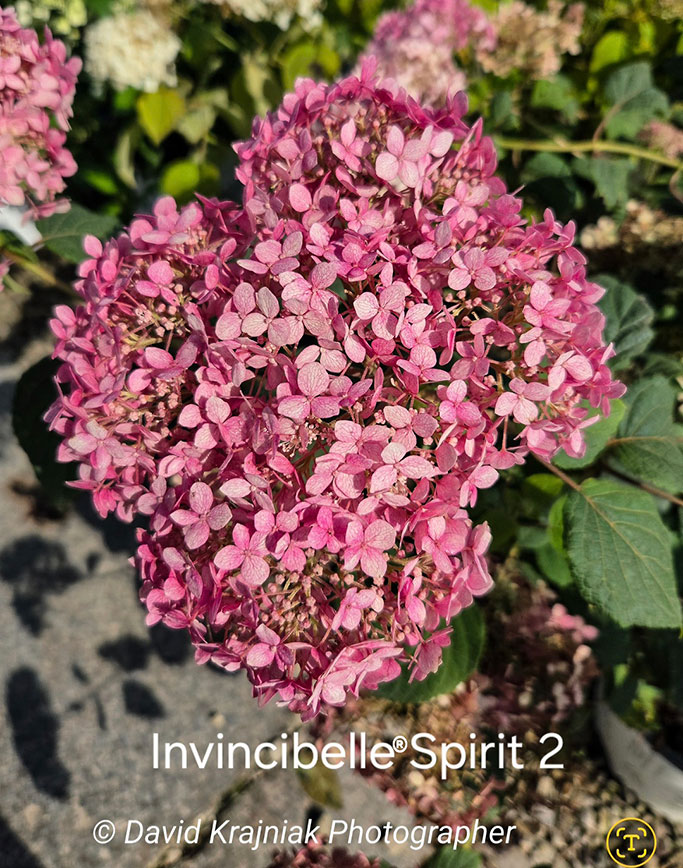
Invincibelle® comes next. The original Invincibelle® was considered the “Pink Annabelle”. It disappeared fast and was replaced by Invincibelle® Spirit II, which is still pink but with stronger stems to hold up the large flowers.

P.S. For every Invincibelle® series Hydrangea sold, Proven Winners donates $1.00 to Breast Cancer research.

The newest arborescens is Flowerfull®. Size-wise, it’s in the middle reaching 3-4’ x 4-5’ with strong stems and large white flowers (ageing green). It is listed as having great disease resistance.


Let’s move on to the “Big Leaf Hydrangea” (macrophylla).

Over the past few years, there has been a slew of new varieties added to the reblooming Endless Summer® Collection. Some have been around for a couple of years but are just now getting their 15 minutes of fame.

The collection includes:

  • Endless Summer® The Original
  • Bloomstruck®
  • Twist-n-Shout®
  • Summer Crush®: raspberry-red, unaffected by soil alkalinity and one of the shortest at 18-30” tall
  • Pop Star®: blue or pink, another one at 18-30”, a lacecap

Making it’s Christensen’s debut in 2026 is Dream Cloud® with their white, mop-head flowers and on a 3-4 x 3-4’ plant.

Before we head into the paniculatas, I would like to highlight a few other lacecaps from the Tuff Stuff® series. Christensen’s has carried these for a few years now and they have held up very well in the nursery. The original Tuff Stuff® is a 2-3’ tall rebloomer with blue or pink flowers. Christensen’s will also carry:

  • Tiny Tuff Stuff™ is quite small at 18-24" x 18-24" with blue or pink flowers
  • Tuff Stuff Ah-Ha® is 3' x 3' with blue or pink flowers
  • Tuff Stuff Top Fun® is 3' x 3' and purple with pink flowers BUT it also has red stems

OK, now we can discuss paniculatas.

Hydrangea paniculata Bobo® are The O.G. panicle hydrangea, no evil stepbrothers in sight. Bobo® are 24-30 x 36-48”, with strong stems, a rounded habit, white flowers and look like they belong on a macrophylla (big round ball flowers) and not a paniculata (usually more of cone shape). The flowers are also sterile, so they just bloom and bloom. 

Hopefully your coffee cup is full - here comes the mess.

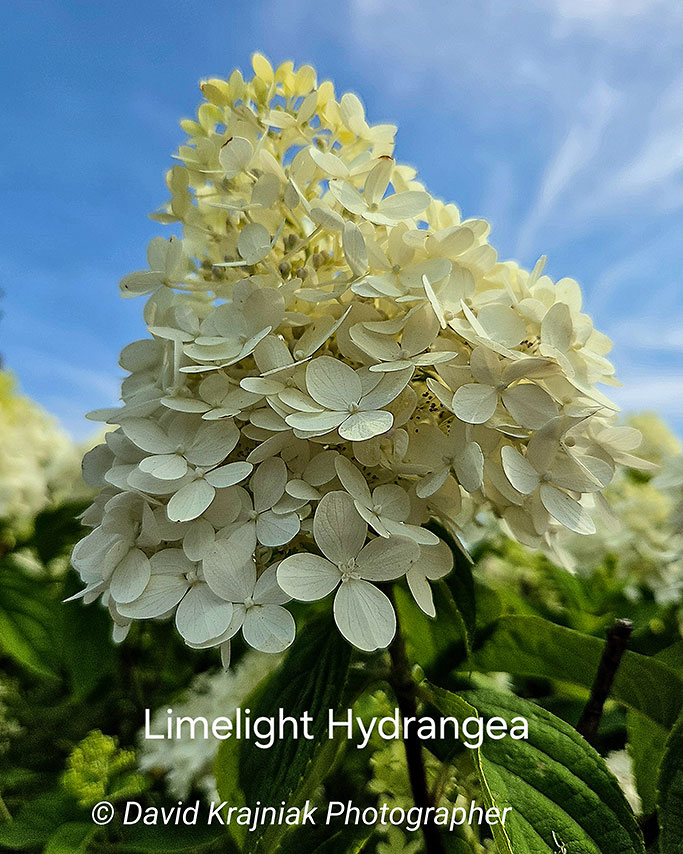
‘Limelight’ has been around forever. Reaching 8x8 with green flowers that age pink, red, burgundy. For now, these are still available.

However, Limelight Prim is looking to knock off ‘Limelight’. Primes® still have the green flowers that age to red and pink tones. But Limelight Prime® are a little shorter at 6’ x 5’ with stronger stems and bloom earlier, giving you a longer season of color.

Little Lime Punch® is the middle brother, reaching 5’ x 5’ but I think it holds its shape better with very strong stems. Little Lime Punch® flowers emerge green but age to a rich red with pinks and whites mixed in. Also, the flowers start the color change at the bottom and work up the flower stalk giving an array of colors before autumn.

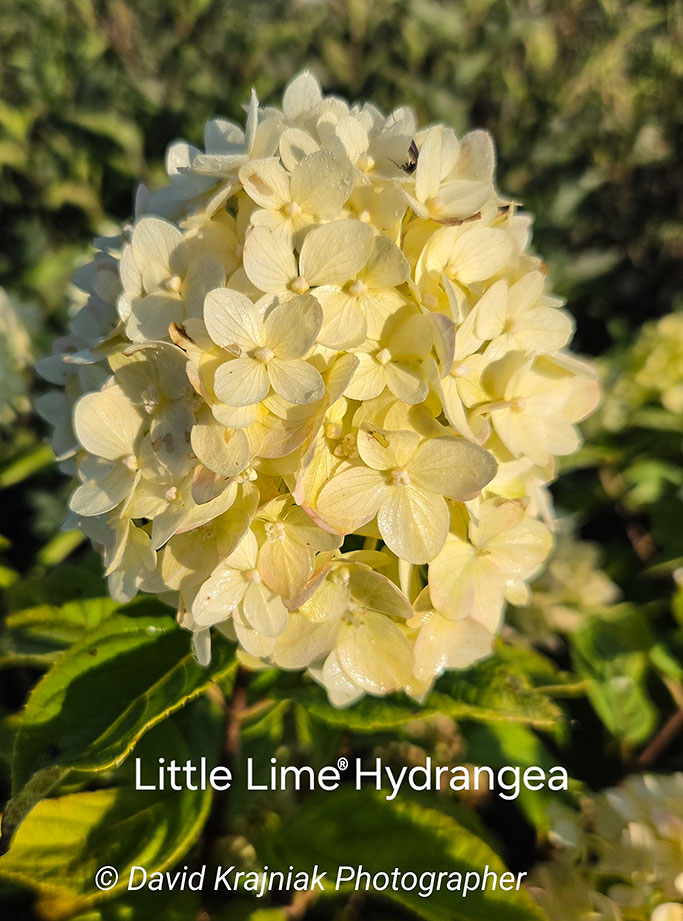
At 3-5' x 3-5', ‘Limelight’s baby brother can be found in its dwarf version, Little Lime®.

Little Lime® has the same green flowers but age more red.

‘Quick Fire’ Hydrangea and all its children bloom about 1 month earlier than other paniculatas, providing a little longer show.  They come in at 8’ x 8’, start flowering white then age pink with great fall color.

Little Quick Fire® is one of my favorites and a dwarf of ‘Quick Fire’, at only 3-5’ x 3-5’. The flowers are white, age pink and the red stems stand out on the plant.

I don’t know why. But with a name like “Fab” I thought Quick Fire Fab® was small – it is not. It is around 7’ x 6’. Unlike their parent, Quick Fire Fab® flowers are pink mopheads then age to red than white. Their stems were also bred to be stronger.

Moving on to another standard - Pinky Winky®. “Pinkys” come in at 6-8’ x 6-8’ with white flowers that age pink. The flowers can also be up to 12” long making for a very showy plant

Now there is also Pinky Winky Prime®. It is touted as having much stronger stems than its parent. Otherwise, it’s similar to the original.

Phew, almost to the end. (You thought I was joking!)

Puffer Fish® Hydrangea’s claim to fame is it has so many flowers you cannot see the plant! According to Proven Winner, "Puffers" are a Bobo® but puffier on a compact 3-5’ x 3-5’. The flowers are white and age green on strong stems.

Powerball® is one of the newest from Proven Winners. Powerball® has mop head flowers on strong stems, starting lime, aging white and pink. It is also a solid rebloomer with a size of 3-6’ x 3-6’.

Believe it or not, there are still more. We didn't even discuss "Oakleafs". I'll cover those later this summer.

I’m always on the look-out for new varieties that will grow well in Michigan. But they tell me, in order to get a new variety through the gate I have to remove one.

What Else Is New?

Christensen's has added two products this year that make it easier than ever for you to improve both the beauty and functionality of your client projects: EZ-Straw® Wildflower Mix and the NDS Downspout Defender™ Shield.

The EZ-Straw® Wildflower Mix from Michigan based company, Rhino Seed®, is a simple, all-in-one solution for starting a wildflower garden. With over 30 types of annual and perennial seeds, including Poppies, Shasta Daisies, and Marigolds, this Wildflower Mix creates a diverse mix of blooms with continuous color, texture and visual interest throughout the growing season. The added processed straw mulch helps to retain moisture, reduce soil erosion and protects seeds during germination to increase chances of success.

Environmentally conscious homeowners are driving the increasing popularity of pollinator gardens. EZ-Straw® Wildflower Mix is a great product to introduce to your clients interested in supporting bees and butterflies.

For the healthiest plants and better blooms, Rhino Seed® recommends that EZ-Straw® Wildflower Mix be planted before June, allowing the seeds to germinate and establish strong roots while temperatures and moisture levels are still favorable.


For those completing drainage projects, Christensen's will now carry the Downspout Defender™ from NDS. Designed specifically for 9-inch and 12-inch drain basins, the Downspout Defender™ acts as a protective shield, preventing debris such as leaves, twigs and other material from clogging the system. It helps maintain proper water flow and reduces the need for frequent maintenance.

Two sizes of the Downspout Defender™ available at Christensen's

Easily installed on top of a catch basin, the Downspout Defender™ is a convenient upgrade with the potential to prevent blockages and damage to the drainage infrastructure.


Make sure to ask about these new products while you're at Christensen's, picking up the trees, shrubs and perennials we've highlighted the past month. 

Here's to a successful 2026!!

What’s Blooming – Perennial Edition

First the trees bud and then bloom. Then shrubs start to wake up. But, when perennials emerge from the ground, it says SPRING!!

Hellebore are some of the first flowers to bloom. They can even be seen blooming out of the snow! Bloom time often coincides with Tulips and Daffodils, and can add more color to the garden. Hellebore tend to produce single, cup shaped flowers in a large variety of colors ranging from white, pink, red, purple and yellow. The foliage is evergreen - dark green and glossy.

Ivory Prince

Rio Carnival

Rome in Red


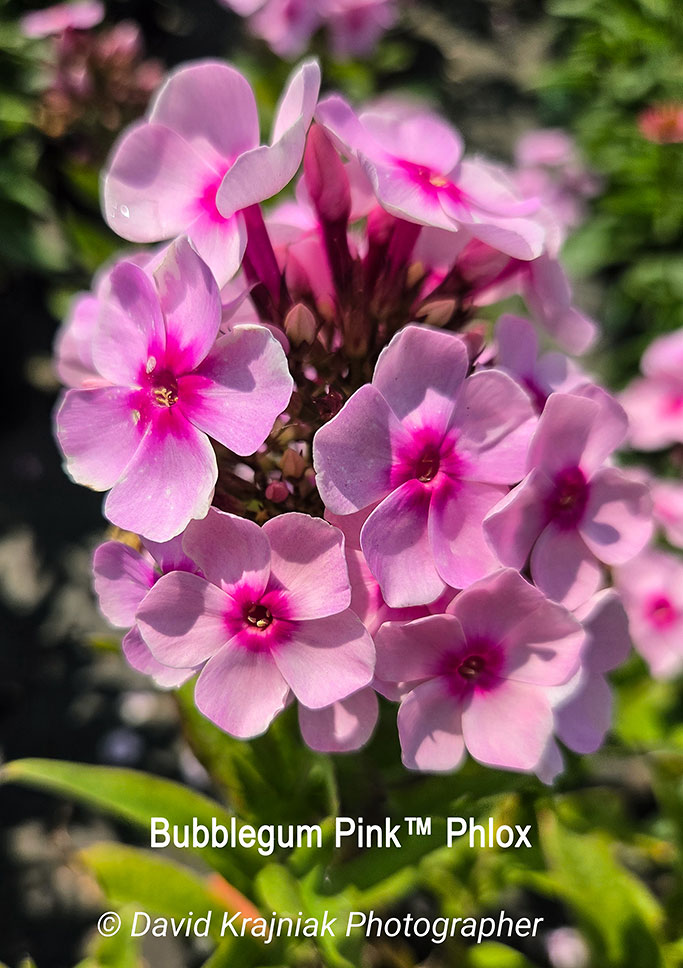
Phlox subulata is another great spring bloomer beginning in early April-May. They come in lots of cultivars: pink, blue, white, purple, and even candy striped.

Featuring a dense, mat-forming habit, these guys make a great groundcover! Creeping Phlox flower best in full sun, but do prefer some dappled shade once the heat really sets in. Known for being drought and deer tolerant, this would be an excellent choice if water or deer are a problem in your landscape.


Phlox divericata 'Blue Moon' is a stunning spring bloomer. They bloom along with the late-blooming tulips in late spring. This impressive native is perfect for a woodland garden, rock garden, border fronts or native plant gardens. With overlapping fragrant flowerheads, this violet-blue perennial really stands out. Phlox 'Blue Moon' is also a pollinator plant, so if you are looking to attract bees and butterflies, this would be a great choice. 


Looking for a fragrant, early bloomer? Check out Anemone sylvestris. Dainty, yellow-centered, white flowers flow up to 18” above soft textured foliage. This plant prefers shade and is ideal for woodland borders under large trees. Anemone sylvestris are known to spread in loose soils, and can be considered a groundcover in the right spot.


It may be early in the spring. But there are plenty of options to wow your customers with plants that are already flowering. If combined well, these are options for the beginning of a landscape that flowers all season long. Contact our sales staff or check the online availability to see what Christensen's has stock.