Updated Michigan Restricted Species List

As we start slowing down into the fall season and get ready for winter, there was news from the Michigan Commission of Agriculture and Rural Development that needs consideration for next season. As you may have heard, they added several species to the Restricted Species list. This means that, effective January 1, 2028, it will be unlawful to introduce, import, sell, possess with intent to distribute, or intentionally propagate these species in Michigan. While Christensen’s can continue to obtain these plants for our customers in 2027, they will no longer be “stocking items”.
Even with this year of reprieve, Christensen’s suggests that our customers consider what can be used to replace the invasive plants because come 2028, they will no longer be sold or allowed to be imported into Michigan.
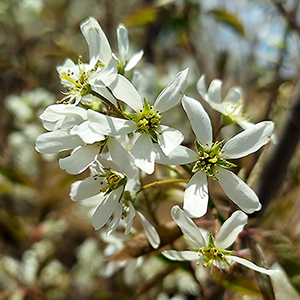
The first to discuss is the Callery Pear (Pyrus calleryana), i.e. Cleveland and Bradford Pear. All of us know of the white flowers in the spring, so consider Amelanchier ‘Cumulus’ as a suitable sub. Amelanchier ‘Cumulus’ has white flowers at roughly the same time as Callery Pear. However, the flowers do not have the putrid smell of the pear and the branches tend to point upward giving it an upward look. Amelanchier produce fall fruit, Juneberries, that tend to have birds eating them. The leaves start off green and turn orange and scarlet in the fall.
Amelanchier flower
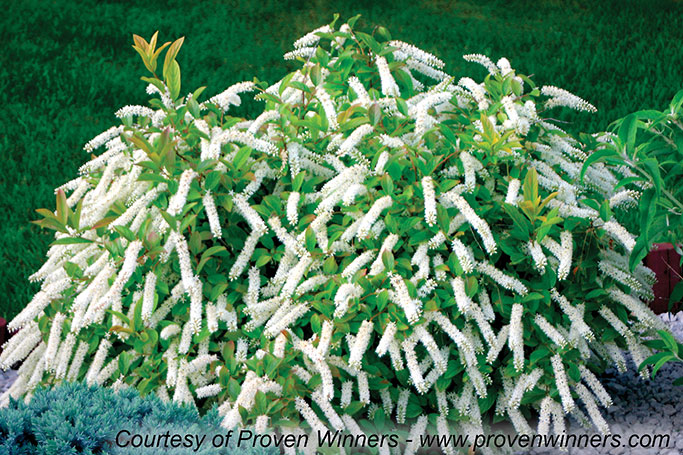
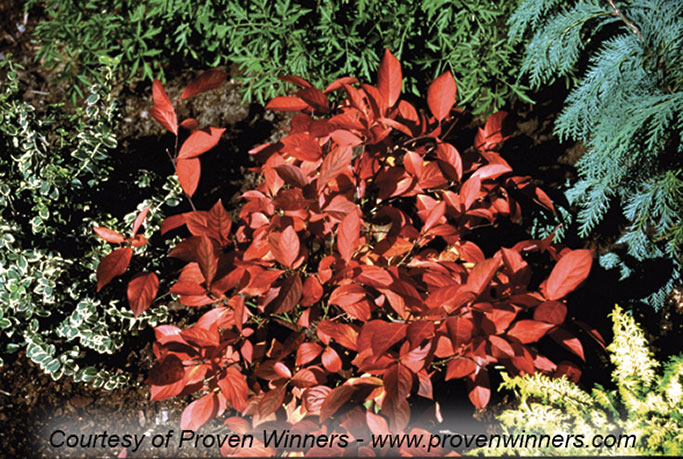
Next let's look at the ever-changing Japanese Barberry (Berberis thunbergii). While there have been changes over the years producing sterile or non-seeding varieties, the way the Michigan law was written, they are still included on the restricted list. Varieties of Japanese Barberry currently found at Christensen's include: 'Crimson Pygmy', 'Rose Glow', 'Orange Rocket' and the Sunjoy® Series. So, what can we use to sub for them? Any of the Iteas would be appropriate. Christensen’s has carried these for a long time, but they are under-utilized. Itea are a smaller plant, roughly 3' to 5' tall, with arching branches downward and white fragrant flowers. The leaves will start green then turn bright red or burgundy as fall approaches.
Itea Little Henry®
Flowering Fall Color
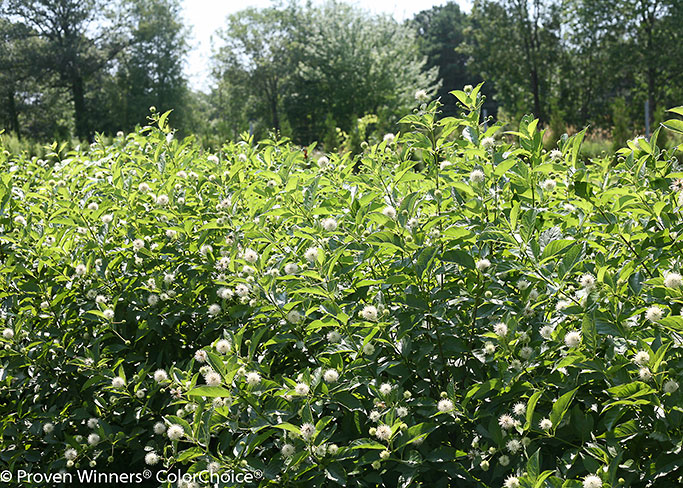
Last on our list is Buckthorn. Both glossy buckthorn and common buckthorn were added to the restricted list. However, of these, Christensen’s has only carried Rhamnus 'Fineline' in recent years. Yes, it is different than what we all know as the scrub tree. But it is still in the same species. Cephalanthus occidentalis, buttonbush, is a great alternative. Buttonbush has a round, white/cream-colored flower that looks like a ball. This is also a great plant for both pollinators and songbirds to feast on later in the fall and winter months.
Cephalanthus Sugar Shack®
As we navigate 2027 with these newly restricted plants, don’t hesitate to discuss your projects with one of the sales staff at Christensen’s. If the alternatives listed above don’t work into your plans, they can help you find other options.