Plants – Page 11 – Sticks & Stones

Archive

Category Archives for "Plants"

Boxwood blight update

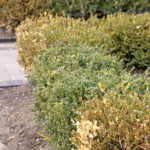
Winter damaged boxwood

Boxwood blight is a fungal disease of boxwood that results in the defoliation and decline of boxwood plants. Once it’s in the landscape it is very costly and difficult to control with fungicides. The boxwood blight fungus has a short life cycle and infections can spread quickly between plants, especially under humid, warm and wet conditions that favor disease development.

The main way that this disease is spread is through the movement of infected plants, cuttings, and boxwood debris. The sticky fungus spores are also spread on contaminated tools and equipment, worker's clothes, and water. The spores are unlikely to travel long distances through the wind. All plants infected with the fungus should be destroyed, as the chance of further spreading the fungus is highly probable. Limiting the spread of this sticky fungus is very difficult and can only be accomplished by following good sanitation practices.

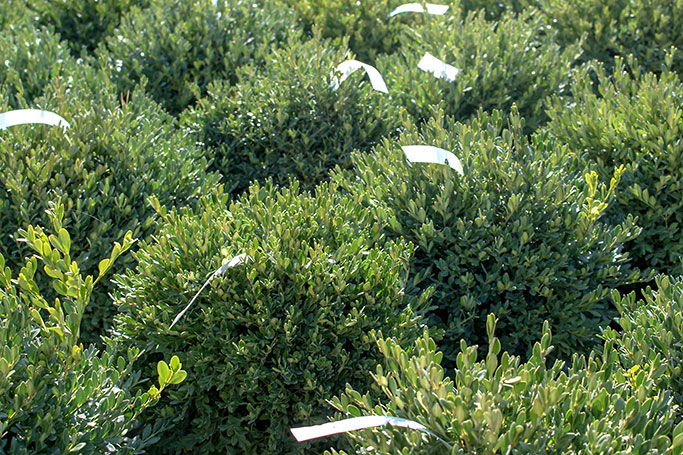
Green Velvet Boxwood

Boxwood blight has been found in Michigan. Because of this we will NOT accept any returns on boxwood once they have left the nursery. We will also ask that you do not bring any boxwood plants, leaf litter, or clippings into our nursery. We reserve the right to not load any vehicle that has boxwood or debris from outside of our nursery. Please do not bring in any samples of boxwood that you are trying to match - take several pictures of the plant you are trying to match and we will help the best we can.

Boxwood blight can look like many other issues that boxwood can have, such as leaf spot, winter burn, and other non-threatening fungal diseases. This means that:

The only way to confirm whether a plant has boxwood blight is to submit samples to a professional plant disease diagnostic lab.

Winter damaged boxwood

NOT Boxwood Blight -  this is winter damage.

Cooperative extension agents will be able to help you in submitting samples if you need help. Affected branches, stems, and leaves make the best samples, don’t forget to also take pictures.

If you do suspect that a plant has boxwood blight, you can send a sample to MSU Diagnostic Services. You can contact them at http://www.pestid.msu.edu/ or through the Michigan Department of Agriculture.

More information and pictures here: Boxwood Blight

Chris Nielson

Ten fall favorites

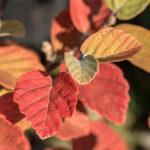
Fothergilla

...and I don't mean cider or donuts. No, it's COLOR TIME! 

Mums. Burning bush. Maple trees! You can probably name a dozen fall color plants without even thinking about it. But what about choosing from some of the lesser-known plants that also shine every autumn? Here are my top ten favorite fall color plants that may not be on your radar.

Hydrangea quercifolia

Oakleaf Hydrangea

  • Hydrangea quercifolia and cultivars: The large, rough-textured leaves are especially striking as they turn shades of red and purple every fall.
  • Viburnum x juddii: Beloved for it's sweetly-scented spring flowers, this medium-sized shrub has great burgundy-purple fall color accented by blue to black berries.
Itea

Itea

  • Itea virginica cultivars: This medium-sized native shrub deserves to be planted more often. The orange, red and burgundy fall color is outstanding and is extremely long lasting.
  • Epimedium cultivars: An underused perennial tolerant of dry shade that gets brilliant red to purple fall colors.
  • Amsonia hubrectii: This North American native perennial grows to about 3x3'. The fine, feathery foliage turns a striking golden-yellow in the fall.
  • Clethra alnifolia ‘Hummingbird’: Usually planted for the amazingly fragrant flower spikes in mid-to-late summer, this smallish shrub turns a gorgeous golden yellow each fall.
Fothergilla

Fothergilla

  • Fothergilla ‘Mount Airy’: This is a handsome 3-5’ shrub that gets wonderful fall color in hues of red-purple, orange and yellow.
  • Amelanchier: OK, so this one is not that obscure but it has to be in my top ten.
  • Vaccinium hybrids: These ericaceous shrubs (best known are blueberries) will surprise you with their beautiful red-orange fall color.
  • Panicum virgatum cultivars: ‘Shenandoah’ and ‘Hot Rod’ are two that turn beautiful red or burgundy.
Panicum

Panicum

Kim Roth

You can’t guarantee fall color

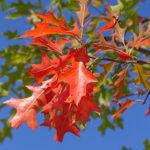
Pin oak

Various parts of the country are known for their vibrant displays of fall foliage colors, none more so than the Midwest, and in particular, Michigan. It seems odd that we get such joy from the annual death of leaves from deciduous trees, shrubs, and even some perennials. Why do leaves change colors in the fall, and why can’t we guarantee that fall color to our customers?

I'm going to super-simplify the scientific part of this explanation so here goes:

  • Chlorophyll produces carbohydrates (sugars) plants need for growth and is responsible for the green color in leaves and stems.
  • Carotenoids express as yellow and orange and are generated during the growing season alongside the green.
  • Anthocyanins are only produced in the fall after sugars are trapped in the leaves, and create reds and purples. More reds, and earlier reds, can come from plant stresses, low nutrition, and near-but-not freezing temperatures. Freezing stops the process of making red pigments.
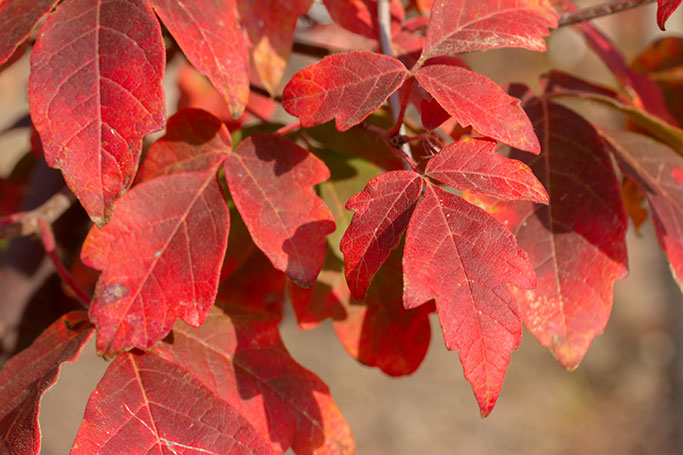
Paperbark maple

During spring and summer chlorophyll masks the other pigments so you pretty much just see green, however shorter days, longer nights, and cooler temperatures trigger an abscission layer to form, cutting off the flow of sugars and replacement chlorophyll. As the green color fades, the underlying yellow and orange colors are revealed, and reds and purples develop. Eventually all the colors break down, leaving brown tannins.

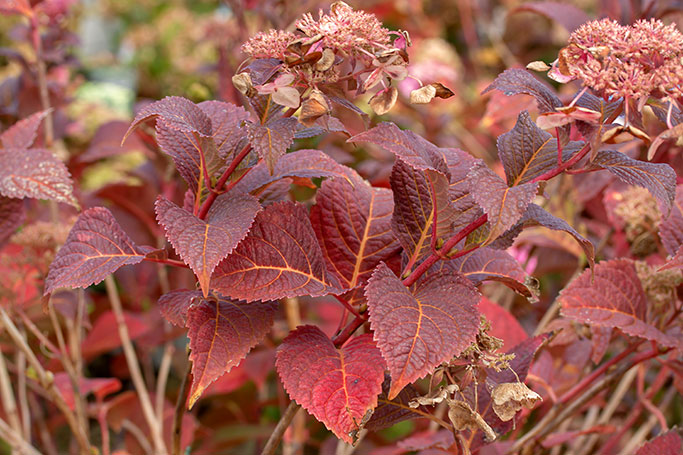
Hydrangea

What colors are produced, and in what amounts, and when in relation to other plants, is due to the genetics of a particular plant, growing conditions, and weather.

Similar environmental conditions as those causing red color in leaves also may cause fall colors to come sooner, or later, or to last longer some years than others. Drought during spring and early summer may signal the plant to form the abscission layer early, shutting down growth and causing color change sooner than usual.

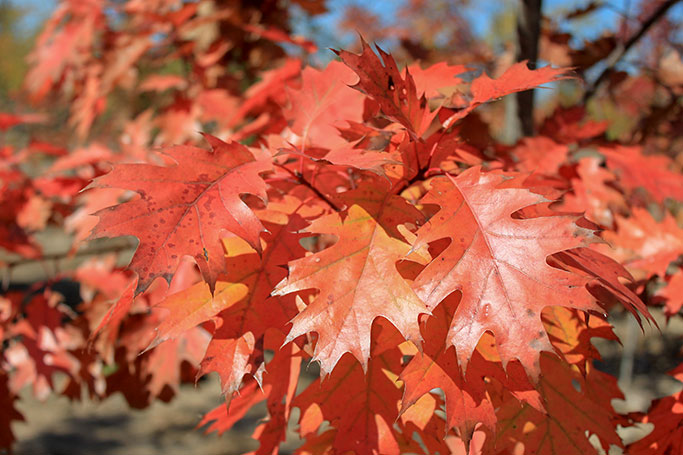
Red oak

So while moisture is good earlier in the season, too much late in the season means more clouds, less sun, and more muted colors. Too much rain in fall plus strong winds, may cause many leaves to fall prematurely. Cooler temperatures in late summer, and plenty of sunshine, often leads to brighter colors sooner. Cool is good, but too cold (freezing) can be bad, killing leaves early.
So ideal for fall color would be a moist growing season early, dry late summer and early fall, with sunny warm days and cool nights during the latter.

Choosing cultivars with known fall color-producing ability will certainly help, but as you can see there are other factors that come into play, and you really cannot guarantee fall color.

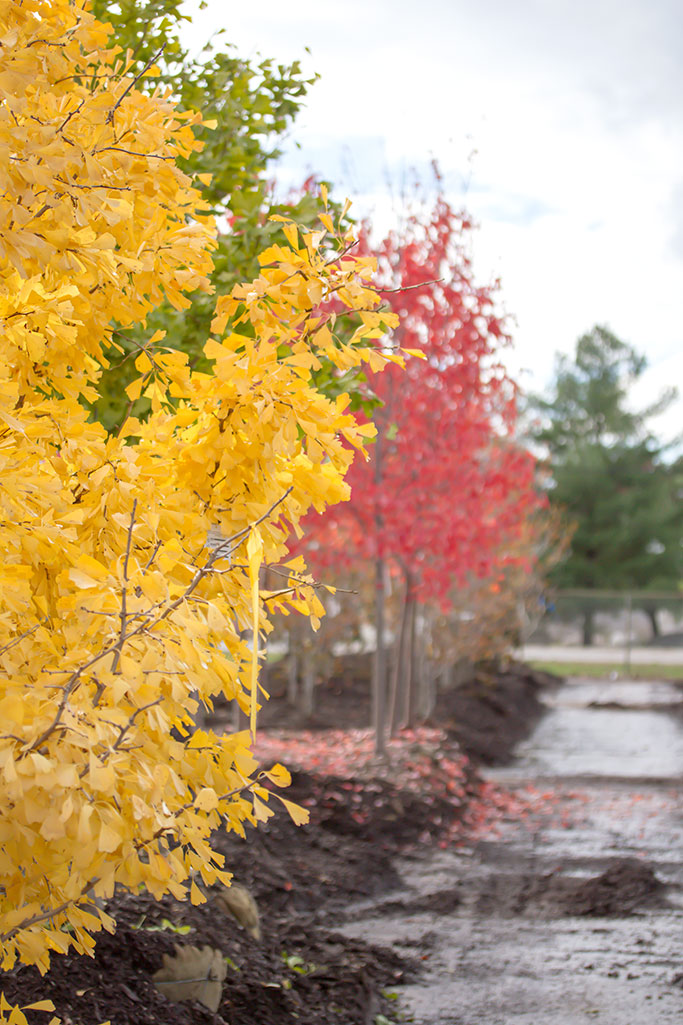
Ginkgo and Red maple
Clint Rasch

Non-Fall Hazard shade trees

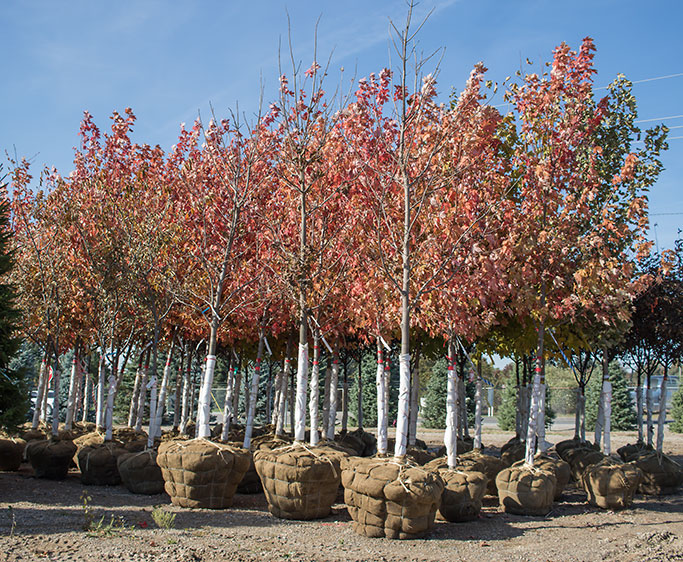
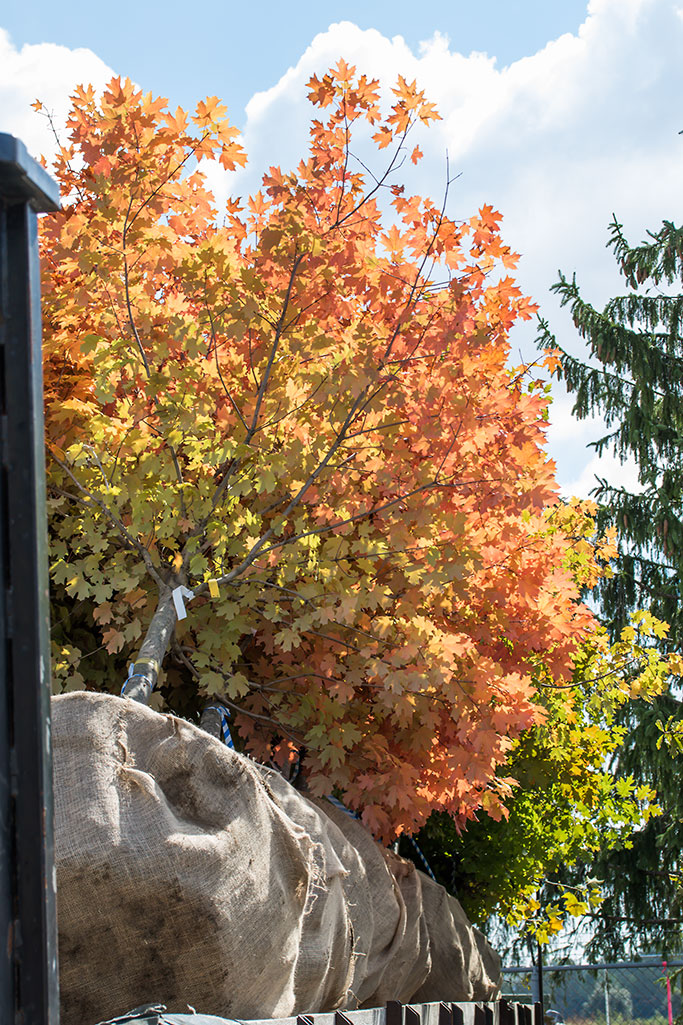
Acer Autumn Blaze

It’s almost that time of year for digging trees. There are some risks when it comes to fall digging season and you might be wondering what those risks are and what is safe to dig.

When handled correctly, many trees can be safely moved in the fall; however we have a list of trees that are considered poor candidates.

Christensen's Plant Center Fall Digging Hazard Trees​​​

For instance, if a freshly-dug tree is slow at regenerating roots or lacks new established roots, that tree could be considered high risk. Thin-barked twiggy trees like birch and willow are also at high risk due to having trouble retaining moisture during the winter months. Fall planted trees of any species still require water going into the winter and many losses can be blamed on the tree drying out.

Acer Autumn Blaze

Even though Red maple is on the Fall Hazard list, the Freeman Maple hybrids (Acer x freemanii ) like Autumn Blaze® (‘Jeffersred’) are not considered a poor risk. Being a cross between silver and red maple, they are tough, fast growing, adaptable trees. They are drought tolerant when established and hardy to Zone 3, making them good candidates for fall digging. Norway (Acer platanoides) and Sugar (Acer saccharum) maple also tend to move well in the fall.
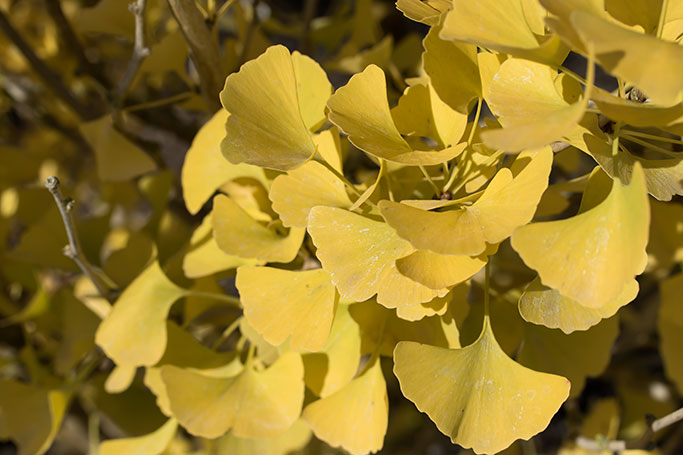
Ginkgo biloba

Some others to consider are Ginkgo and ‘Ivory Silk’ Tree Lilac (Syringa reticulata) - even though that last is not technically a shade tree we do see demand for them in landscapes where space is at a premium.

Any of our knowledgeable staff would be happy to help answer questions or give you the most suitable substitutions regarding fall hazard trees.

Visit these links for more information about Fall Hazard trees:

Fall Hazard tree lists explained (Sticks & Stones, Jeff Good)

Transplanting and a Deeper Look at “Fall Hazards” (NYC Parks Director of Street Tree Planting Matthew Stephens and Taking Root Editor Michelle Sutton)

Fall Fiesta Sugar Maple
Luke Joerin

Boxwood Blight

Boxwood Blight leaf symptoms

You may have heard of a new fungus that has been damaging and killing boxwood in the US. It was first identified in Connecticut in 2011. Called Boxwood Blight, it has now been seen as near as Ohio. It has been predicted that it will continue to spread. Spores can be transferred by physical contact, splashing water, or wind.

Christensen’s Plant Center is taking the necessary steps to make sure that we have clean boxwood in stock for you at all times. This means following the best practices that have come from growers and distributors across the country.

Boxwood

Boxwood Blight is easily transferred by physical contact. Even brushing up against an infected plant means that you can transfer the fungus onto other plants later that day. To that end we must ask that you observe the following when visiting Christensen’s Plant Center.

  • Please do not bring Boxwood plants or parts of a Boxwood into CPC. We will continue to do our best to identify any plant material via a photograph, but we can not have possibly infectious plants brought into our clean nursery.
  • We will no longer accept any returns of Boxwood for any reason. Again, we cannot accept materials back once they have left our clean environment.

These practices are for your success as well as our own. Maintaining a clean facility ensures that we will be able to provide you with material that is free of Boxwood Blight for all of your projects now and in the future. Thank you for your help!

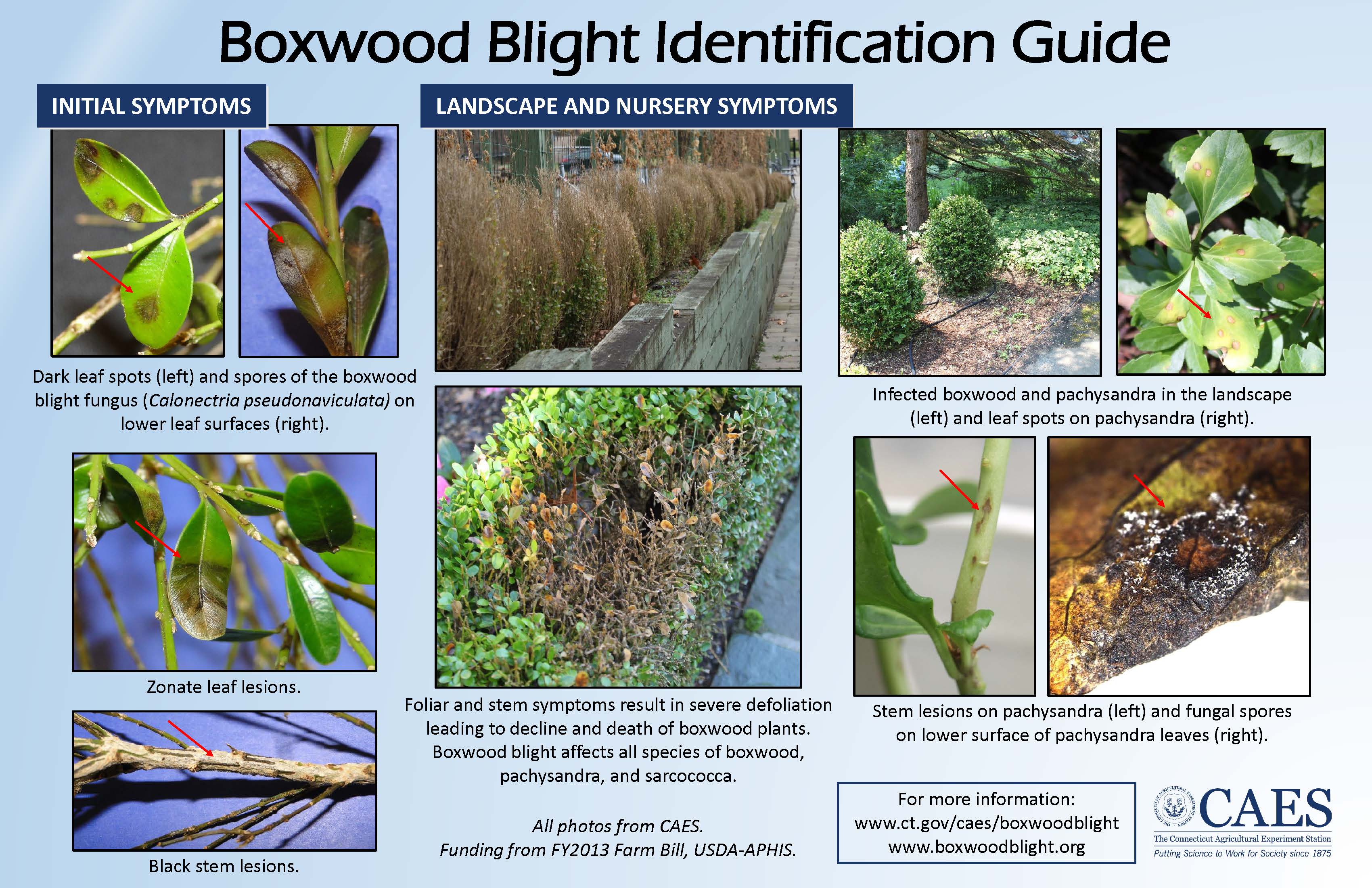
Boxwood Blight ID

Click image for larger size

In the links below are PDFs with more information about this disease.

MSU Extension - Boxwood Blight Disease in North America (2.33 MB)

CAES - Boxwood Blight - A new disease for Connecticut and the U.S. (1.05 MB)

“Jupiters & Yous”

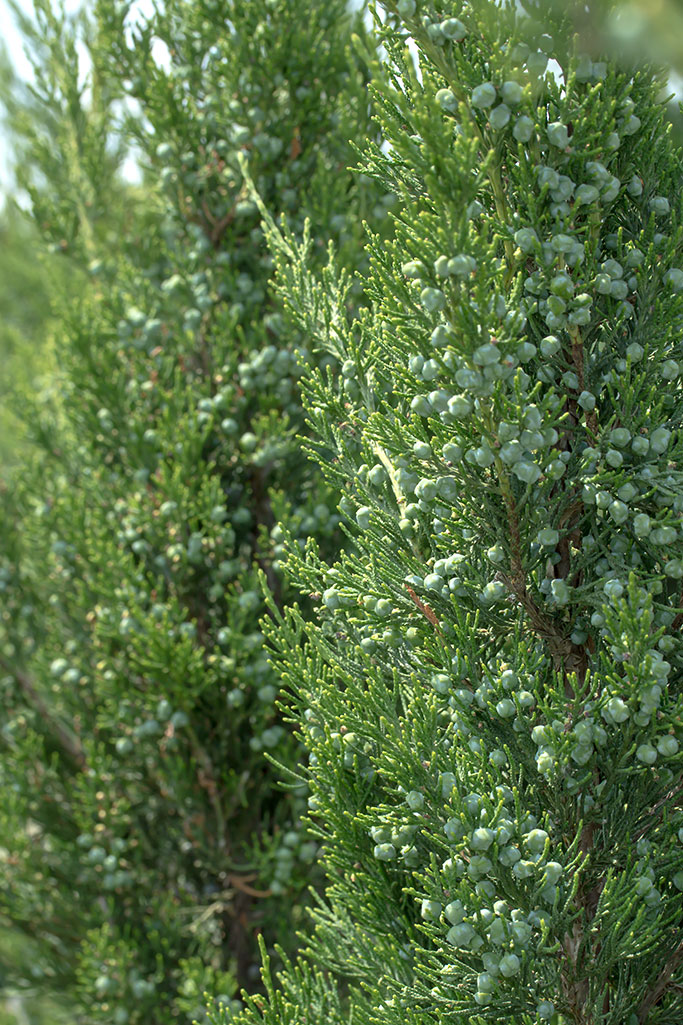
Juniper berries

Guess what! We sell these! I don’t care how you say ‘em or spell ‘em as long as your check clears. I’m pretty sure my boss would agree with me. Hardly a day goes by that we don’t get contractor lists of hybridized and spell-’em-as-you-hear-’em names. I personally love the challenge! And yes, we do sell junipers - and yews.

In particular, Christensen’s sells a number of species of upright Junipers, the Eastern Redcedar. They are somewhat interchangeable with Arborvitae. Junipers require and tolerate hot, dry, sunny conditions but can have difficulties in poorly drained areas. They can be planted as backdrop accent evergreens or hedged into a living fence. A caveat is to avoid planting them too close to some members of the Rose family such as Crabs, Pears, Hawthorn, and Quince due to host/parasite rust occurrences.

The species of Juniperus that Christensen’s typically stocks are:

J. virginiana

  • ‘Keteleer’ - a soft, green needle with loose habit; often used for native plantings
  • ‘Taylor’ - a newer introduction with a bluish-green, tight habit; similar in form to Thuja occ. ‘Emerald Green’

J. chinensis

  • ‘Blue Point’ - a bluish-green, full habit; often used for topiary
  • ‘Hetz Columnaris’ - green needles with broad, architectual habit; best of the fruiting varieties we stock
  • ‘Spartan’ - a green needled variey with a tight, upright habit
Juniper 'Hetz Columnaris'

Juniperus chinensis 'Hetzii Columnaris'

J. scopulorum (Rocky Mountain Junipers)

  • ‘Blue Arrow’ - a soft, bluish upright with a very tight form
  • ‘Skyrocket’ -a grayish, green variey similar in form to ‘Blue Arrow’
  • ‘Wichita Blue’ - a broad, very blue form with very soft growth, but a rugged look
Juniper 'Wichita Blue'

Juniperus scopulorum 'Wichita Blue'

Availability for this genus is not quite as reliable as Arborvitae. We usually see periodic waves of uprights appear throughout the season. Junipers do, however, offer a greater range of color when compared to Arborvitae.

Next time you need an upright evergreen, ask to see some of the varieties just mentioned. Exact spelling not required!

Jeff Good

Mid-season fertilizing

Should I be fertilizing my trees and shrubs in August?

Ask five experts that question and be prepared for five different answers, at least that happened to me. Regardless of the type or size of your new landscape, maintenance will be required to ensure it stays healthy and looking the way it was designed to look. Although 95% of all problems with new plant material can be attributed to improper watering, fertilizers are going to play a big part in getting things established and staying healthy.

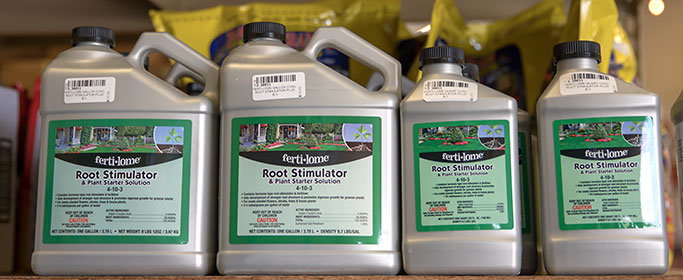
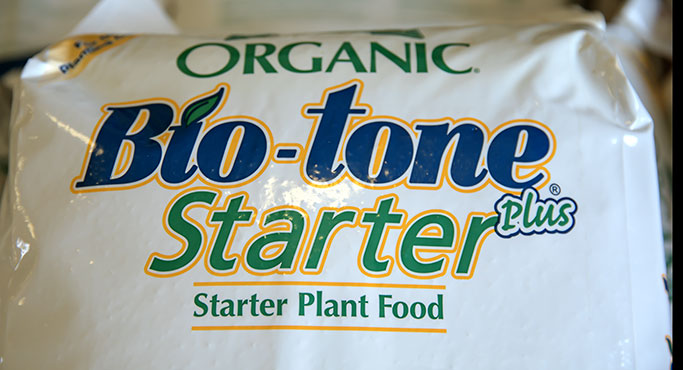
Early spring and late fall are obviously your major fertilizing moments, but let's look at right now. New plantings will be aided by the use of some starter fertilizer, especially at new housing and businesses where a lot of good soil has been stripped away. Some cities have poor soil to begin with, lacking nutrients to give plants a good start. We carry some great organic starter fertilizer containing bacteria and mycorrhizae to increase root mass and help avoid transplant loss due to difficult conditions. Light application of these starters and plenty of water will be key during this month.

Fertilizing established plants in August is a little tricky. To avoid stressing the plant, avoid fertilizing during drought or heatwave conditions. Know your soil and fertilize only when plants are truly nutrient deficient. Why? Because new growth forced by fertilizing during this period may not harden off before the onset of winter resulting in tip dieback that won't show until next spring sometime. That's a phone call you won't want to get!

Come by our store and we will help you choose the best product for your particular situation.

Fresh landscaping
Jim Guy

Why is my blue spruce turning green?

Picea pungens 'Glauca'

Colorado blue spruce is one of the most popular evergreens we sell. The straight species is usually green, but the cultivar 'Glauca' ranges from bluish-green to an eye-popping silvery blue. The color is genetically determined and before grafting ornamental trees became the norm, the brightest blue seedlings were known as "shiners" and were selected out and sold at a premium. Now we have numerous cultivars with consistent, bright blue color. 

Picea pungens 'Glauca'

So why might you get calls from customers complaining that their expensive blue tree is turning green? Firstly, the blue color is only present on the new growth, weathering off in time. Pesticides can strip off this waxy blue coating from the needles as well. Other culprits can be air pollution, or poor growing conditions that keep new foliage to a minimum.

Picea pungens 'Glauca'

Once the blue color has worn off the needle, nothing will bring it back and the tree is going to look green until that flush of new growth each spring. However, you can encourage the best possible color by providing ideal growing conditions and care. Spruce prefer moist, well-drained soil, and you may fertilize established trees in early fall or mid-spring.

Picea pungens 'Glauca'
Holly Christensen

So you want blue in the garden!

Ceratostigma

Horticulturally speaking, the color blue is rare. So rare, that many of the flowers we call "blue" are in fact... purple. Blue iris? Purple. Blue roses? HA! Purple - and weak at that. Syringa, Campanula, Lobelia, Hyacinth, Baptisia... all have varieties CALLED blue, but they are... purple. I found this quite confusing when I started in the nursery business. Apparently we gardeners are DESPERATE for blue in the garden and we will call anything close "blue".

Picea pungens 'Glauca Globosa'

Picea pungens 'Glauca Globosa'

This tendency extends to foliage as well - blue spruce, blue juniper, and blue hosta, are all rather more silvery than blue, with the added insult of the color wearing off with weather and time! I still chuckle about the customer I had on the retail lot one day, who accused us of spray-painting the 'Moerheim' spruce because, "Look! It rubs off!" There wasn't much I could say because he was right, it did.

Scilla and Chionodoxa

L: Scilla siberica - R: Chionodoxa luciliae

There ARE a few truly blue flowers we can grow in Michigan. Amsonia, Delphinium, Virginia Bluebells, the annual 'Black and Blue' Salvia, Forget-me-nots, Sisyrinchium, and Ceratostigma all have excellent blue flowers. Scilla siberica is a minor bulb that naturalizes and can give you an ocean of blue flowers every spring. Chionodoxa's pretty good, too.

Caryopteris

Caryopteris x clandonensis

In shrubs you can try Caryopteris - wait, that one's a bit on the purple side - heck, it's barely a shrub, more like a woody perennial. Hmmmm. Hibiscus 'Blue Chiffon' is pretty blue. Almost. OKAY, OKAY, FINE. You want blue? You'd best be planting Hydrangea. The old favorite, 'Nikko Blue' has been surpassed by newer cultivars like Nantucket Blue™ and The Endless Summer® line, with the original Endless Summer®, Twist-n-Shout®, and BloomStruck®  all of which bloom on both old and new wood. These plants can be coaxed into producing nice blue blooms with the proper soil pH.

Hydrangea

Hydrangea Endless Summer®

So you do have some options. And take those photos of bright blue-flowering plants on Pinterest with a grain of salt. Most of them are Photoshop. Or perhaps dyed like those poor Phalenopsis orchids at the grocery store. 

Myosotis

Myosotis palustris

Holly Christensen

How to shear boxwood and yew

Sheared taxus

People are always asking me about the best time to prune the shrubs they've installed or are maintaining.  For flowering shrubs the answer is easy - prune right after they’re done blooming. Late pruning in this case is bad since you’re removing the next season's flower buds and most of your clients would not be happy about that.

Buxus ready for next shear

Boxwood (Buxus) and yew (Taxus) are a little different as flowers are not necessary or desired. First and foremost, always use very sharp pruners or shears, to make the pruning easier and reduce damage to the plant. To maintain trimmed forms and hedges you ideally need to shear twice a year. Once in late May or early June after the initial foliar flush, and then a second time around August. This causes the formation of lateral buds which help maintain denser growth. 

Sheared buxus

Keep in mind that shearing a plant to the same exact size every year causes the outside of the plant to become very dense, leaving the interior bare. Allowing for a slight increase helps delay the need for an extreme renewal pruning or plant replacement. Try not to prune during a drought period, and to prevent foliar freezeback pruning should never occur in late fall or winter. If you’re only going to shear once a year, try to do it around August. 

taxus with tight shear

When shearing hedges, taper them so that the top is narrower than the bottom, so all sides will be exposed to sunlight. This will give you a slightly pyramidal shape. Avoid at all cost the inverted pyramid look, as this even further screens sunlight and eventually kills the bottom.

Taxus hedge

Both boxwood and yew are very tolerant of shearing and with proper technique will remain attractive and functional in the landscape for many years. 

sheared taxus
Bill Ten Eyck
1 9 10 11 12 13 15