Plants – Page 13 – Sticks & Stones

Archive

Category Archives for "Plants"

Five steps to quality

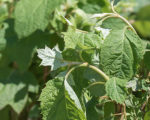
little wilt on these oakleafs

What goes into Christensen’s Plant Center having the freshest, most viable stock?

It began years ago when Lee Christensen (and probably before him his dad Pete) sought out material from the finest growers in North America. When Lee passed on the company to Tim Joy and Frank Huber, that sourcing experience of finding nice material at a good value was part of the deal. Over the years Christensen’s has cultivated relationships with a number of top-notch vendors, and our current Investment team of me, Kim Roth and David Dermyer as well as Frank Roth at Rushton Farms are focused on nurturing and expanding those relationships.

checking the shipping documents

Secondly, the material is shipped by trucking companies we broker ourselves, then unloaded by our highly trained (and sometimes overworked) receiving staff. They can unload 8-12 trucks in a day and 1000’s of boxwood and yews in a week. All plants are placed in our facility under irrigation, both in the yard or the field. Maintaining that irrigation system is a top priority for our yard manager Chris Nielson (assisted by Rigo).

Third, the material is evaluated and approved as it gets unloaded or shortly after. If we see anything wrong, it gets rejected. If I wouldn’t buy it for myself, why would I sell it to you? Sub-par material is often put right back on the truck.

inspectiong some boxwood

We make sure that plants are viable, rooted, and healthy. Plants that don’t pass this evaluation are removed from inventory immediately. Rarely, we receive trees in the spring that are rejected for quality but are not able to be shipped back to the vendor. We put the best of them in our “2%” area, and offer them to you at shockingly low prices.

We do want to be fair to our vendors, so if material arrives early in the year, we give the plants till early June to come out of dormancy. It’s amazing how some will take that long (like trying to wake up a teenager on a Saturday morning).

Finally, the other main force for refreshing our stock is you, our customer. Quick stock turns are key. If you’re busy planting, our staff is busy doing what Lee, Tim and Frank have trained and asked us to do. We are experts at finding quality material and are ready to provide what you need for your installs.

We know your success is our success, and we are glad we can help.

Dan Alessandrini

Beware the late frost!

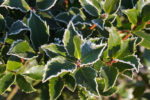
Hoarfrost

Barring tornadoes and earthquakes, few weather occurrences strike fear into the hearts of the avid gardener, landscaper, and nurseryman like a late frost. We have no control over Mother Nature, if she decides she wants to paint everything white on a chilly spring morning. But there are things we can do to protect our plants.

Frost occurs on clear still nights. In late spring a light frost (28-32 F) can harm tender plants, magnolia blooms, and can kill annuals. A hard frost (25-28 F) can kill root hardy perennials and harm new leaves on woody plants. Below 25 F can harm many plants in late spring, mainly due to desiccation. Since temperatures can vary a few feet off the ground, smaller plants can be affected by a frost even if your thermometer reads above freezing. Most weather stations and apps will report a frost advisory, so pay special attention if you have vulnerable plants. Making sure to select plants that are suitable to the Hardiness Zone where they are being planted will reduce the risk of damage, and reduce anxiety over frost.

Hoarfrost

Types of frost include Hoarfrost (feathery white frost crystals), Rime (fog or dew frozen into a glaze), and Black Frost which is when there is no actual frost formed but the low temperatures are still harmful to the plants.

When is it safe to stop worrying about frost in Michigan? That depends on where you live. According to the Climactic Data Center website, in Ypsilanti it’s May 5th, in Detroit and Ann Arbor it’s May 10th, in Flint and East Lansing it’s May 28th, and if you live in Tahquamenon Falls it’s July 9th. Unfortunately nature doesn’t consult the Climactic Data Center website and can easily send a harmful frost your way beyond these dates, so be vigilant in late spring.

Some trees that are susceptible are early budding evergreens such as Black Hills spruce and Concolor fir, and deciduous trees including Sycamore, Lilacs, and Honeylocust.

So what can you do to protect your plants during a late frost? If you haven’t planted them yet and you have the space, bring them indoors (a garage, shed, or enclosed porch will do). Smaller plants can be covered with overturned pots or buckets, and larger plants can be covered with fabric, old bed sheets, or burlap (be prepared and have these items on hand before you need them). Another good method is to use your irrigation system. Watering your plants before and during below freezing temperatures helps prevent desiccation, and the water has and insulating effect on the plants and soil.

What if your plants are damaged by frost? If they are annuals or garden vegetables, they are probably toast. The effects on most landscape plants is cosmetic and plant survivability is good. The healthier the plant is, the more reserves it has to push new growth, so it is important that the plant is in the right environment and is well fed and watered.

Hopefully we don’t have to fret much longer about frost as the warmer months head our way, but don’t let your guard down yet. The Late Frost will get you if you do.

Frost damage
John Mollon

A New Look at an Ancient Plant

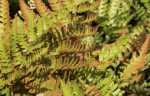
Autumn fern
What kind of plant has branched stems and leaves, neither flowers nor seeds, can grow in a variety of locations and has been with us for more than 300 million years?

FERNS!

They are an immense and diverse group of plants that are more versatile than many people may think. Not all of the many ferns hardy to our Zone 5 climate need be pictured as only woodland delicacies.

Many varieties are suitable for, believe it or not, rock and water gardens as well as sunny and dry locations. I have personally seen happy colonies of Ostrich Fern (Matteuccia pensylvanica) and Japanese Painted Fern (Athyrium n. Pictum) growing in full sun, provided (THIS IS IMPORTANT!) the soil is organically rich and consistently moist.

A few more sun-tolerant varieties include the Hayscented Fern (Dennstaedtia punctiloba), Lady Fern (Athyrium felix-femina), and Cinnamon Fern (Osmunda cinnamomea).

When established, Ostrich, Lady and especially Hayscented Ferns will also be able to tolerate drier soils.

These ancient beauties can be deciduous or evergreen and exist in many textures, colors (think Japanese Painted Ferns and Autumn Ferns) and sizes. Even better, most are resistant to rabbits and deer.

Their tropical look can soften up areas around a patio and the edges of hardscaped portions of the garden.

They truly are worth a second glance, beyond the forest setting, as long as proper research is done to choose the correct variety that should be used.

Continue reading...